The recent collaboration between the U.S. Treasury and the Bank of Japan to purchase yen marks a significant move in international finance. Rather than converting dollars for this operation, the U.S. has opted to trade euros, a decision that has sparked considerable discussion. This intervention raises questions about the U.S.’s unaccompanied involvement and the underlying risks it aims to mitigate.
Understanding Japan’s Economic Challenges
At the heart of this strategy lies Japan’s long-standing economic struggles, exacerbated by the aftermath of its significant real estate and stock market bubbles in the late 1980s. The realities of an aging population and a culture inclined towards saving over spending complicate matters further.1 Japan has relied heavily on accommodating monetary policies to counteract near-deflation, achieving limited success until the pandemic-induced supply chain disruptions. Consequently, the yen has remained weak since the crisis, benefiting exports but failing to invigorate domestic consumption.2 Furthermore, Japan’s vulnerability to energy and supply shocks resulting from geopolitical tensions, such as the recent Iran war, has intensified the hurdles facing its economy.
The Rationale Behind U.S. Intervention
Many experts argue that the Treasury’s actions are primarily to avert major sell-offs of Treasuries in pursuit of dollars for yen purchases, a process that would escalate the value of longer-dated yields amid turbulence sparked by the Iran conflict. Although this may align with Treasury Secretary Scott Bessant’s objectives, it raises the question of why the U.S. hasn’t encouraged Japan to proactively elevate interest rates to fortify its currency. There may be concerns within the U.S. government over the potential fallout on fragile Japanese companies, which could be severely affected by such rate hikes, alongside fears regarding a possible unwinding of the yen carry trade.3
Details of the Coordinated Intervention
The details of this cooperative effort are outlined in an announcement from the Finance Ministry of Japan:
- Japan’s Finance Ministry confirmed it executed a coordinated intervention to buy yen alongside U.S. Treasury officials.
- Japan has indicated it will not hesitate to conduct further joint interventions as necessary and is maintaining close communication with the U.S. Treasury.
- U.S. Treasury Secretary Scott Bessent stated, “Friday’s coordinated foreign exchange actions countered disorderly yen movements.”
This intervention represents a rare cooperative measure by the two nations aimed at stabilizing fluctuations in the Japanese currency. Subsequent to the intervention, the yen, which had dropped to 163.73 against the dollar, improved to around 157.57.4 As of Monday, it was trading at approximately 157.70 per dollar. The alarming decline of the yen, reaching levels not seen in nearly 40 years against the dollar, has increasingly concerned Tokyo.
The Future of Currency Intervention
The Finance Ministry has also disclosed plans to leverage the Federal Reserve’s Foreign and International Monetary Authorities (FIMA) repossession facility for future operations. This facility permits approved foreign central banks to access short-term dollars by temporarily exchanging U.S. Treasury securities.
Economic Implications and Market Reactions
It’s crucial to understand the broader implications during times of external debt crises, which, in various situations, have prompted International Monetary Fund (IMF) involvement. Historically, both the U.S. and Japan have collaborated on interventions, including the notable actions during the 1980s Plaza Accord and later the Louvre Accord.5
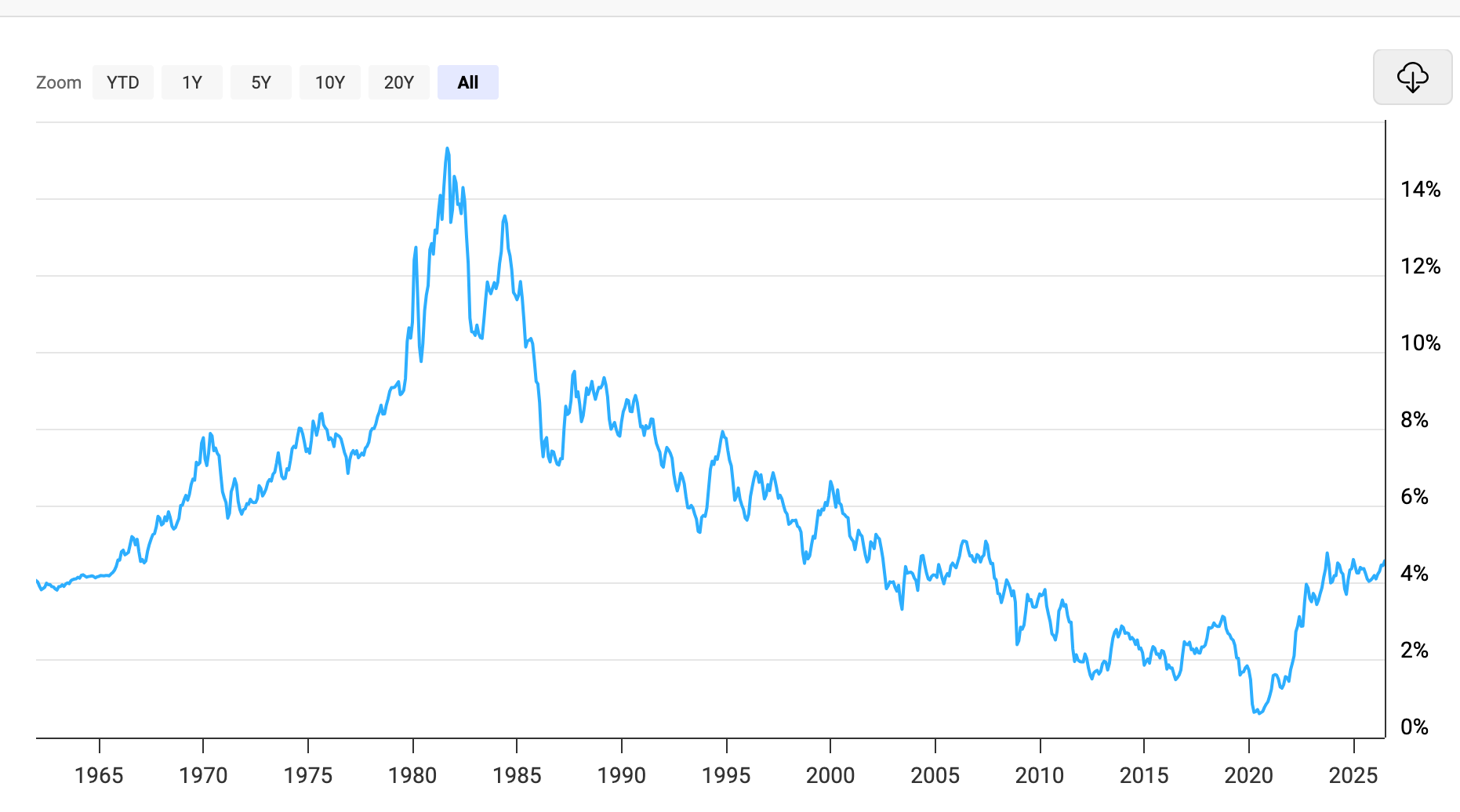
In current discourse, commentary surrounding the U.S.’s rising Treasury yields — surpassing 5% — deserves context. In historical terms, this is not an exceptionally high rate. Again, Macrotrends provides insights:

Nonetheless, the backdrop of historically low interest rates since the 2008 financial crisis has conditioned investors to adapt to such environments, complicating their reactions to current conditions. There is widespread anxiety regarding U.S. deficits; however, a currency issuer like the U.S. does not face a risk of involuntary default as it can generate currency, albeit potentially at the cost of higher inflation.
Potential Risks in Financial Markets
If the yen experiences rapid appreciation, it could lead to risky unwinding of the carry trade, akin to past events that caused disruptions in Asian markets.6 Analysts report a significant accumulation of short positions on the yen, with hedge funds betting on its weakness, which precedes potential volatility in global markets. Economic experts are particularly cautious about the implications for sectors such as technology, which could bear the brunt of such shifts.
Conclusion
This intervention signifies a complex interplay of global economic factors, revealing underlying vulnerabilities in Japan’s financial landscape and the broader implications for international markets. As stakeholders navigate these challenges, the evolving dynamics are likely to unfold further, making it essential for investors and policymakers to remain vigilant and prepared for possible ramifications.