A Tribute to Dr. Mark C. Schug: A Pioneer in Economic Education
With great sadness, we acknowledge the passing of Dr. Mark C. Schug on July 13. A distinguished figure in economic education, Dr. Schug’s contributions have left a profound impact on the field. I had the honor of knowing him for many years and collaborating on the book Economic Episodes in Civics and American Government. This tribute aims to capture his extraordinary career and long-lasting influence on economic education.
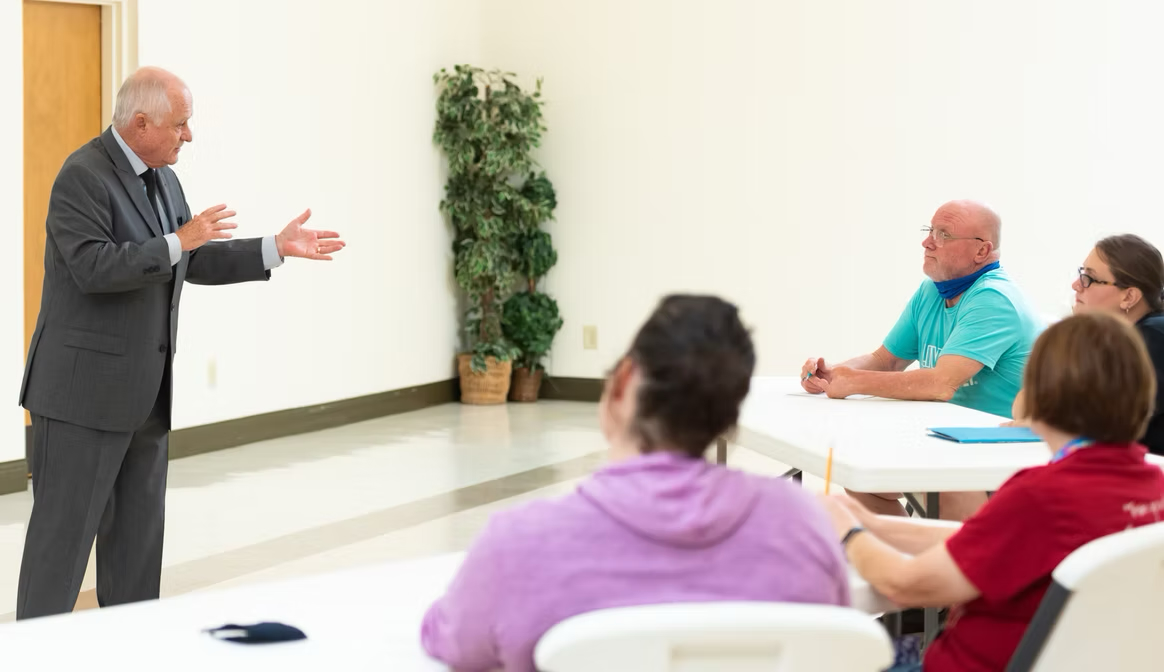
Dr. Mark C. Schug dedicated over fifty years to enhancing understanding and application of economic reasoning among teachers, students, and the general public. As Professor Emeritus at the University of Wisconsin–Milwaukee, he played a critical role in redefining economic education through multiple avenues: classroom instruction, university teaching, research, curriculum development, authorship, editing, and mentorship. His extensive work includes more than 280 publications, ranging from books and articles to national curriculum materials. Notably, 31 of these were authored or co-authored books and monographs, while approximately 131 were journal articles. His scholarship was characterized by rigor and a fervent commitment to improving economic education for learners of all backgrounds.
After receiving his bachelor’s, master’s, and doctoral degrees from the University of Minnesota, Schug began his professional journey as a social studies teacher before joining the faculty of the University of Wisconsin–Milwaukee in 1980. Over his 27 years at the university, he ascended to the position of full professor in the Department of Curriculum and Instruction, serving as Director of the Center for Economic Education for twelve years. His research into how children acquire economic reasoning advanced the field, while his teaching inspired countless educators to weave economics into history, civics, government, and daily decision-making.
Schug’s influence reached well beyond the university. He authored or co-authored over 30 books and monographs, participated in significant national curriculum projects, edited The Senior Economist for a decade, and contributed to numerous themed issues of Social Education, the primary journal of the National Council for the Social Studies. His notable works include Economics: Choices and Challenge, Economic Episodes in American History, Teachers Can Be Financially Fit, and Economic Episodes in Civics and American Government. Through his writings and various presentations, both nationally and internationally, he made economics accessible, engaging, and relevant for educators and their students.
Beyond his academic responsibilities, Schug was deeply committed to professional leadership and community service. He was the founding president of the Business and Economics Academy of Milwaukee (BEAM), a tuition-free charter school that began operation in 2001, focusing on integrating business and economics into all subjects. After eight years of leadership, he continued to support BEAM as board secretary. While directing the Center for Economic Education at the University of Wisconsin–Milwaukee, he launched the Youth Enterprise Academy, a program designed to empower Milwaukee public school students to earn, invest, and save money for their education. Schug was also involved with various educational and civic boards, including BEAM, School Choice Wisconsin, Economics Wisconsin, and the Wisconsin Council for the Social Studies. As president of the Wisconsin Council for the Social Studies and through his other roles, he advocated for teacher professional development and fostered collaboration among educators.
Advocating for educational choice and other reforms, Schug supported initiatives that aimed to enhance educational opportunities. Milwaukee’s 1990 school voucher program was the first of its kind in the nation, serving as a model for school choice reforms that followed. Research indicates that the competition generated by these vouchers prompted improvements in public schools as well.
After 37 years of teaching at various educational levels, Schug retired, yet his journey did not end there. Even as a Professor Emeritus, he remained active in writing, consulting, and fostering professional development through Mark Schug Consulting Services and the Office for the Advancement of Free Enterprise Education (OAFEE). In the latter part of his career, Schug collaborated closely with economist M. Scott Niederjohn, working to advance economics education through joint initiatives, publications, and outreach programs. Together, they hosted OAFEE workshops covering topics such as Economics for Heroes, Economics for Opinion Leaders, and Teaching Economics in American History. They also organized workshops for Canadian journalists as part of the Fraser Institute’s Economics for Journalists program.
After moving to Port St. Lucie, Florida, Schug established the Del Webb Tradition Econ Club, which attracted over a hundred members and regularly featured prominent guest speakers. He also held various leadership roles on the Church Council of St. Andrew Lutheran Church, including president and vice president. His numerous contributions earned him several accolades recognizing his excellence in leadership, research, curriculum development, and service to the profession. Those who knew Mark remember him not only for his exceptional scholarship but also for his kindness, humility, generosity, and genuine desire to uplift fellow educators.
The legacy of Mark C. Schug is far-reaching, encompassing more than just his extensive list of publications, research, and professional service. He devoted his career to simplifying economic concepts for teachers, students, and the general public, significantly impacting how economics is taught in classrooms nationwide. His work has inspired fellow researchers, enriched teacher preparation programs, and motivated several generations of educators to encourage their students to think critically about the choices that individuals and societies face. Mark’s enduring influence persists not only in his written works and developed curricula but also in the lives of countless educators and students who benefited from his unwavering commitment to economic education.
Mark C. Schug: December 23, 1947 – July 13, 2026
Footnotes
[1] Mark C. Schug, Curriculum Vita. (Downloaded from Mark Schug Consulting Services on July 14, 2026. The list of publications on his CV was last updated in 2021 and does not include his latest textbook and other recent publications, while sections such as conference presentations had not been updated since 2013, meaning he actually continued to speak at conferences and conduct workshops until his passing.)
[2] Mark C. Schug, Curriculum Vita; Mark Schug Consulting Services, “About Mark.”
[3] The Senior Economist was a professional publication of the Joint Council on Economic Education, now known as the Council for Economic Education. See Mark C. Schug, ed., The Senior Economist, vol. 1, no. 1 (New York: Joint Council on Economic Education, Fall 1986).
[4] John S. Morton, Mark C. Schug, and Donald R. Wentworth, Economics: Choices and Challenge (McDougal Littell, 1995); William C. Wood, Tawni Hunt Ferrarini, M. Scott Niederjohn, and Mark C. Schug, Economic Episodes in American History, 2nd ed. (Wohl Publishing, 2019); Mark C. Schug, Tawni Hunt Ferrarini, M. Scott Niederjohn, and William C. Wood, Teachers Can Be Financially Fit: Economists’ Advice for Educators (Springer Nature, 2020); M. Scott Niederjohn, Mark C. Schug, Signè Thomas, and William C. Wood, Economic Episodes in Civics and American Government (Wohl Publishing, 2022). Refer to Mark C. Schug’s Curriculum Vita for more information.
[5] Schug presented internationally in countries such as England, Scotland, Russia, Latvia, Sweden, and Canada.
[6] Business and Economics Academy of Milwaukee (BEAM), “About BEAM“; Mark C. Schug, “Restart Your Engine: How to Educate an American,” Econlib, January 4, 2021.
[7] Mark C. Schug and Eric A. Hagedorn, “Milwaukee’s Youth Enterprise Academy: An Eight-Year Study of a Model Program for Urban Youth,” The Social Studies 97, no. 2 (March–April 2006); ERIC, “Milwaukee’s Youth Enterprise Academy: An Eight-Year Study of a Model Program for Urban Youth,” EJ744217; M. Scott Niederjohn, “Schug: A Giant of Economics Education Took Lessons Beyond Classrooms to Anyone Willing to Learn,” Badger Institute, July 16, 2026.
[8] Mark C. Schug, Curriculum Vita; Mark Schug Consulting Services, “About Mark”; Mark C. Schug, “Restart Your Engine: How to Educate an American,” Econlib, January 4, 2021; Mark C. Schug and M. Scott Niederjohn, “Teacher Licensure in Wisconsin—Who Is Protected: Parents or the Education Establishment?“ Badger Institute, February 1, 2011; Mike Ford and Mark C. Schug, “How to Correct Our Schools of Ed,” Badger Institute, October 1, 2013.
[9] School Choice Wisconsin, Parent Choice in Wisconsin; Rajashri Chakrabarti, “Can Increasing Private School Participation and Monetary Loss in a Voucher Program Affect Public School Performance? Evidence from Milwaukee,” Journal of Public Economics 92, nos. 5–6 (June 2008): 1371–1393.
[10] Mark Schug Consulting Services, “About Mark.”
[11] Office for the Advancement of Free Enterprise Education (OAFEE), “Mark C. Schug – Senior Program Advisor & Faculty“; Office for the Advancement of Free Enterprise Education (OAFEE).
[12] Fraser Institute, “Economics for Journalists“; William Watson, “My ‘Aha! Moment’ on Minimum Wages…and More,” Fraser Institute, May 11, 2018.
[13] Mark Schug Consulting Services, “About Mark”; Martin Funeral Home & Crematory, “Obituary of Mark C. Schug.”
[14] Mark C. Schug, Curriculum Vita; Mark Schug Consulting Services, “About Mark.”

