Biden critiques Warren and Sanders regarding the costs of their healthcare plans:
Reuters
The ECB introduces a new stimulus strategy to combat Europe’s economic downturn:
CNBC
China broadens tariff exemptions for certain US goods:
Bloomberg
Trump hints at a possible interim trade agreement with China:
CNBC
US budget deficit exceeds $1 trillion for the first time in seven years:
WSJ
Is the US on the brink of recession or experiencing slow growth?
NY Times
US jobless claims fell to their lowest level in five months last week:
MW
The annual rate of US core consumer inflation surged to an 11-year high in August:
CNBC
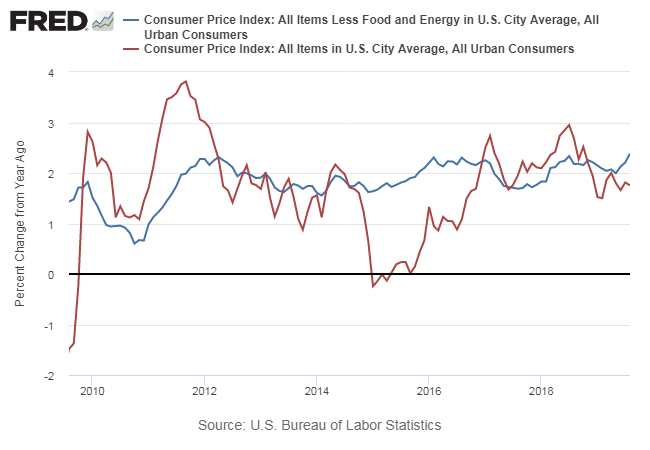
Over the past decade, risk management has become paramount for investors, significantly shaped by the financial crisis and recession of 2008-2009. This event sparked a widespread reevaluation of strategies to mitigate risk without sacrificing potential returns. A key question that arises is whether simplicity can play a competitive role in this context. To explore this, consider a straightforward strategy that alternates between two BlackRock asset allocation ETFs.
Continue reading
Trump postpones tariffs on China as trade negotiations unfold:
BBC
Supreme Court approves new asylum regulations:
CNN
European Central Bank expected to initiate a fresh stimulus package:
CNBC
Potential for a new refugee crisis in Europe looms:
NY Times
US surpasses Saudi Arabia in oil exports for June:
Bloomberg
Wholesale inflation in the US slightly increased to a subdued 1.8% in August:
MW
Eurozone industrial output declined more than anticipated in July:
FT
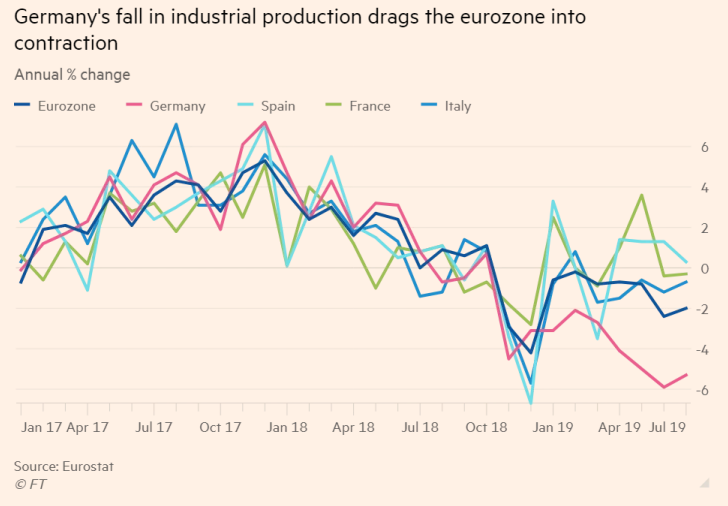
While economic growth has slowed, current indicators do not suggest a significant downturn is imminent. The economy remains on a steady path, albeit at a slower rate.
Trump unexpectedly dismisses Bolton, the national security advisor:
The Hill
Stagnation in median US household income reported for 2018:
WSJ
China lifts tariffs on certain US products:
Axios
Some US companies are canceling investments in China at an increasing rate:
CNBC
California enacts legislation requiring contractors to be classified as employees:
NY Times
Despite a positive outlook, US small business optimism faces challenges as of August:
NFIB
Job openings in the US are still high but have shown a downward trend in July:
CNBC
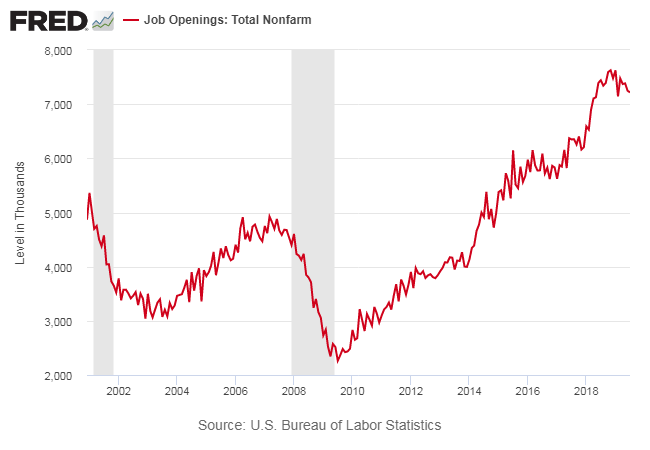
Globally, the economy seems to be slowing, with some experts signaling that the risk of recession is increasing. However, as evidenced by the year-to-date performance of equities in key economic regions, traders do not appear overly concerned.
UK Parliament suspends activities as Brexit reaches a critical stage:
CNBC
Prime Minister Johnson insists on avoiding further delays to Brexit:
Reuters
North Korea launches projectiles despite offering new discussions with the US:
Time
Germany’s 30-year bond yield briefly surpasses 0%:
Reuters
Multiple states intensify their inquiries into Google and Facebook:
Wired
US consumer borrowing in July saw the largest increase since 2017:
CNBC
Perceptions of US debt levels appear far worse than generally acknowledged:
CNBC
While the risk of a US recession seems low, contraction may still arrive soon:
MW
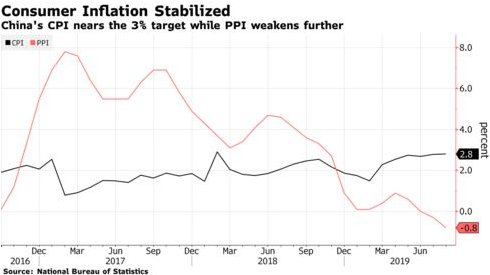
Deflation in Chinese manufacturing suggests a deepening slowdown:
Bloomberg
Emerging markets have witnessed a significant rebound over the past week, achieving the highest performance among major asset classes based on a variety of exchange-traded funds—a notable success during a trading week where nearly all global markets experienced gains.
A typhoon strikes Japan, plunging nearly a million households into darkness:
CNN
About 1,500 deaths in France are linked to the summer heat:
BBC
US job growth lagged expectations in August:
CNBC
The UK economy grew more robustly than anticipated in July:
Reuters
Is China’s economic slowdown more severe than reported?
WSJ
China’s gold reserves increased by 5% in August:
FXStreet
Could a manufacturing recession hinder Trump’s re-election?
Bloomberg
The ‘Volfefe index’ measures the impact of Trump’s tweets on the bond market:
CNBC
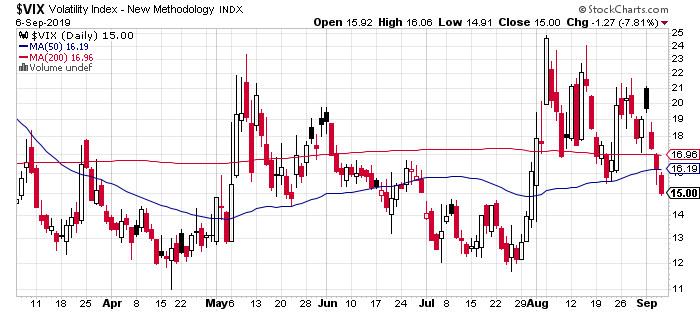
The VIX Index, known as the “fear gauge” for US stocks, fell to its lowest level since July last Friday:

The Economists’ Hour: False Prophets, Free Markets, and the Fracture of Society
By Binyamin Appelbaum
Review via Reuters
What accounts for the rallying cry of “free markets”? This term invokes strong feelings in certain circles. In “The Economists’ Hour: False Prophets, Free Markets, and the Fracture of Society”, Binyamin Appelbaum recounts the outcomes when these ideological proponents were empowered to implement their ideas. This narrative is far from pleasant.
Like many misguided beliefs about society, the notion of free markets appears to be straightforward, alluring, yet fundamentally incorrect. It’s comforting to think that if governments refrain from intervening, markets will naturally self-regulate. This outlook is appealing: it alleviates the need for oversight or assessment if price signals from a self-sustaining market could perform the economic function. However, it is erroneous: human behavior and the contemporary economy do not conform to these economists’ assumptions. Appelbaum’s account offers considerable evidence supporting this view.
Continue reading

This version enhances readability and flow, while retaining the original HTML structure and placements of images and links.