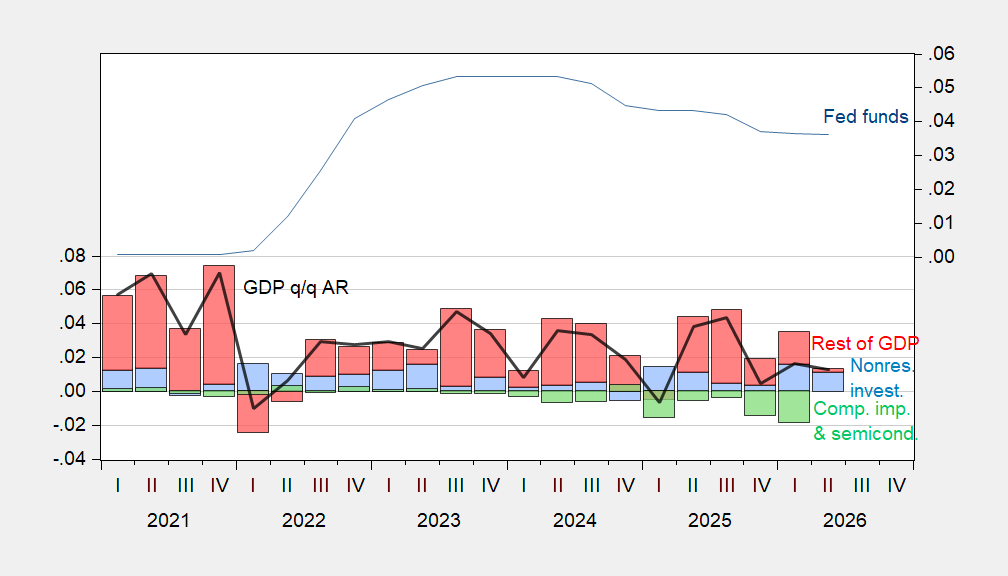
The recent dynamics in macroeconomic conditions have raised questions regarding the relationship between tightening monetary policy and its effect on economic activity, particularly capital investments. Despite increased Fed funds rates, nonresidential fixed investment continued to rise throughout 2022-23.
Key Observations:
-
Economic Growth Composition:
- A significant component of GDP growth is still driven by nonresidential fixed investment, which could potentially be offset in accounting terms by imports from the tech sector, particularly semiconductors and computers.
-
AI Investment Trends:
- Since the launch of ChatGPT in late 2022, investments in AI-related sectors have surged. However, a direct breakdown is lacking, though there are observable shifts in software and information equipment investments.
-
Future Investment Projections:
- Projections indicate that AI investment from major firms could reach $800 billion, reflecting substantial growth. However, historical trends suggest that such investment levels are contingent upon certain economic conditions.
-
Market Influences:
- Stock valuations in major tech firms have decreased, which could lead to a rise in the cost of capital. As the market stabilizes, the wealth effect supporting consumption may also diminish, potentially impacting AI capital expenditures.
-
Financing Changes:
- Companies may begin relying more heavily on external financing—a shift from using internal funds—which may introduce additional risk and higher hurdle rates associated with investments.
Conclusion:
While AI-related investments appeared resistant to interest rate hikes in the past, future conditions suggest a more nuanced landscape. Increased policy uncertainty and rising interest rates may have significant effects on the trajectory of investment in AI and related technologies. Hence, the need for a stable policy environment is critical to sustaining growth in this sector.