Today’s market trends have prompted a downward shift, leaving little refuge for risk assets. The primary driver behind this wave of selling is clear: rising inflation.
This year has seen a remarkable shift in the performance of sectors within U.S. equities. Once-dominant tech stocks have slipped to the bottom of the rankings, while energy stocks have taken the lead, as reflected in various ETFs up to May 11.
* The Israel-Palestine conflict continues to escalate, raising fears of renewed warfare.
* Today’s U.S. inflation report for April is anticipated to reveal a substantial increase.
* Panic buying is evident along the East Coast following pipeline shutdowns.
* The major U.S. fuel pipeline is moving closer to reopening.
* U.S. border detentions climbed to a two-decade high in April.
* While the UK economy contracted by 1.5% in Q1, it rebounded in March.
* Small business optimism increased in April, although hiring remains a challenge.
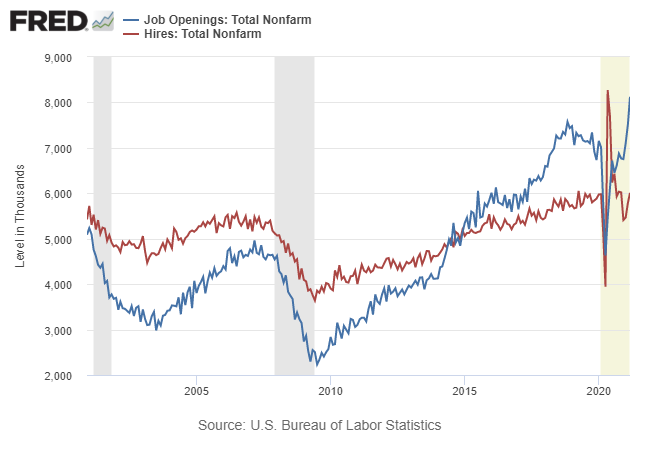
* Job openings in the U.S. surged in March, but hiring showed only modest growth:
The financial world is rife with attempts to derive a theoretical valuation for the stock market, as seen with the CAPE ratio. While equity analysis garners significant attention, similar evaluations focused on key interest rates are just as critical.
* Republicans are expected to oust Liz Cheney from her House leadership role today.
* Israel has intensified airstrikes on Gaza for a second consecutive day.
* A U.S. vessel fired warning shots at Iranian boats during an encounter in the Persian Gulf.
* China’s factory gate prices rose at the fastest pace in over three years in April.
* Concerns arise over whether progressive groups will hinder a potential second term for Fed Chair Powell.
* China’s population experienced its slowest growth rate in decades.
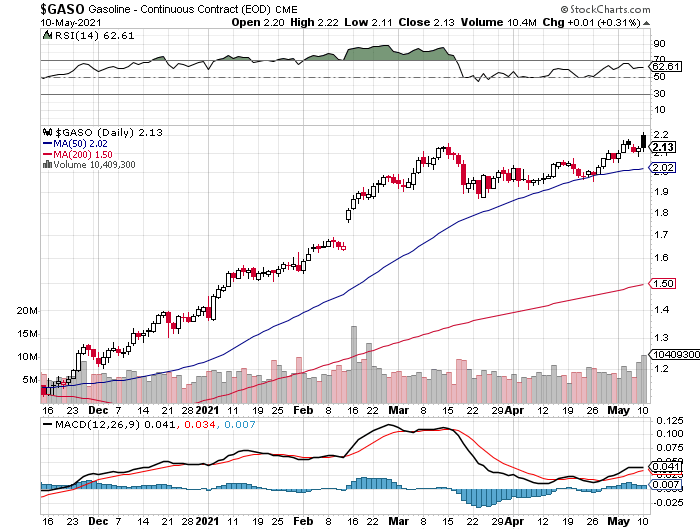
* The pipeline shutdown has triggered worries about potential gasoline price surges.
* As a key fuel pipeline in the U.S. remains offline, gasoline prices remain relatively steady.
Last week, nearly all major asset classes experienced a rally, as gauged by various exchange-traded funds. The only exception was U.S. real estate investment trusts (REITs), which faced a decline through the week ending May 7.
* A major U.S. fuel pipeline remains shut for a third consecutive day following a cybersecurity breach.
* Consumers are feeling the impact of rising prices for a variety of goods and services.
* The recent weak jobs report poses challenges for Biden’s legislative agenda.
* The GOP is bracing for a week filled with intense leadership battles in the House.
* The cryptocurrency sector is seeking lobbyists as regulatory measures loom.
* The U.S. dollar’s share of global foreign reserves declined for the fifth consecutive year in 2020.
* U.S. payrolls showed a much weaker-than-expected gain for April.
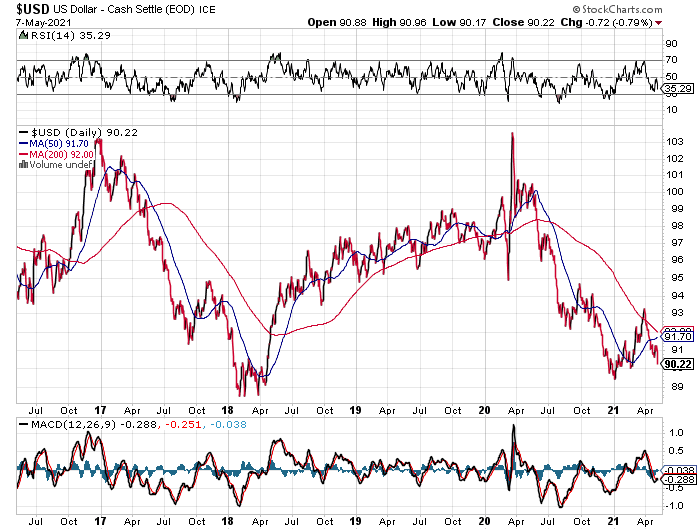
* The U.S. dollar fell to its lowest point in over two months on Friday:
The markets experienced significant activity last week, and our proprietary strategies reflected that momentum. The standout performer was Global Managed Volatility (G.B16.MVOL), which rose 1.5%, surpassing the benchmark, Global Beta 16 (G.B16), which increased by 1.2% for the week ending May 7.

Campbell R. Harvey, et al.
Interview with co-author (Sandy Rattray) via HedgeWeek
According to Rattray – who co-authored a new book on strategic risk management with Professor Campbell Harvey and Otto Van Hemert – the upheavals of the past year have made tail event predictions “almost impossible.”
Their book, “Strategic Risk Management: Designing Portfolios and Managing Risk,” discusses how to integrate risk management within portfolio design and explores strategies for balancing returns through volatility targeting and defensive measures that protect capital.
In this edition:
- Weak U.S. payroll numbers spark rallies across the markets.
- Overall gains observed across the portfolio benchmarks.
Conclusion:
In summary, the financial landscape is dynamic and marked by volatility across various asset classes. With inflation concerns mounting and geopolitical tensions affecting markets, investors must stay informed and adapt to rapidly shifting conditions. The recent performance trends illustrate how quickly sectors can change, emphasizing the need for prudent decision-making in light of economic indicators.

