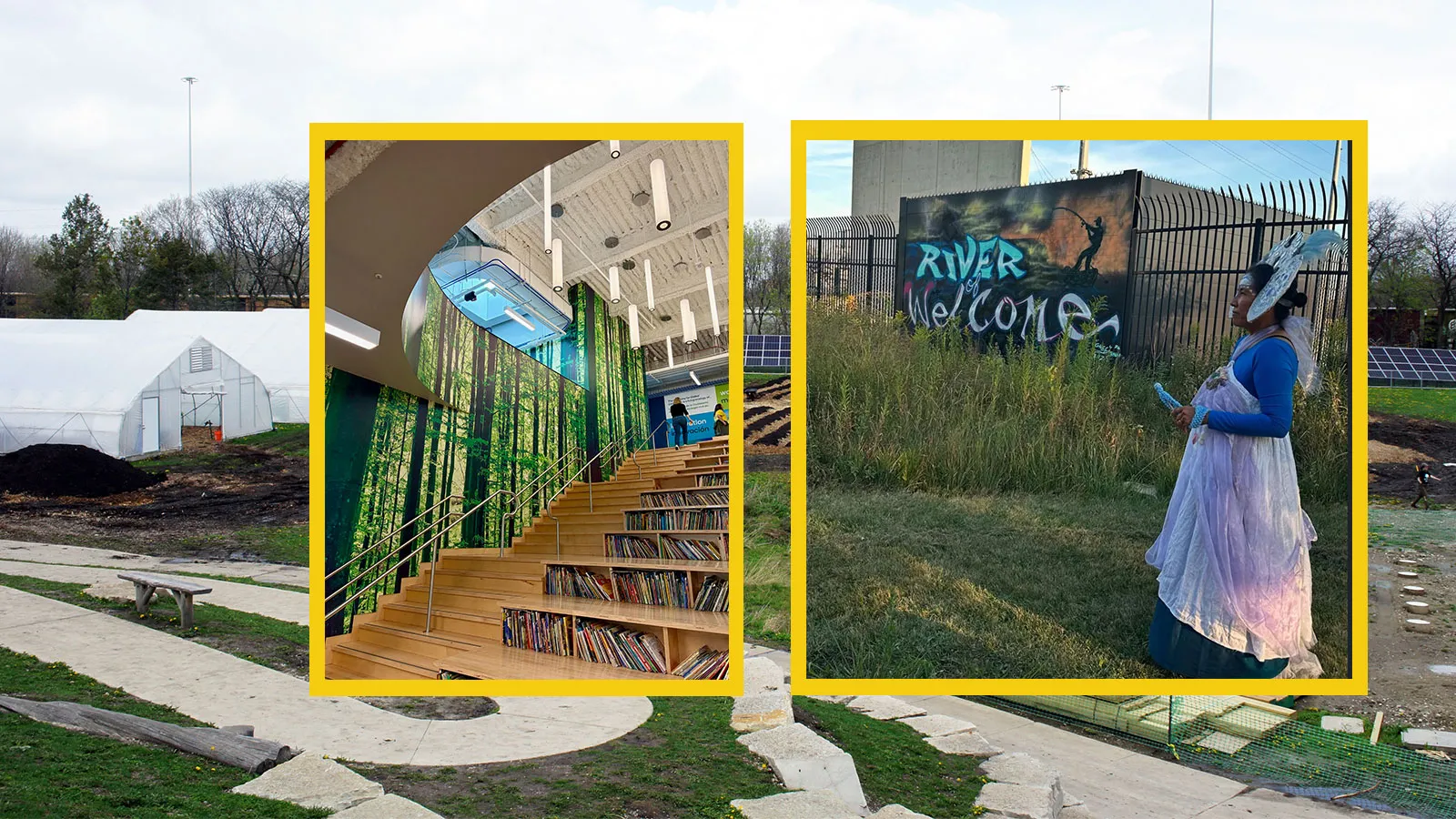
On a beautiful spring day, I made my way to the Academy for Global Citizenship, a K-8 charter school located just two miles north of Chicago Midway Airport. My eyes were immediately drawn to the surrounding overgrown lots, where wild weeds thrived in abundance. This area once was vibrant with community life until fifteen years ago, when the city demolished hundreds of public housing units, displacing families and contributing to the visible decline.
Berenice Salas, the co-principal of the Academy for Global Citizenship, recalls her teenage years walking by the former public housing development, known as “the courts.”
“It was public housing, but there was a computer lab and basketball courts,” Salas reflected. “It thrived in many respects and had many resources.”
Eager to revive the neighborhood’s spirit, or “chispa,” as Salas puts it in Spanish, she and her team are focusing on transforming the land surrounding the school. Initiatives include establishing a farm, rain gardens, planting native species, creating outdoor classrooms, and integrating solar and geothermal energy.
The academy is part of a broader effort aimed at reconnecting Latine communities with nature across three U.S. cities. This initiative, funded by GreenLatinos, a national environmental organization with support from the Bezos Earth Fund, amounts to $2.6 million invested in Chicago, Los Angeles, and Albuquerque, emphasizing environmental sustainability.
Leaders at the academy anticipate generating 10,000 pounds of produce in their first year, intended to nourish students and offer affordable options for the community. During my visit, I witnessed a group of younger students delightfully delivering trays of freshly picked strawberries to the kitchen staff.
Additionally, the initiative is improving Chicago’s Canal Origins Park, a nearly three-acre green space about six miles northeast of the academy, alongside creating an urban farm and enhancing recreational access to the Calumet River, prioritizing areas where Latinos can engage in these welcomed changes.
This effort is crucial, as nearly 70% of Latines reside in nature-deprived regions. Research highlights a range of benefits linked to access to natural spaces, such as enhanced mental well-being, increased physical activity, lower blood pressure, and a heightened sense of community. As climate change exacerbates unpredictable weather patterns, the planting of trees and greenery can help manage urban temperatures and mitigate flooding impacts. A recent Nature Communications study indicated that trees play a critical role in cooling urban areas.
“These projects go beyond mere beautification,” emphasized Lucy Contreras, the Illinois state director at GreenLatinos. “They address longstanding issues of disinvestment, pollution, and unequal access to green spaces in Latino and frontline communities.”
Much of Chicago’s South Side, including the six-acre Academy for Global Citizenship campus, faces challenges from surrounding polluters such as highways, railroad lines, and the airport. This environment contributes to local asthma rates, which are among the highest in the area.
Across the nation, wealthier and predominantly white neighborhoods are disproportionately privileged in their access to nature. Chicago mirrors this trend, with Latine neighborhoods featuring 33% less park space than the city’s average. A 2023 study found links between lower green space coverage and reduced life expectancies in Black and Latine communities in Los Angeles.
“Urban greening transcends simply planting trees,” Contreras noted. “It is fundamentally a public health concern.”
In a city like Chicago, heat poses a particularly pressing issue. Juan Declet-Barreto, a senior social scientist for climate vulnerability at the Union of Concerned Scientists, referenced the devastating heat wave of 1995 that claimed over 700 lives. Since that event, Chicago has enhanced its emergency notification system, established cooling centers, and identified its most vulnerable residents.
“While that heat wave occurred decades ago, its lessons remain relevant in prioritizing the needs of society’s most vulnerable,” Declet-Barreto explained.
He painted a stark contrast between the experiences of white-collar workers and immigrant families during heat waves. A white-collar worker enjoys the comfort of air conditioning in their car and office, while an immigrant laborer may arrive at work in the back of a pickup truck or bicycle, exposed to the sun without adequate protections. Often lacking health insurance and unable to afford air conditioning at home, these immigrant families face unique challenges.
“These scenarios illustrate the varying levels of heat exposure that people experience under the same sun as a result of their circumstances,” Declet-Barreto remarked.
Green Spaces Keep Neighborhoods Cooler
By enhancing tree and vegetation coverage, neighborhoods can enjoy significant relief, feeling up to 14 degrees Fahrenheit cooler.
During my visit to Canal Origins Park, I was startled to see a beaver gnawing away on one of three oak trees while a chorus of birds—northern cardinals, red-winged blackbirds, brown creepers, and yellow-rumped warblers—filled the air with their melodies.
Similar to the Academy for Global Citizenship, Canal Origins Park wrestles with industrial surroundings, including a 30-acre data center, a chicken-processing plant, and a now-closed coal plant. Thanks to community leaders in Little Village and Pilsen, the coal plant was shut down 14 years ago, and efforts are now focused on revitalizing the park.
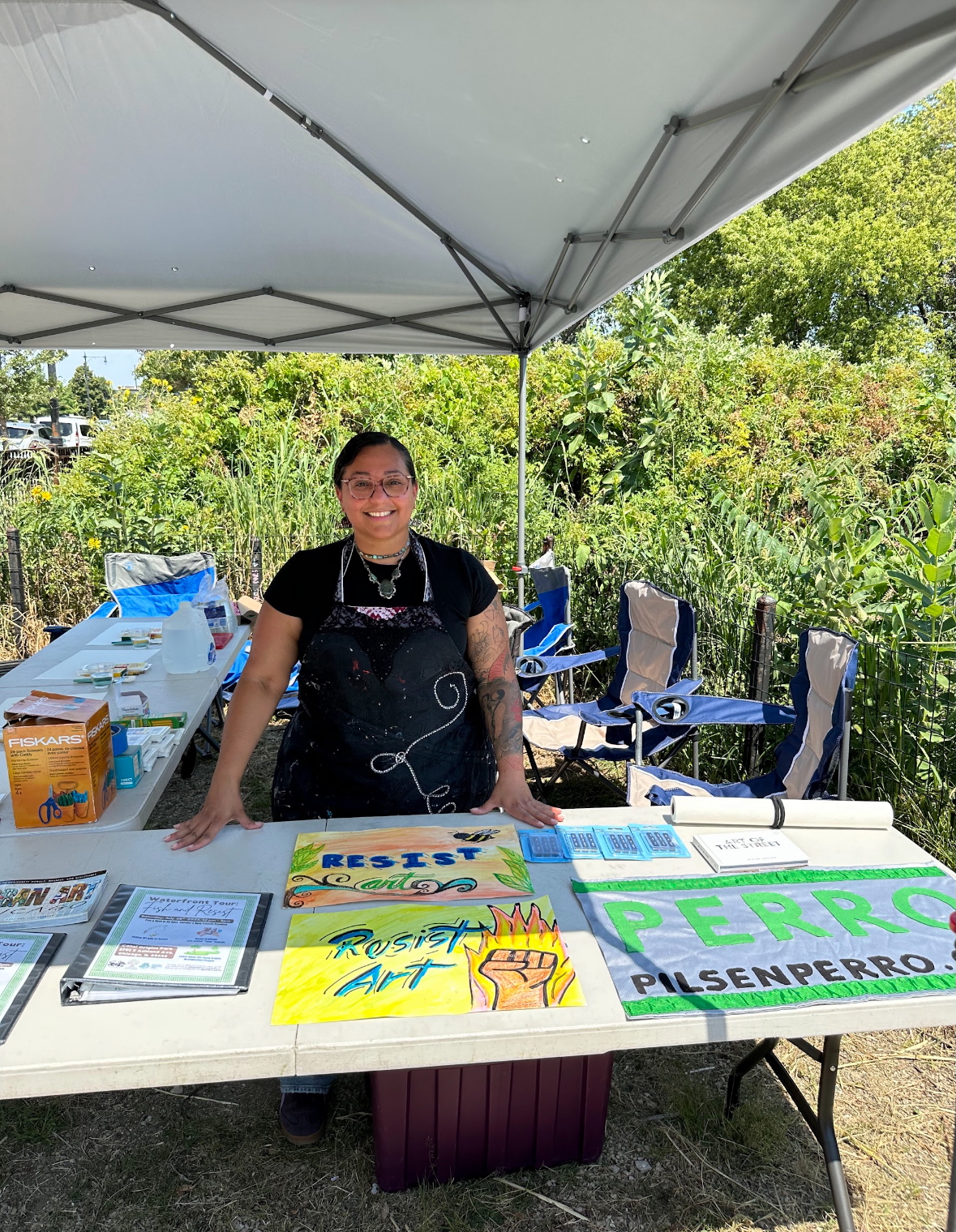
“Growing up in Pilsen, I wasn’t allowed to play outside due to safety concerns before gentrification,” shared Rebecca Ramirez, a member of the Pilsen Environmental Rights and Reform Organization (PERRO). “My mom kept my brother and me indoors.”
“I experienced the same,” added PERRO President Zitlalli Paez. “There was a lot of gang violence, and my mom kept me inside.”
The organization is committed to breaking this cycle for younger generations. Eighth graders from the Academy participated in a cleanup effort at the park last February. PERRO is dedicated to incorporating community feedback; they’ve engaged approximately 190 locals at various events, including one featuring Mexican folklorico dancers. By August, they plan to unveil a $190,000, 24-square-foot picnic pavilion equipped with accessible tables.
As we prepared to leave Canal Origins, I noticed a group of rowers on the water, prompting memories of Salas. During her high school years, she was part of the institution’s inaugural female rowing team.
“We had a rickety, hand-me-down boat, but we made it work,” she recalled fondly. “We wore black biking shorts and a plain white t-shirt—that was our uniform.”
The rowing team practiced at Canal Origins Park, launching from a modest dock. While navigating up the Chicago River, they would often pull up disturbing remnants, yet their journey would eventually lead them to cleaner water.
That’s what residents of Chicago’s South Side, particularly among the Latine community, aspire to achieve: clean waters suitable for swimming and green parks perfect for relaxation.
The Benefits of Access to Nature in Schools
Back at the Academy for Global Citizenship, Salas shared her father’s past as an organic bean farmer in Mexico, a lifestyle he left behind when migrating to the U.S.
“I see many parents here who also long for that connection,” she remarked. “They miss their roots.”
One memorable moment occurred when a student’s mother wanted to utilize a dried-out squash from the garden as a natural sponge.
“That’s a reflection of our heritage,” Salas noted. “Many towns in Mexico are incredibly resourceful because they need to sustain their communities with what they can grow.”
Third grader Kara Solis-Cortes is an active member of the academy’s Green Team. Excitedly, she shares details of their recent seedling sale and honey harvest from the school’s beehives.
“I don’t spend a lot of time at school, so yippee!” she exclaimed playfully.
She’s absolutely right—many students thrive outdoors.
This outdoor approach yields tangible results: Salas mentioned how students often request to take walks to help themselves focus. The school’s design ensures that no matter where students are, they can look outside through a window—except in the restroom.
This Type of Education Comes at a Price
While the academy’s leaders hope that other educational institutions can replicate their model, the challenge is significant. The school was built at a cost of $53 million, financed through private philanthropy, state funds, and federal tax credits. Its operational expenses amount to $22,100 per student each year, similar to other Chicago charter schools.
Yet, the true value of this educational approach cannot be measured purely by cost.
Eighth grader Camila Ontiveros, who sports round glasses and braces, explained how she can concentrate better when lessons take place outdoors, with fellow eighth grader Emily Gaytan nodding in agreement.
On picture day, I met another eighth grader, Joaquin Cervantes, dressed sharply in a dark suit. He lit up as he spoke about teaching his father how to cultivate chilies in their backyard.
“He didn’t know much about gardening,” Cervantes shared, “but thanks to what I learned at this school, I’ve gained skills in gardening and soil preparation. Now, I can grow flowers and vegetables.”