The current state of Iraq is severely impacted by ongoing geopolitical tensions, particularly influenced by the policies of the Trump administration regarding Iran. Whether intentional or incidental, these actions have led to catastrophic consequences for Iraq, resulting in compromised trade routes, a steep decline in crude oil exports—critical to the nation’s economy—and rising inflation that is depleting foreign currency reserves rapidly.
Iraq relies heavily on oil exports, accounting for over 90 percent of its national revenue. According to a 2021 report by Carbon Tracker, this reliance places Iraq as the world’s most fossil fuel-dependent country, with no close contenders.
Recent analyses from Eco Iraq, an economic observatory, indicate that Iraq has forfeited approximately 350 million barrels worth around $37.7 billion in oil exports since February 28. This loss equates to nearly 30 percent of the annual budget evaporating in a mere three months, further complicated by a projected 16 percent drop in oil income in 2025 due to weakened market prices.
Financial Dependencies and Sanctions
The gravity of the situation is compounded by the United States’ control over Iraq’s oil revenues. Following the 2003 invasion, a system was established whereby Iraq’s oil export earnings are deposited in the US Federal Reserve before being sent to Iraq—typically. However, with the onset of the conflict against Iran in February, the U.S. halted dollar shipments to Iraq, escalating pressure on Baghdad to dismantle Iranian-backed factions within its borders.
Reports indicate that dollar shipments resumed recently after U.S. envoy Tom Barrack’s visit to Iraq. However, these developments were accompanied by additional threats. As The New Arab reported:
After the Barrack–al-Zaidi meeting, the U.S. State Department issued a statement resembling demands rather than mutual agreements, detailing political, economic, and security conditions the Iraqi government must fulfill to receive U.S. support and avoid what was described as “massive” sanctions.
These conditions included calls for disarming armed factions, dissolving militias, and preventing threats to neighboring nations from Iraqi territory, along with stipulations regarding American business operations in Iraq.
In response, Prime Minister Ali al-Zaidi’s office nearly mirrored this statement, emphasizing government responsibilities to:
“Enforce plans for full disarmament and dissolution of all armed groups operating outside the authority of the Iraqi state, restrict arms solely to the state, and uphold national sovereignty to prevent conflicts and any party from using Iraq to threaten regional stability.”
As per official announcements from both countries, Prime Minister al-Zaidi is expected to visit the White House in mid-July to explore the future of U.S.-Iraq relations.
This month, Iraq was placed on the Financial Action Task Force’s grey list, raising scrutiny on banking transactions and increasing costs, hindering efforts to attract foreign capital. This placement is seen as a potential precursor to sanctions unless Baghdad aligns with U.S. expectations.
In a recent event to appoint a new central bank governor, Prime Minister Ali al-Zaidi emphasized the need to progress with banking reforms initiated by his predecessor. Insights from The National reveal:
Since late 2022, the U.S. Treasury Department has scrutinized Iraq’s banking sector for money laundering and facilitating access to U.S. dollars for Iran and other sanctioned nations.
In response to U.S. pressure, the previous administration imposed stringent controls on dollar transactions, requiring detailed accounting of imported goods and ended with activating an electronic payment system, encouraging banks to enhance services, and prompting both businesses and the public to open accounts.
Progress has been sluggish, however, as state banks and cash payments still dominate, leading to accusations against Iraqi banks of assisting Iran in evading sanctions.
Nazar Nasser Hussein, the newly appointed chief of the central bank, specializes in anti-money laundering.
Potential Economic Relief on the Horizon
Discussions from Barrack’s mid-June meeting with al-Zaidi yielded notable developments, including:
- A contract with Texas-based Excelerate Energy to create an LNG Floating Storage and Regasification Unit at the southern port of Khor al-Zubair, estimated to reduce Iraq’s dependency on Iranian natural gas by 30 to 35 percent.
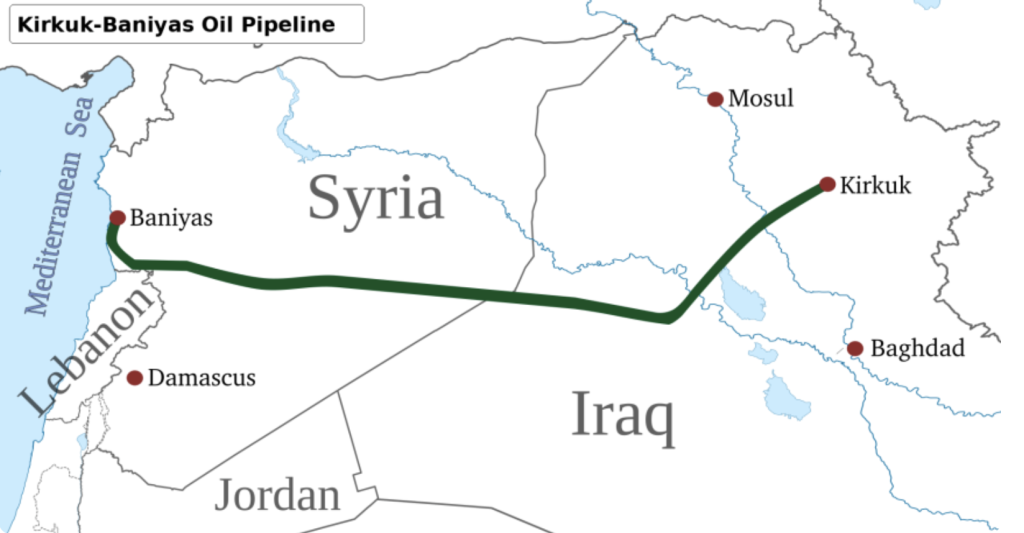
- A memorandum of understanding with Los Angeles-based TI Capital aimed at rehabilitating the Kirkuk-Baniyas oil pipeline, restoring a vital link from northern Iraq’s oil fields to Syria’s Mediterranean coast, which has remained inoperative since the early 1980s.

- Commitment from the Iraqi Federal Armed Forces to ensure the security of the Kurdistan Region’s energy infrastructure, enabling three American upstream companies (HKN Energy, Western Zagros, and Hunt Oil) to resume immediate full-scale production. According to Iraqi News:
Going forward, federal anti-air units, localized border patrols, and joint intelligence operations will protect these foreign assets from non-state drone and missile attacks, highlighting a strong alliance between Baghdad and Erbil.
However, the feasibility of these plans remains uncertain. Facing intense pressure from Washington, Baghdad seems compelled to comply, but delivering on these agreements poses its own challenges.
Additionally, the pressure is not solely from the U.S.
Negotiations with Türkiye
Currently, Iraq is exporting between 150,000 to 200,000 barrels per day through the Kurdistan Region’s pipeline to Turkey’s port of Ceyhan. This pipeline was previously shut down for approximately two-and-a-half years after an international arbitration ruled in favor of Iraq, which mandated Turkey to pay $1.5 billion for exports conducted without Baghdad’s consent during 2014-2018. Although oil shipments resumed in late 2025, another suspension could be imminent.
The agreement concerning Iraq’s oil pipeline with Turkey is set to expire on July 27, posing a threat to Iraq’s primary export routes amidst disruptions in the Strait of Hormuz. Ankara, understanding its leverage, is seeking increased transit fees, investment assurances to mitigate the earlier ruling, and additional oil supplies.
Interestingly, Barrack visited Ankara just before his trip to Iraq.
Productive meeting with FM @HakanFidan ahead of the NATO summit in Ankara. As strong allies with many shared goals, the U.S.-Türkiye partnership is delivering results. 🇺🇸 🤝 🇹🇷 https://t.co/IMcs6Wh835
— Ambassador Tom Barrack (@USAMBTurkiye) June 12, 2026
Meanwhile, the older Kirkuk-Ceyhan pipeline remains non-operational as Iraq continues extensive repairs, which could eventually allow for an additional 1.6 million barrels per day in exports.

Increased Pressure on the Kurds
While Turkey threatens not to renew the Kurdistan pipeline agreement, Barrack is pressuring Kurdish leaders to align with Zaidi’s security and oil strategies or risk losing U.S. backing. As the U.S. envoy to Türkiye and presidential envoy to Syria and Iraq, Barrack likely aims to leverage U.S. influence to negotiate with Turkey for uninterrupted oil flow.
On the surface, it appears the U.S., despite shortcomings in Iran, has managed to distance Baghdad from Tehran. However, certain concerns persist.
One significant factor often overlooked in discussions about U.S. agreements with the al-Zaidi government is Iran’s substantial influence in Iraq, particularly over the Popular Mobilization Forces, which have targeted U.S. bases in the country and the Gulf states.
In recent weeks, various armed groups in Iraq have expressed intentions to integrate with national security forces. This includes militias under cleric Muqtada al-Sadr and the Popular Mobilization Force’s leadership.
Iraq has repeatedly made promises about curtailing militias and pursuing alternative oil export paths, yet the results have been minimal. The current chaos in the Strait of Hormuz may serve as a motivating factor, or it could just as easily stall progress. As reported by Al-Monitor:
The statements regarding integration and reform are met with skepticism, with many viewing them as a tactic influenced by Iran to provide Iraq with breathing space amid escalating financial distress.
Ultimately, Zaidi faces obligations to the Coordination Framework, an alliance of Shiite parties responsible for his selection, as analysts note. Yet he will seek to carve out more autonomy in his political maneuvers.
Maria Fantappie, who leads the Mediterranean, Middle East, and Africa Program at the Istituto Affari Internazionali in Rome, observed, “The new PM embodies a network tethered to Iran-aligned groups. He is also pragmatic, aiming to balance U.S. relations while reducing Iranian ties, but mismanagement of U.S. pressure could backfire and strengthen his reliance on Iranian influence.”

