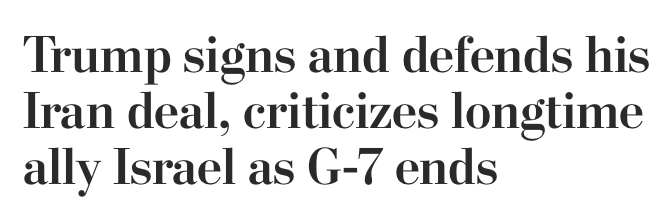
As the situation continues to evolve in Iran, it has become increasingly clear that the dynamics of power in the region are shifting. The possibility of a negotiated settlement to end hostilities between the U.S. and Iran raises several challenges and implications for existing power structures. This article provides an overview of the recent developments regarding the Memorandum of Understanding (MOU) signed by key players and its potential ramifications.
While it would have been preferable to be mistaken about the inevitability of ongoing conflict between the U.S. and Iran, the potential for a deal that parallels a U.S. capitulation cannot be ignored. This scenario could be interpreted as a step towards regime change, one of the alternative conclusions previously discussed. Regardless of whether a final agreement materializes, it is clear that Iran has emerged as a newfound dominant force in the Middle East, further diminishing perceptions of U.S. global primacy.
The full text of the Memorandum of Understanding (MOU), as disclosed in a recent press briefing, can be found in Footnote 1. Trump signed this document in Versailles, seemingly oblivious to the historical context of the 1918 Treaty of Versailles that marked the end of World War I. It is crucial to remember that the probability of successfully completing this deal remains low, and the proposed 60-day deadline appears overly ambitious. Compounded by the fact that the U.S. delegation is led by individuals inexperienced in international relations, including a real estate mogul and a politically unseasoned Vice President, and affected by staff turnover in Trump’s administration, the challenges are manifold. Alastair Crooke has pointed out that reaching a ceasefire is merely the first step; opponents outside this agreement may actively work to drive a wedge between the negotiating parties. The U.S. has effectively agreed to oversee Israel’s withdrawal from Lebanon—something Israel vehemently opposes. Moreover, Iran maintains that no agreement is definitive until all matters are resolved, signaling potential areas of contention ahead.
Further complicating negotiations, Robert Pape emphasizes that global oil supplies will remain precarious during discussions and may tighten, thereby increasing Iran’s leverage. Iran’s strategy may involve adopting a hardline stance, with threats to close the Strait of Hormuz if Israel does not comply. Any slowdown in traffic through this critical waterway would alarm shippers, disrupt oil supply lines, and prolong negotiations. Such tactics may serve to bolster Iran’s economic leverage, especially if deadlines are extended. It’s crucial to note that these talks could exacerbate Trump and the Republican Party’s challenges ahead of the upcoming midterm elections.
In case there were any lingering uncertainties:
Indeed, Iran has secured total victory. https://t.co/LTPYFQPPHx
— Noah Smith 🐇🇺🇸🇺🇦🇹🇼 (@Noahpinion) June 18, 2026
Last night, the White House presented the final details of the MOU. As outlined in Paragraph 1, both the U.S. and Iran aspire to bind their allies to halt hostilities, explicitly including “ensuring the territorial integrity and sovereignty of Lebanon,” which necessitates an Israeli withdrawal from the region. More details will follow in subsequent sections of this article.
Paragraph 13 stipulates a sequential implementation of the agreement, requiring immediate action on Paragraphs 1, 4 (end of the U.S. naval blockade; a commitment to reduce troop presence after 30 days), 5 (Iran’s restoration of traffic in the Strait of Hormuz for the first 60 days without charge), 10 (termination of sanctions and issuance of waivers), and 11 (release or access to frozen assets). Failure to comply with any of these points allows either party to suspend negotiations or withdraw completely.
It seems improbable for the U.S. to fulfill the commitments outlined in Paragraph 6:
The United States will collaborate with regional partners to develop a comprehensive plan for the reconstruction and economic development of Iran, estimated at U.S.D. 300 billion. The framework for executing this plan will be finalized as part of the final deal within 60 days, with all licenses, waivers, and permissions required for the associated financial transactions granted by the U.S.
Initiating infrastructure projects of such magnitude is inherently complex and requires substantial financial input. Iran may not be amenable to relinquishing ownership of the assets involved, making U.S. influence over funding from other Gulf states less likely. The U.S. has deteriorated relations with these states due to its military actions, complicating the situation further.
Should the U.S. fail to meet its commitments, Iran could advance its control over the Strait of Hormuz and charge fees after 60 days. It is plausible that Iran understands the U.S. will not meet this requirement and may take advantage of this situation to extract significant concessions from the Gulf states instead of continuing to fund reconstruction. Robert Pape posits that Iran will aim to maximize its power, with the ultimate goal of expediting the withdrawal of U.S. forces from the region.
In a dissenting opinion, I believe our respected Auerlien has misjudged the significance of the UNSC resolution mentioned in Paragraph 14. Though he perceives it as intended to embarrass the U.S. politically, I contend it carries considerable symbolic weight. Iran has faced multiple UNSC sanctions, and the passing of this deal would assert its position as a rightful player on the international stage, despite prior aggression directed at it.
The media’s reporting of the MOU has varied significantly, with only some outlets clarifying that the agreement is far from finalized:
From the Washington Post:

USA Today remains notably vague:

The Wall Street Journal even neglects to mention “the deal” on its front page:

Conversely, Fox News emphasizes the positive:

The Financial Times, in contrast, places “the deal” at the forefront:

Meanwhile, the BBC has reported:

In a surprising turn, Bloomberg provides a well-rounded critique of the MOU, often heralded by its cheerleaders, outlining its shortcomings in relation to U.S. and Israeli goals:

Recently, President Trump and his team outlined several red lines that justified U.S. military intervention in Iran. During a Wednesday press conference, Trump dismissed these stipulations.
Trump reiterated that the country would never develop nuclear weapons but suggested that Iran should be allowed to enrich uranium, develop ballistic missiles, and access billions in frozen funds.
These three elements have long been contentious points regarding U.S.-Iran relations, dating back to the 2015 agreement signed under President Barack Obama to curb Iran’s nuclear activities.
Despite a history of hard-line positions, Trump has frequently reversed course swiftly.
Nevertheless, many statements during this press conference surprised even his staunchest supporters.
Regarding Iran’s missile program, Defense Secretary Pete Hegseth stated the U.S. sought to “neutralize the missile threat” posed by Iran. Trump dismissed this notion, criticizing advisors for placing focus on ballistic missiles. “They need to have some because other nations do,” he argued.
Similarly, he dismissed the longstanding concern about nuclear enrichment. He previously demanded Iran abandon enrichment entirely; now, he claimed it was an unreasonable demand given regional dynamics. “It doesn’t make sense,” he stated.
The stance on frozen assets also evolved. Iran’s substantial overseas funds have been blocked, based on claims of its sponsorship of terrorism. Trump suggested, “It’s not our money; we froze it at one point,” implying it should be returned.
The Wall Street Journal captures the essence of Trump’s reasoning behind the deal:
Trump, in an unexpected turn, signed the agreement in Versailles and cited the stock market’s favorable performance as motivation. He expressed a desire to avoid comparisons to former President Herbert Hoover, who presided over the economic collapse in 1929.
“I didn’t want to see an economic disaster,” Trump explained.
Notably, the Journal also underscores that initial negotiations are set to commence in Switzerland and that the 60-day timeline is not rigid.
Interestingly, the Journal did not mention crucial factors prompting Trump’s change in stance, especially the looming energy crisis. An article from The Hill reveals Trump’s assertion that U.S. oil reserves could be depleted in four weeks without access to Iranian production:
Trump highlighted that the country could exhaust its reserves within four weeks if the Strait of Hormuz remained closed, which he deemed catastrophic. “This deal allows shipments to proceed,” he noted. “If we continue military actions, we won’t achieve that.”
This timeline aligns with anticipations regarding potential oil shortages. While resuming oil flow through the Strait is essential, various factors could hinder supply recovery. The imminent energy cliff implies urgency in negotiations; any escalation from Iran could exacerbate an already precarious situation, particularly if Israel continues its aggressive tactics.
At a recent conference, Robert Pape laid out how the MOU symbolizes U.S. capitulation and how the energy crisis empowers Iran to demand greater concessions throughout the negotiation process:
Aljazeera’s live coverage corroborates that Israel remains non-compliant with the MOU:
- U.S. President Donald Trump and Iranian President Masoud Pezeshkian have electronically signed an MOU aimed at terminating the conflict.
- Israeli forces have continued military operations in Lebanon, despite being included in the U.S.-Iran memorandum.
In addition:
⚠️ Breaking: Israel has executed a drone strike in Kfar Tebnit, Lebanon, violating the Iran-U.S. MOU.
— Ehsan Safarnejad (@Safarnejad_IR) June 18, 2026
Israeli National Security Minister Ben-Gvir asserts that Israel will persist with its military efforts in southern Lebanon:
Israeli National Security Minister Ben-Gvir:
We cannot cease operations in southern Lebanon. Our control over this territory is non-negotiable, irrespective of Trump’s stance.
— Clash Report (@clashreport) June 17, 2026
Notably, Israel could potentially withdraw from Lebanon through expulsion rather than a voluntary retreat, if Iran’s leverage increases:
Hezbollah is actively weakening the remaining Israeli presence in southern Lebanon—escalating attacks reported.
— Hadi (@HadiNasrallah) June 18, 2026
For further insights, please click through. Some points align closely with Pape’s analyses:
Israel perceives the MOU as a significant strategic defeat. Here are their key concerns:
1) Immediate sanction waivers without Iran giving concrete concessions benefits its economy.
— Shaiel Ben-Ephraim (@academic_la) June 17, 2026
Economically, Jeff Currie reiterates predictions for heightened oil prices:
On Twitter, Jack Prandeli highlights logistical challenges confirming Currie’s perspective that normalization may be delayed, thus exacerbating the energy crisis:
PetroChina and Indian Oil faced significant hurdles in securing tankers for oil shipments, citing exorbitant costs and hazards of navigation through Hormuz.
This discrepancy illustrates the difference between market conditions and reported optimism. Shipping and insurance costs have surged.
Bear in mind, pricing conditions may shift rapidly in the near term.
Lastly, unfavorable developments may signal further issues ahead:
Pete Hegseth undermined the Iran MOU on its first day by threatening military action against Iran.
— Garland Nixon (@TheGarlandNixon) June 18, 2026
As we conclude for now, the unfolding developments regarding Iran will largely depend on Israel’s forthcoming actions and the broader geopolitical implications. The situation remains fluid and requires ongoing observation.
_____
📌 Islamabad Memorandum of Understanding between the United States and the Islamic Republic of Iran.
The text of the MOU, as read out during a conference call with reporters:
🔹Paragraph 1
The United States and the Islamic Republic of Iran declare an immediate cessation of military operations on all fronts, including Lebanon, without initiating any further hostilities and respecting Lebanese territorial integrity.
🔹Paragraph 2
Both nations commit to respecting each other’s sovereignty and territorial integrity, refraining from involvement in each other’s internal affairs.
🔹Paragraph 3
The parties shall negotiate a final deal within a maximum of 60 days, extendable by mutual agreement.
🔹Paragraph 4
Following the signing of this MOU, the U.S. will begin dismantling its naval blockade, concluding within 30 days, while normalizing shipping traffic previously disrupted by military actions.
🔹Paragraph 5
Iran will use its best efforts to restore safe passage for commercial vessels from the Persian Gulf to the Sea of Oman for 60 days without charge. Arrangements will be made in cooperation with Oman and other Gulf states.
🔹Paragraph 6
A U.S.-led initiative for a reconstruction plan estimated at USD 300 billion will be developed with regional partners.
🔹Paragraph 7
The U.S. will terminate all sanctions against Iran in an agreed-upon schedule as part of the final deal.
🔹Paragraph 8
Iran will reaffirm its commitment to not develop nuclear weaponry, with mutual discussions to determine the fate of enriched materials in stock.
🔹Paragraph 9
Both nations agree to maintain the current status of Iran’s nuclear program, halting new sanctions and military deployments in the region during negotiations.
🔹Paragraph 10
Immediate sanction waivers for the export of Iranian oil and associated services will be issued.
🔹Paragraph 11
Frozen or restricted Iranian funds will be made fully available upon compliance with this MOU, with mutually agreed release procedures established.
🔹Paragraph 12
A monitoring mechanism will be set in place for ensuring compliance with this MOU and future agreements.
🔹Paragraph 13
Negotiations for a final deal will commence after the initial steps outlined in the MOU have been instituted.
🔹Paragraph 14
A binding U.N.S.C. resolution will endorse the final deal.


