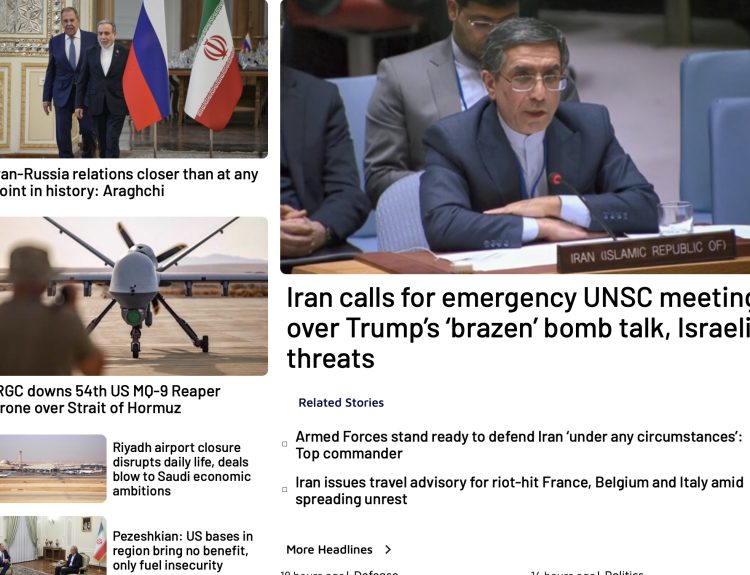
As the U.S. military grapples with its setbacks, especially following the failed campaign in the Middle East, there may be mounting political pressure in Washington for a swift show of restored American strength. In search of a more manageable target, Cuba could emerge as an appealing option—a vulnerable adversary that is geographically close and seemingly weak.
The journey toward potential confrontation with Cuba is likely to unfold gradually. Current political discourse suggests that intensified pressure on Cuba could be on the horizon, supported by increased naval deployments and military activities in the Caribbean. This normalization of direct confrontation is permeating both policy discussions and media reporting. It is anticipated that before any overt military action is considered, Washington will ramp up sanctions, enhance maritime interdiction efforts, amplify accusations of regional instability, and portray the Cuban government as a persistent threat to hemispheric security.
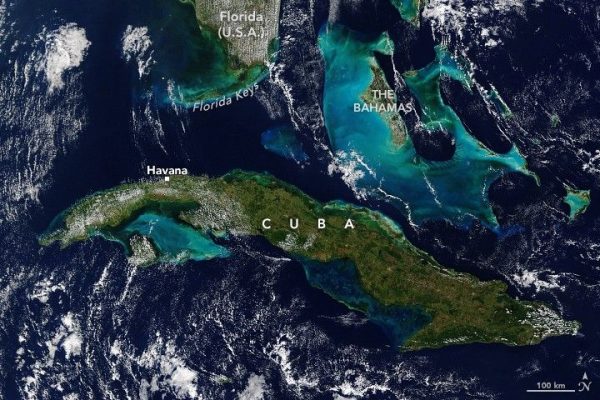
Cuba – In easy reach?
This inclination towards escalation could be fueled by the perceived success in coercing Venezuelan leadership following U.S. pressure tactics. Even if Venezuela remains unstable, the visible surrender of its leaders may lead Washington to dangerously conclude that neighboring governments in the Caribbean are equally fragile and susceptible to military force. Policymakers might convince themselves that hostile regimes can quickly collapse under the weight of overwhelming American power. By the time military intervention becomes part of the mainstream conversation, much of the necessary psychological and political groundwork for escalation could be firmly in place.
Military Factors
From a basic military standpoint, the rationale might seem convincing. Cuba is situated just ninety miles from Florida, giving the U.S. significant geographic advantages, as it wields overwhelming naval and air superiority. The Cuban economy is fragile, its military hardware is outdated, and its strategic isolation is notable. Compared to the complexities associated with operations in the Middle East, Cuba could appear to offer a prospect for a swift and visible victory. However, this simplicity carries strategic risks.
Military planners often perceive force as a controllable application of power. In reality, modern geopolitical systems act more like stressed materials, where the impact of military force extends beyond the immediate area, causing fractures that ripple outward and result in destabilization far from the initial engagement.
An intervention in Cuba would likely commence as a limited coercive effort designed to re-establish credibility and assert hemispheric dominance. However, it could rapidly escalate into a broader military, political, economic, and diplomatic crisis, far exceeding the initial intentions of its architects. The false assumption that the consequences could remain contained would pose a significant threat.
Escalation Logic of Intervention
The operational rationale for intervention would likely develop gradually. Initial coercive actions designed to demonstrate resolve would lead to demands for enforcement, and any failures in enforcement would prompt calls for expanded strikes. Disruptions to infrastructure and destabilization of the regime could incite internal unrest, creating arguments for additional security deployments and stabilization efforts. What began as a limited demonstration could evolve into a deepening counterinsurgency and occupation.
The campaign might start with naval deployments, intensified sanctions, cyber attacks, and enforcement of exclusion zones around Cuban waters. The stated aim would be to apply coercive pressure rather than instigate an invasion. Yet, coercive measures seldom remain static. When political leaders commit to visible success, pressure arises for more pronounced actions capable of producing decisive results.
Subsequent stages could entail substantial suppression of Cuban air defenses, strikes on military infrastructure, communication systems, ports, airfields, and command facilities. The U.S. would almost certainly gain rapid air and naval dominance. However, this initial military success could inadvertently destabilize the situation by fostering the perception that operations were proceeding effortlessly and at a low cost, thus setting the stage for further escalation.
From Coercion to Occupation
Airborne and amphibious operations would likely follow, necessitating the securing of airfields, ports, and strategic sites to facilitate sustained operations. Marine and airborne forces could quickly establish footholds due to U.S. advantages in precision strikes, intelligence, surveillance, reconnaissance, and mobility.
However, this would mark a fundamental shift in the nature of the conflict. The operation would transition from a series of coercive actions to the responsibility of governing territory, infrastructure, civilian populations, communication networks, and transportation systems. Military intervention risks transforming into an occupation.
Occupying major urban centers would amplify these complexities. Havana, home to over two million residents, serves as the political and administrative hub of the island. Other cities like Santiago de Cuba would present similar stabilization challenges on a smaller scale. Historical experience shows that capturing modern cities is easier than managing them. Conventional military victory does not necessarily equate to political submission or social stability.
This disconnect is central to the strategic illusion surrounding “easy wars.” Overcoming organized military resistance is often simpler than establishing enduring political control.
The Cuban Resistance Problem
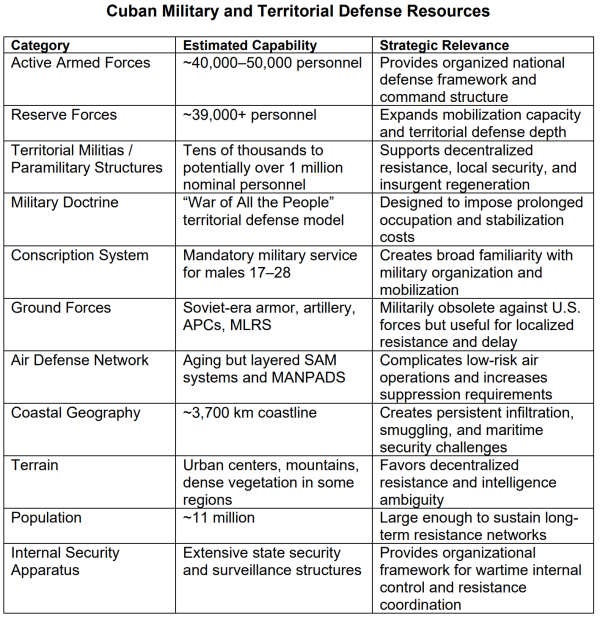
Many Americans incorrectly view Cuba through the lens of past military engagements such as Grenada or Panama: small states easily toppled by swift military action. This view is misleading. While Cuba’s conventional military strength may seem weak, its defense system has historically been designed for prolonged resistance and survival rather than direct confrontation with the U.S. The Cuban military doctrine emphasizes a “War of All the People,” focusing on territorial defense and incorporating regular military units, reserves, militias, internal security organizations, and mobilization networks.
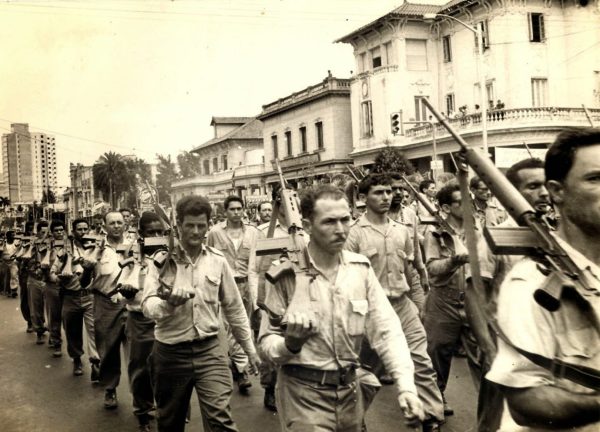
Cuban militia in 1959
The Revolutionary Armed Forces were not built to defeat a conventional U.S. invasion but to complicate occupation efforts, fragment resistance, and impose continuous military and political costs on any foreign power attempting to control the island long-term. Even if organized Cuban military resistance were to crumble quickly, the challenge of stabilization would likely be significant.
The Stabilization Burden
Cuba’s population of approximately eleven million is distributed across a vast island with a sprawling coastline, urban areas, mountainous regions, and extensive transportation networks. Havana alone could demand significant security resources. Urban operations are resource-intensive since they involve establishing checkpoints, protecting infrastructure, maintaining patrols, and controlling public unrest.
Foreign occupation often alters the political landscape in unforeseen ways. Discontent with a government does not automatically translate into support for foreign military control. Even among those frustrated with their own rulers, nationalist sentiments can emerge, leading to a fragmented resistance comprising of hostility towards the occupiers, sabotage, decentralized armed opposition, and low-level civil unrest.
This variety of resistance need not threaten outright military defeat to become strategically problematic. Past U.S. experiences, such as in Afghanistan, illustrate how even low-intensity insurgencies can lead to significant casualties, financial burdens, political fatigue, reputational damage, and demands for increased troop deployments over time, despite facing overwhelming conventional military power.
The burden of stabilization is dynamic, as military accomplishments bring about expanding obligations. Ports must be secured, airfields protected, roads patrolled, communications restored, and civil governance must be re-established. Every success generates new responsibilities, creating an escalating demand for troop commitments. The journey from coercive tactics to occupation would likely produce steadily increasing manpower requirements at each phase.
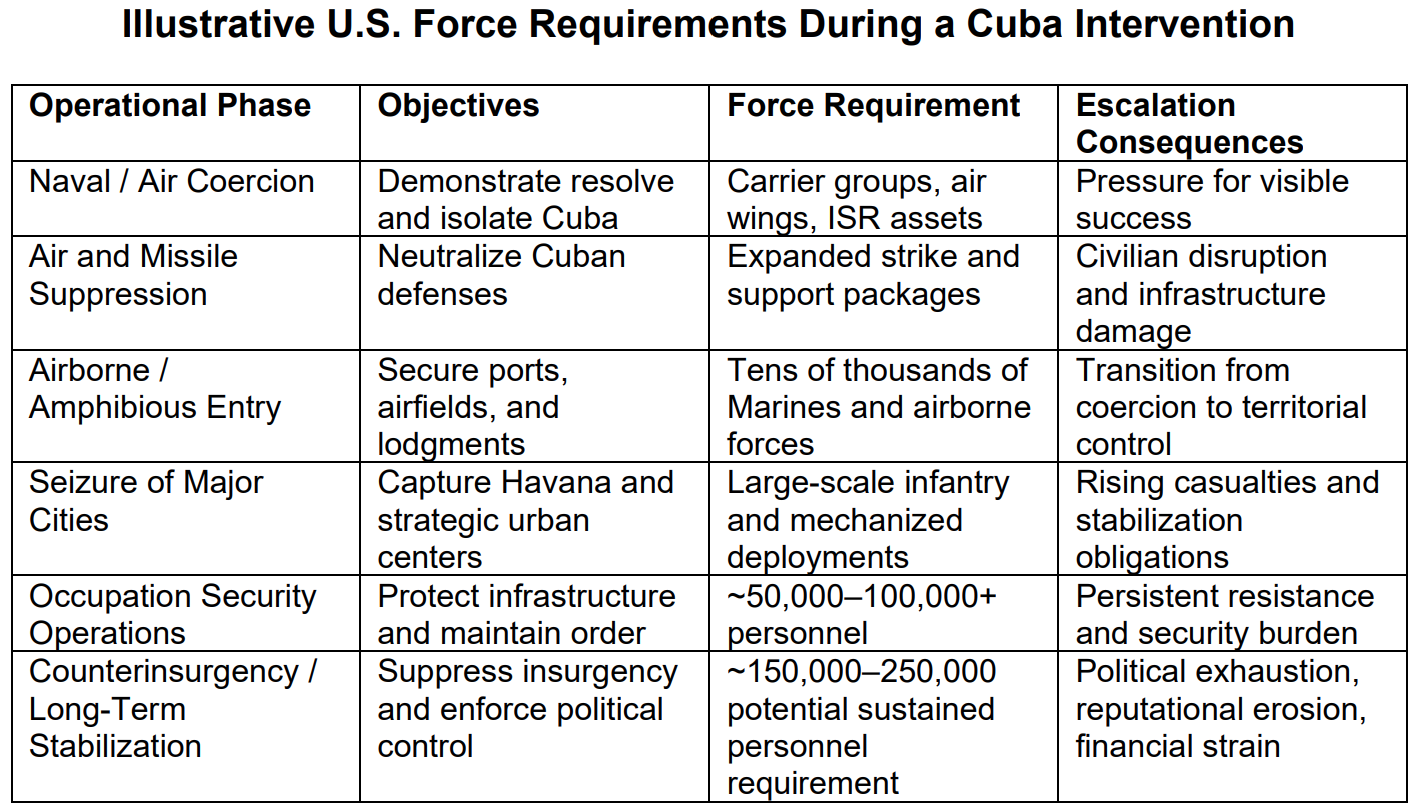
Even with optimistic forecasts, maintaining control over Cuba—a nation of substantial size—could demand force levels not in the thousands, but in the hundreds of thousands once urban security, logistical needs, counterinsurgency, and troop rotations are fully considered. At that point, the perceived “easy” conflict could evolve into a major occupation campaign.
Regional Blowback
A military operation in Cuba wouldn’t unfold in a political vacuum. It would reignite deep-seated historical anxieties throughout Latin America regarding American interventionism and sovereignty. Governments across the region may oppose military action against Cuba even if they have no alignment with the Cuban regime. The concern is less about ideological alignment than about the normalization of coercive actions in the region.
For decades, the U.S. has sought to move away from the overt interventionist stances associated with earlier hemispheric policies. A military engagement with Cuba would resurrect memories of gunboat diplomacy, regime manipulation, covert operations, and unilateral sanctions. The political fallout could spread rapidly, with left-leaning parties framing the intervention as evidence that American imperial doctrine is still deeply ingrained, rather than a relic of the past. Nationalist movements could unite against perceived renewed threats of intervention, leading governments to face domestic pressure to distance themselves from the actions of the U.S.
The Organization of American States might experience severe divisions, while regional trade and security initiatives could face fragmentation. Anti-American protests would likely erupt across major Latin American cities. Even governments that are privately antagonistic toward Cuba could find open support for intervention politically untenable.
Migration pressures could also exacerbate regional instability. A large influx of refugees fleeing toward Florida and surrounding Caribbean nations could create humanitarian, logistical, and political challenges. Even limited maritime crises can stretch coast guard and emergency resources thin, stirring domestic political tensions both within the United States and the wider region.
Rather than reinforcing hemispheric dominance, a U.S. incursion into Cuba could incite turmoil across the region on a scale not witnessed in decades.
Global Geopolitical Impact
The international ramifications of such an intervention could be equally severe. The United States aims to position itself as a defender of sovereignty and opposer of coercive territorial behaviors. A military operation in Cuba would directly contradict this narrative, especially when juxtaposed with American positions on Ukraine, Taiwan, and international norms. Russia and China could seize this intervention as an opportunity to depict Washington’s application of international laws as inconsistent and selectively applied.
Allied nations might find themselves uneasy with the precedent being set. European governments, already grappling with rising anti-war sentiments, could face intensified domestic criticism regarding their alignment with U.S. actions. The cohesion of NATO may weaken in light of renewed accusations that the alliance primarily serves as a conduit for American military ambitions.
China could emerge as the biggest strategic beneficiary of the crisis. By presenting itself as a guardian of sovereignty while expanding its influence in Latin America, Beijing could effectively counterbalance U.S. hegemony. Concurrently, the overt reassertion of American power in the hemisphere would diminish Washington’s ability to critique similar behavior elsewhere. Once the U.S. re-engaged in sphere-of-influence politics, Chinese leaders could justify more aggressive postures regarding Taiwan and other regional issues as matter-of-fact strategic necessities.
What was aimed to be a restoration of American credibility after previous failures could instead raise perceptions of inconsistency, overreach, and a decline in strategic discipline—further undermining the global standing of the United States.
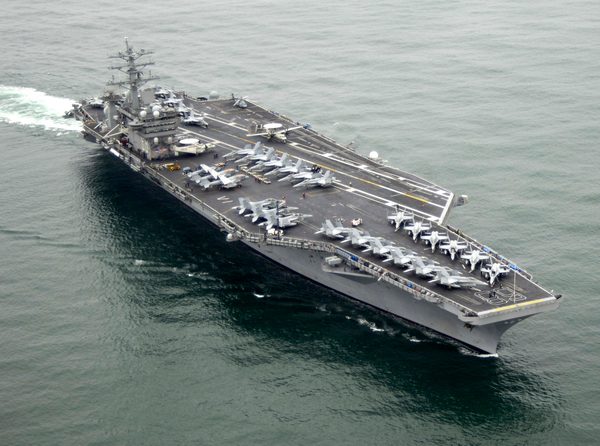
USS Nimitz – recently deployed to the Caribbean
Conclusion
A military intervention in Cuba might seem deceptively straightforward to U.S. officials. With geographical proximity, economic vulnerability, and military inferiority compared to U.S. power, the allure of a rapid victory may prove too tempting to resist, especially after recent setbacks abroad.
However, this sheen of simplicity belies substantial peril. The risks inherent in an intervention in Cuba would not stem from defeating its military, a scenario that would likely occur swiftly. Instead, the real danger will arise in the aftermath, where the intervention’s fractures ripple through the military, political, and diplomatic landscapes in ways that leaders may not fully control.
An action framed as a limited demonstration to restore credibility could spiral into a prolonged occupation requiring ever-increasing troop levels and sustained political backing. Furthermore, such an intervention could destabilize regional dynamics, amplify anti-American sentiment, fracture existing coalitions, and tarnish U.S. credibility on the global stage, all while it seeks to represent itself as the champion of international order.
Modern geopolitical landscapes do not yield to military force in a straightforward manner; rather, they respond in complex and often unpredictable ways. Once armed engagement begins, the effects can cascade outwards, leading to unintended consequences well beyond the battlefield. What may start as a seemingly effortless victory over Cuba could ultimately devolve into an entangled quagmire—both militarily and politically—bringing about far-reaching consequences that extend well beyond the Caribbean.