Human eating habits have undergone a profound transformation over the ages, evolving from primitive practices to complex dietary needs in the modern world. Two starkly different scenes exemplify this journey: one depicts an early human ancestor feasting on bone marrow in the African savanna, while the other shows a modern individual picking up a double cheeseburger at a drive-through.
While these scenes are separated by millions of years, they highlight a continuous biological connection. A recent review from the University of California, San Diego traces the developments in human dietary habits and underscores an important point: a food that once supported the evolution of our species now contributes to contemporary health issues and environmental challenges.

The Popular Red Meat Story
For years, scientists have linked the advancement of human societies with the consumption of meat. They attribute our larger brains, social cohesion, and extended lifespans to the practice of hunting. Despite this prevailing notion, the authors of the review challenge this tidy narrative.
They draw attention to a fundamental flaw: archaeological findings typically emphasize the preservation of what remains over time. Bones and stone tools endure for millions of years, while plant-based foods—such as tubers, fruits, and nuts—decay rapidly.
The everyday activities involved in gathering plant foods produced minimal archaeological evidence, thereby shaping our understanding of human diets. As a result, the story we inherited primarily focuses on hunting, leaving plant-rich diets largely ignored.
What Counted as Meat
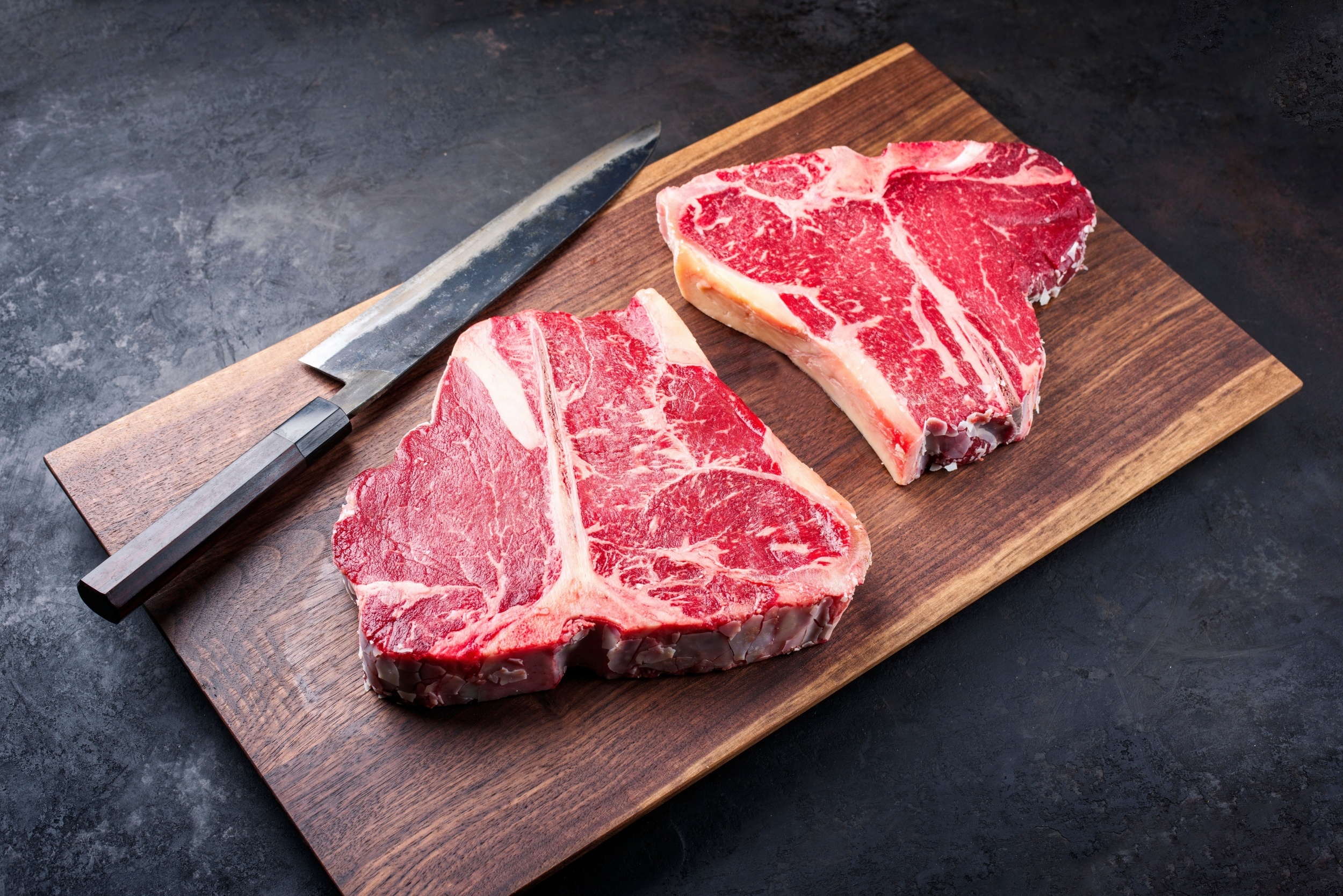
Contemporary diets define red meat as muscle tissue, with steaks and roasts dominating the culinary landscape. However, early humans had a different perspective. They prized fatty portions of animals over lean muscle, favoring energy-dense sources like marrow, brain, liver, and fat deposits.
Muscle meat often took a backseat, typically dried, stored, or consumed alongside other foods. According to the researchers, “The cultural prominence of red meat in modern Euro-American diets, typically centered on steaks and roasts, reflects ideals and biases that influence assumptions about early hominin diets.”
Protein Limits in Humans
Excessive consumption of lean meat can lead to adverse health effects. This phenomenon is exemplified by a condition known as rabbit starvation, where an overload of protein leads the liver to struggle with processing excess nitrogen.
Symptoms manifest quickly, including weakness, nausea, and diarrhea. Without a balanced intake, the body fails to function optimally, a principle understood well by hunter-gatherers.
They strategically paired protein with fats or carbohydrates to ensure dietary stability. Pure muscle meat was never a sustainable dietary foundation.
Shifts in Human Digestion
Human digestion has evolved significantly over time. In comparison to other primates, humans exhibit smaller colons and longer small intestines, structures that favor the rapid absorption of nutrient-dense foods.
Cooking is often credited for these digestive changes, as heat makes food easier to break down. However, evidence indicates that these adaptations began prior to the widespread use of fire. Other processing techniques, such as crushing, soaking, and fermenting, likely enhanced nutrient availability.
Pathogens Need Iron
Iron is essential for human health, and red meat is a prime source of heme iron, easily absorbed by the body. While this reinforces its nutritional worth, iron has another critical aspect.
Pathogens also rely on iron for growth, leading to competition between bacteria and parasites within the human body. Lower iron levels might inhibit infections, creating a trade-off where mild iron deficiency could offer protective benefits in pathogen-rich environments.
This dynamic is evident in populations such as women and children, who often display lower iron levels, reflecting this delicate balance.
Farming Reshaped Diets
Roughly 12,000 years ago, the advent of agriculture revolutionized human existence. With the establishment of settlements and the cultivation of crops, food security increased, leading to population growth. However, this also led to less dietary diversity.
Staple crops replaced an extensive variety of wild foods, as evidenced by skeletal remains that indicate rising iron deficiencies, decreased body sizes, and deteriorating dental health.
Proximity to livestock introduced additional health risks. The stability provided by farming came at the cost of new health challenges.
Meat in Modern Industry
The industrial age transformed food production once more. Innovations in transport and storage made meat universally accessible, and its consumption surged globally.
Between 1998 and 2018, global meat consumption skyrocketed by 58%. Modern livestock has also evolved, with cattle growing faster and larger, often fed grains and antibiotics.
By 2021, the meat industry had reached a staggering value of $1.3 trillion, ranking among the world’s major markets.
Health Risks Grow
Extensive population studies reveal concerning trends. High red meat consumption correlates with heart disease, type 2 diabetes, and certain cancers, with processed meat presenting even stronger associations.
The risk escalates with quantity; each additional serving heightens the likelihood of illness. The International Agency for Research on Cancer has classified processed meat as a confirmed carcinogen, while unprocessed red meat falls into a probable category. These findings continue to influence nutrition research and public health discussions.
The Body’s Response to Red Meat
One explanation for these health effects is a unique human mutation. Unlike most mammals, humans cannot produce a sugar molecule called Neu5Gc. When red meat is consumed, small amounts of this molecule enter the body and integrate into human tissues.
The immune system recognizes this as foreign and responds, leading to chronic low-level inflammation, a phenomenon termed xenosialitis. The researchers suggest that this process could be connected to conditions like atherosclerosis and cancer, offering insight into why humans respond differently to red meat than other animals.
Environmental Costs Rise
Livestock farming significantly impacts the environment, accounting for approximately 15% of global greenhouse gas emissions. Cattle produce methane, while various agricultural practices contribute carbon dioxide and nitrous oxide to the atmosphere.
Extensive deforestation has occurred to make room for grazing land, with significant portions of the Amazon being converted for cattle farming in Brazil.
The agriculture sector also plays a major role in water pollution. Current food systems, even without fossil fuels, threaten to push global warming beyond critical thresholds.
Concerns About Intensive Farming
Modern meat production often employs concentrated animal feeding operations, where numerous animals are kept in confined spaces. While this system enhances efficiency, it introduces a variety of risks.
Antibiotic use fosters antibiotic-resistant bacteria, and close quarters among animals increase disease transmission. Surrounding communities face severe repercussions, including polluted air and water, disproportionately affecting marginalized groups.
A Growing Mismatch
The disparity between ancient and contemporary diets is striking. Early humans consumed a diverse array of foods, including occasional meat, and were adept at balancing nutrients in response to scarcity.
In contrast, modern diets are often heavy in processed meats and include refined grains and sugary beverages. The current understanding of red meat encompasses different realities, leading to implications for both health and sustainability.
Rethinking Red Meat Consumption
The researchers do not advocate for a complete elimination of meat from diets. Animal products have likely played a crucial role in human development, providing vital nutrients during key life stages. However, the focus should be on scale and context.
Current consumption patterns starkly contrast those of our ancestors. Changes in processing techniques, portion sizes, and consumption frequency all contribute to this shift. According to the authors, “The nature, scale, and context of red meat consumption today differ drastically from those of our evolutionary past.”
This perspective encourages a reevaluation of dietary habits. Red meat was once integrated into a balanced system shaped by environmental needs. Modern practices have disrupted this equilibrium. Understanding this evolutionary trajectory may help us make informed choices that benefit both our health and the planet.
The study is published in the journal The Quarterly Review of Biology.
—–
Enjoyed this article? Subscribe to our newsletter for engaging content and the latest updates.
Explore more on EarthSnap, a free app developed by Eric Ralls and Earth.com.
—–


