Diplomats working abroad can significantly benefit from the advancements of artificial intelligence (AI). However, the essence of diplomacy—that human touch—remains irreplaceable.
BY MAHVASH SIDDIQUI
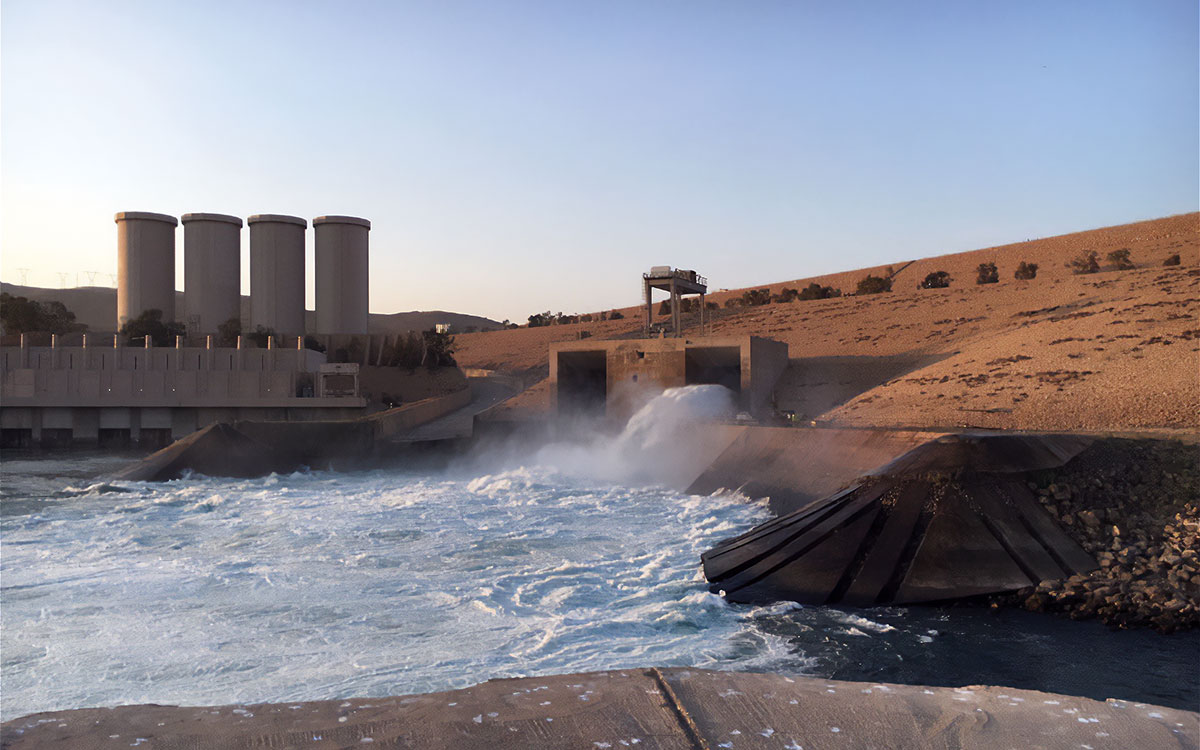
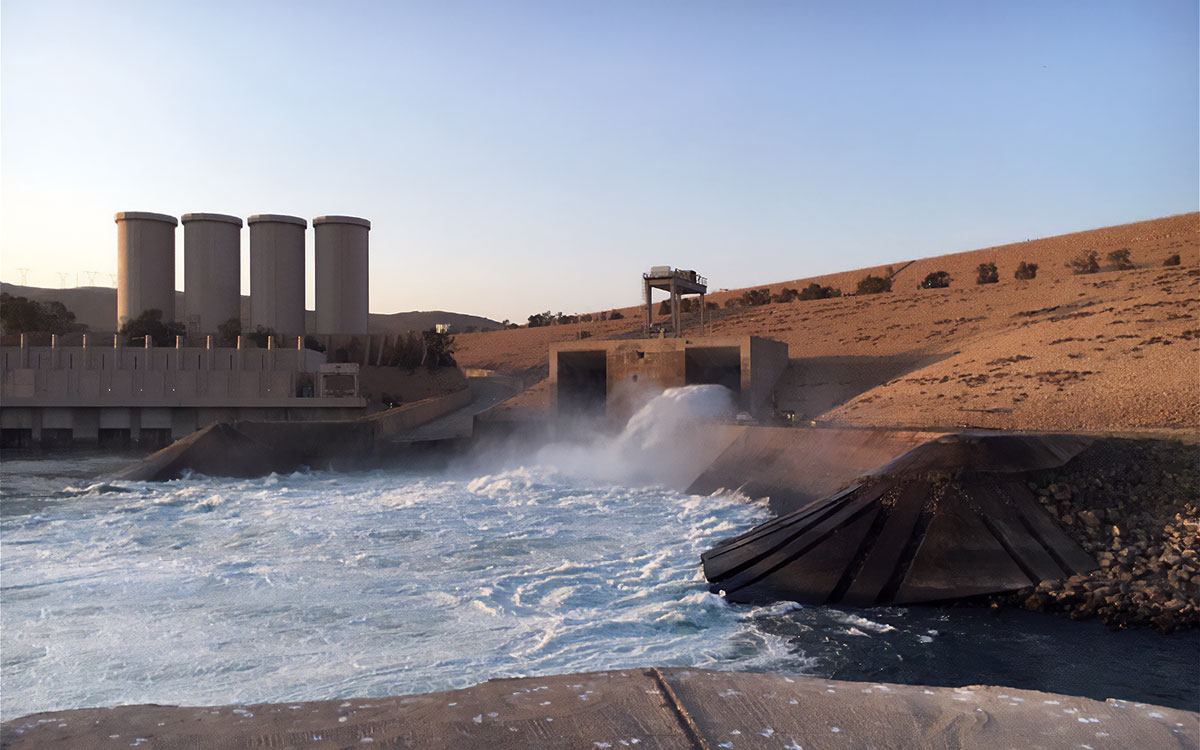
The Mosul Dam in Iraq, the fourth-largest dam in the Middle East, circa 2017.
U.S. Army
In 2014, when ISIS captured Iraq’s Mosul Dam, the risks of a structural failure loomed large, threatening to unleash catastrophic floods and claiming millions of lives downstream. At that critical juncture, I found myself as the sole environment, science, technology, and health (ESTH) officer in the region. With no hydrologists from the U.S. Army Corps of Engineers on hand, I assumed the role of the unofficial water-security adviser to the top U.S. commander in Iraq.
Interpreting piezometer data and translating technical risks into actionable guidance is rarely part of a diplomat’s duties. Yet, this became my new reality. Drawing upon my long-dormant knowledge of physics and calculus, I briefed the commander daily on the complexities of water management and structural vulnerability. A single misinterpretation could lead to dire consequences.
During those tense moments, I often envisioned an AI system that could swiftly analyze intricate engineering data and provide actionable insights. While such a tool wouldn’t replace human intuition, it could alleviate uncertainties, enabling decision-makers to prioritize strategy and safety. AI designed to convert specialized scientific data into practical operational language could be invaluable in crisis scenarios where expertise is limited and timing is critical.
AI as a Predictive Tool
In 2013, well before ISIS became a global concern, I witnessed how fragmented intelligence could obscure threats. Based on discussions with Iraqi counterparts, local informants, and regional reports, our team in Baghdad issued unclassified warnings to the National Security Council about an influx of foreign fighters entering Iraq. While local Iraqi and Syrian media covered the trend, it largely went unnoticed in international news.
The prevailing perception in Washington, D.C., was that Iraq was stabilizing, which fostered a sense of safety that justified a diminished external presence. Despite the clear signs of trouble, information was scattered across local sources and languages.
AI systems capable of aggregating and translating local news on a large scale could have synthesized these indicators into a coherent early warning. Predictive analytics might not have stopped the crisis, but it could have heightened awareness and prompted timely policy responses, allowing anticipation of destabilization before it became manifest on the ground. The lesson remains: the challenge often lies not in a lack of information, but in the inability to compile it swiftly.
While such a tool wouldn’t replace human intuition, it could alleviate uncertainties, enabling decision-makers to prioritize strategy and safety.
I recognized the operational potential of these technological tools while working in the Iran Threat Directorate at the Global Engagement Center in early 2021. Our team utilized AI-supported analysis to map disinformation networks targeting Afghanistan, highlighting an 800 percent increase in coordinated narratives pushed by Iranian, Russian, and Chinese actors. The magnitude and rapidity of these activities would have been challenging to quantify manually, but AI empowered us to gauge the impact of malign influence campaigns on public sentiment in real-time.
However, technology alone does not guarantee effective action; institutional barriers can hinder the implementation of our recommended responses. The efficacy of tools is contingent upon the willingness of institutions to act on their findings.
AI excels in computational tasks and large-scale pattern recognition. It can track disinformation trends, identify early warning signs of instability, and automate routine administrative processes. Areas such as drafting templates, managing communication formats, and processing standardized reports are ripe for efficiency improvements. By alleviating bureaucratic burdens, officers can devote more time to analysis, negotiation, and relationship-building—the true essence of diplomacy.
Nevertheless, a clear boundary must always be maintained.
The Human Element
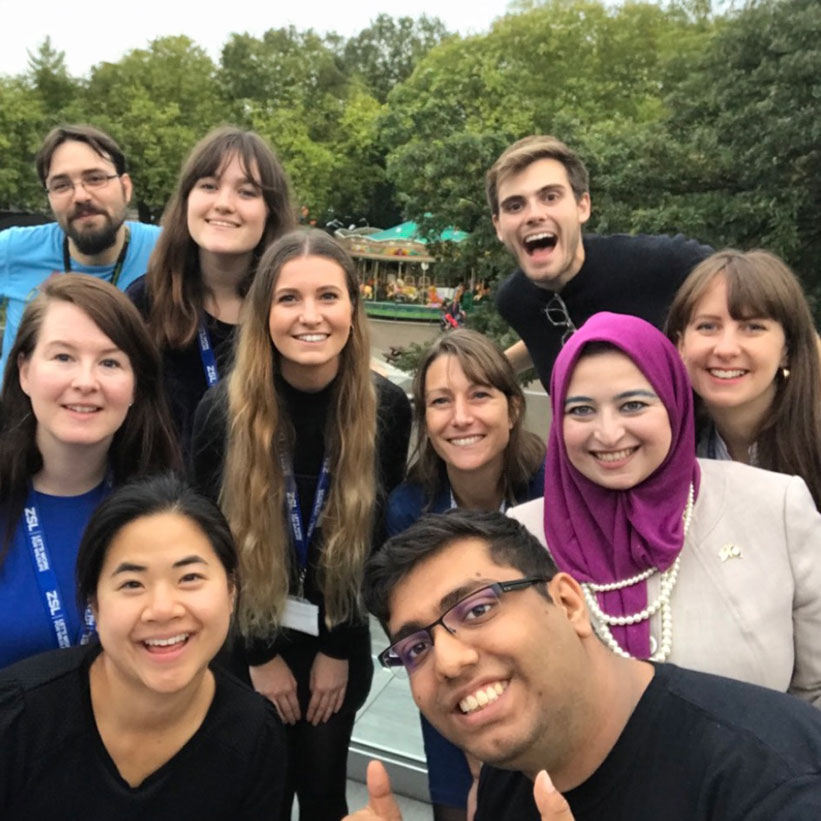
The author (second from right) meeting with university students in London to discuss the possible impacts of Brexit on science and technology research, March 2016.
Courtesy of Mahvash Siddiqui
AI cannot replicate the keen observations and insights of diplomats on the ground. It cannot build trust through sustained engagement or navigate the emotional currents of a negotiation. During my time in pre-Brexit United Kingdom, I interacted with countless individuals from various professions and backgrounds. Many ordinary Britons voiced concerns that EU labor migration was straining public services and intensifying job competition—issues seldom highlighted in London’s media but crucial to the eventual Brexit decision.
These personal conversations unveiled a political undercurrent that raw data could not capture, enabling us to alert State leadership to prepare for the economic and political repercussions of Brexit on our transatlantic ties. Effective diplomacy hinges on presence, curiosity, and empathy. Algorithms cannot step into a pub, gauge the atmosphere, or sense social tensions before they surface in polling data.
The implications of AI for national security cannot be overlooked. As AI technologies increasingly leverage private sector infrastructures, governments must confront challenging questions about data governance. Diplomatic reporting and analytical frameworks embody years of institutional knowledge. Even unclassified databases can contain sensitive patterns that, if aggregated or compromised, risk exposing vulnerabilities or skewing policy. Centralizing diplomatic knowledge within proprietary private-sector platforms creates dependencies that may not align with America’s long-term public interests.
U.S. government personnel operate under strict vetting processes and constitutional mandates to prioritize American interests. In contrast, private companies like Palantir are accountable primarily to their shareholders. Their motivations and partnerships—sometimes with foreign entities—do not necessarily align with national security goals. A breach, acquisition, or change in a corporate strategy could result in far-reaching consequences beyond typical contractor risks. As AI systems become integrated into diplomatic efforts, the risks associated with external control over essential infrastructure grow correspondingly.
Furthermore, there is a cognitive aspect to consider. Overdependence on automated systems can dull analytical instincts and critical thinking. Effective diplomats challenge assumptions, synthesize ambiguous information, and exercise judgment under pressure. AI should enhance these abilities, not replace them. Systems that manage data and computations ought to elevate human reasoning rather than foster passive acceptance of automated outputs.
Careless use risks centralizing sensitive knowledge, weakening institutional memory, and engendering misplaced confidence in automated conclusions.
Next Steps
The policy implications are clear: rather than shunning AI, its role should be thoughtfully defined. Careful integration can extend the reach of diplomats, speed up analytical processes, and cut through red tape. However, reckless implementation risks consolidating sensitive information, eroding institutional memory, and fostering unwarranted confidence in machine-generated conclusions. Strategic judgment and diplomatic engagement must remain the purview of humans, with technology serving to complement statecraft, not redefine it.
U.S. diplomacy has traditionally relied on officers willing to embrace the limits of their expertise. AI can act as a valuable technical ally in moments of crisis, enhancing our ability to tackle complex challenges. Nevertheless, it cannot substitute for the foundational relationships that characterize diplomacy or the ethical responsibilities carried by public servants.
In this age of rapid technological advancements, sustaining the human core of foreign policy is not merely sentimental; it is a vital security necessity. Our diplomats are the nation’s interpreters in a complex world. While AI can help us operate more efficiently and intelligently, it lacks the capacity to see, feel, or understand on behalf of America. Keeping AI as a supportive tool rather than a replacement is crucial for the resilience and credibility of U.S. diplomacy.

Mahvash Siddiqui has dedicated over 20 years to the Foreign Service, serving in Germany, the United Kingdom, Iraq, Qatar, and India. Her diverse roles have included public diplomacy officer, acting consul general, and alternate permanent representative to the International Maritime Satellites Organization and the International Maritime Organization. The views expressed in this article are hers alone and do not reflect those of the U.S. government.
When sharing or linking to FSJ articles online, which we welcome and encourage, please ensure to cite the magazine (The Foreign Service Journal) and include the month and year of publication. For further details, please visit the permissions page.