
Fish oil supplements have gained popularity for their purported brain benefits, but recent studies reveal a more complex picture. Emerging research indicates that one of the omega-3 fatty acids found in these supplements may disrupt the brain’s natural repair mechanisms.
A study conducted on mice with mild traumatic head injuries found that those consuming diets high in eicosapentaenoic acid (EPA) showed poorer performance in spatial memory and learning tasks post-injury. Contrary to previous beliefs that omega-3s generally aid recovery, the findings suggest that EPA might hinder the repair processes by altering blood vessel metabolism.
Interestingly, not all omega-3 fatty acids exhibit the same effects. Docosahexaenoic acid (DHA), another key omega-3, is known for its role in building and preserving brain cells. In follow-up experiments involving human-derived brain microvascular endothelial cells, DHA did not impede repair mechanisms.
“Fish oil supplements are ubiquitous, and many individuals take them for various reasons without fully understanding their long-term implications,” explains neuroscientist Onder Albayram from the Medical University of South Carolina (MUSC). “In neuroscience, we still lack clarity on whether the brain can resist or recover from the effects of such supplements. Our study is the first to address this issue in depth.”
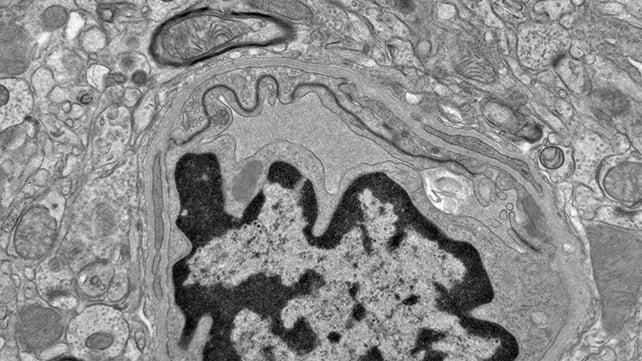
The researchers refer to these observable effects as a “context-dependent metabolic vulnerability,” signifying a shift in cellular energy usage that may divert attention from brain repair in specific situations. The adverse impact of EPA was found solely in injured mice undergoing repair, leaving its effects on human tissues uncertain.
One crucial observation was that EPA, rather than DHA, accumulated in the brains of the mice given these supplements. This aligns with existing knowledge that DHA incorporates more readily into brain cell membranes compared to EPA. Furthermore, the disruptive effects of EPA on blood vessels resulted in the accumulation of toxic tau proteins, which are associated with brain degeneration.
The team of researchers noted similar metabolic disruptions and blood vessel damage in human brain tissue from individuals suffering from chronic traumatic encephalopathy (CTE), often linked to repeated head injuries akin to those examined in their mouse model. They speculate that EPA-rich fish oil supplements could heighten the risk of CTE by impairing cellular recovery, thereby intensifying the consequences of unnoticed mild concussions.
However, these notions require further validation; the majority of available evidence stems from animal and cell studies that only highlight potential associations worthy of deeper exploration.

These insights are not unfounded; prior research has indicated that while omega-3s are often praised for their neuroprotective properties, EPA might induce learning and memory deficits, mitigated by DHA’s influence. It is becoming increasingly apparent that omega-3 fatty acids like EPA and DHA can offer benefits, but these are not universal and come with specific considerations.
“The idea that fish oil offers a one-size-fits-all benefit breaks down when we delve into their interactions,” says neuroscientist Onur Eskiocak from Cold Spring Harbor Laboratory. “But this doesn’t imply that fish oil is detrimental.”
Related: Common Vitamin May Reduce Buildup of Alzheimer’s Proteins, Study Finds
The research team is eager to further investigate the impacts of EPA and DHA, examining their effects on various brain cell types and regions, with clinical trials being a potential avenue for future exploration. “This paper marks a critical starting point,” observes Albayram. “It opens a new dialogue about precision nutrition in neuroscience and provides a framework for formulating better, more testable questions.”
This important research was published in Cell Reports.


