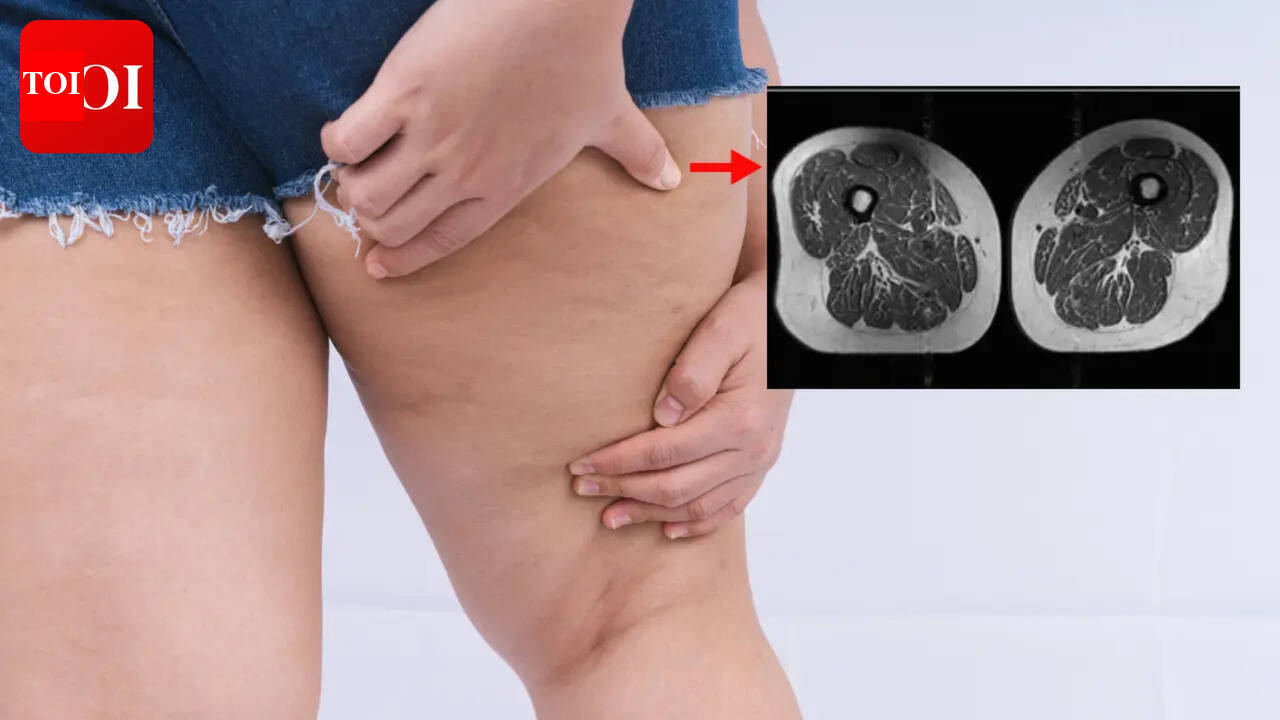
Representative axial T1-weighted spin-echo thigh MRI scans in (A) a 61-year-old female participant and (B) a 62-year-old female participant. Both participants were of similar age and body mass index (BMI, calculated as weight in kilograms divided by height in meters squared). Both had Physical Activity Scale for the Elderly scores above the mean score in the study. According to the World Health Organization definition, the participant in B qualified as having abdominal obesity (abdominal circumference ≥ 88 cm). Abdominal circumference is a measure of central obesity that captures fat distribution and serves as an indicator of cardiometabolic health. Compared with the participant in A, the participant in B had a higher proportion of ultra-processed food (UPF) in their diet (87.1% vs 29.5%) and exhibited fattier thigh muscles bilaterally, with Goutallier grade (GG) for all thigh muscles summing to 25 for the participant in A and 38 for the participant in B.
Credit
Radiological Society of North America (RSNA)
Crispy chips, indulgent chocolate cookies, sugary drinks, and ready-to-eat meals may satisfy your cravings temporarily, but they have a more insidious impact on your body. Recent research has revealed that a high intake of ultra-processed foods is altering muscle structure, resulting in the accumulation of fat in the thighs that resembles the marbling found in steak. The study’s findings are detailed in the journal Radiology, published by the Radiological Society of North America (RSNA).
UPFs and Muscle Health: A Troubling Link
While marbling in steak can be appealing, experiencing it in your own body is concerning. Researchers discovered that individuals consuming higher quantities of ultra-processed foods (UPFs) tend to have more fat stored in their thigh muscles, irrespective of their caloric intake, physical activity levels, or demographic factors. This trend is particularly pronounced among those at risk for knee osteoarthritis. Increased intramuscular fat in the thighs may elevate the risk of developing this painful joint condition.
Defining Ultra-Processed Foods
When we talk about ultra-processed foods, think of items like cookies, chips, and sodas. Characterized by long shelf lives and convenience, these foods gain their appeal from a combination of sugar, fat, salt, and carbohydrates, which engage the brain’s reward system, making it difficult to resist consumption. Surprisingly, many products considered ‘healthy’ fall into this category, including breakfast cereals, spreads, packaged snacks, hot dogs, sodas, energy drinks, candies, frozen pizzas, and mass-produced baked goods—all containing synthesized ingredients.
The Rising Tide of Obesity and Knee Osteoarthritis
The research underscored a strong correlation between UPFs and obesity. “In recent decades, as obesity and knee osteoarthritis rates have surged, natural ingredients in our diets have been increasingly supplanted by industrially processed, chemically altered foods,” said Dr. Zehra Akkaya, lead researcher and consultant at the University of California, San Francisco. Dr. Akkaya and her team investigated the relationship between UPF intake and thigh intramuscular fat by analyzing data from 615 participants in the Osteoarthritis Initiative, a national study aimed at preventing and treating knee osteoarthritis. Notably, these participants had not yet been affected by the condition.
“Osteoarthritis presents a growing health dilemma globally and ranks among the largest non-cancer healthcare expenses both in the U.S. and worldwide. It is closely linked to obesity and poor lifestyle choices,” Dr. Akkaya added. Among the 615 individuals, 275 were men and 340 were women, with an average age of 60. Generally, the participants were classified as overweight, with an average body mass index (BMI) of 27. Remarkably, 41% of their food intake over the past year consisted of UPFs.
The Connection Between UPF Consumption and Fat Accumulation
The researchers made a striking observation: as the consumption of ultra-processed foods increased, the levels of intramuscular fat in thigh muscles also rose, independent of caloric intake. This change was evident on MRI scans, which revealed the fatty degeneration of muscles, where muscle fibers are replaced by fat streaks.
“We implemented widely available, non-enhanced MRI techniques, making our approach accessible for future studies and routine clinical use,” Dr. Akkaya explained. “This research highlights the critical role nutrition plays in muscle quality concerning knee osteoarthritis. Addressing obesity remains a pivotal objective in managing knee osteoarthritis, yet it’s essential to prioritize dietary quality alongside caloric control and exercise,” she concluded.
Conclusion: A Simple Approach to Prevention
So, how can we combat obesity effectively? The answer is straightforward: focus on adjustable lifestyle factors, including a balanced diet and regular exercise. These strategies are also fundamental for managing knee osteoarthritis. Limiting ultra-processed foods can help maintain muscle quality, potentially reducing the burden of knee osteoarthritis.
“In recent years, numerous studies have highlighted the negative effects of ultra-processed foods on various health outcomes. However, this study is the first to examine how UPFs impact muscle composition in relation to knee osteoarthritis using MRI. By illuminating how ultra-processed food consumption affects muscle health, we have gained valuable insights into the dietary influences on muscle quality,” Dr. Akkaya emphasized.