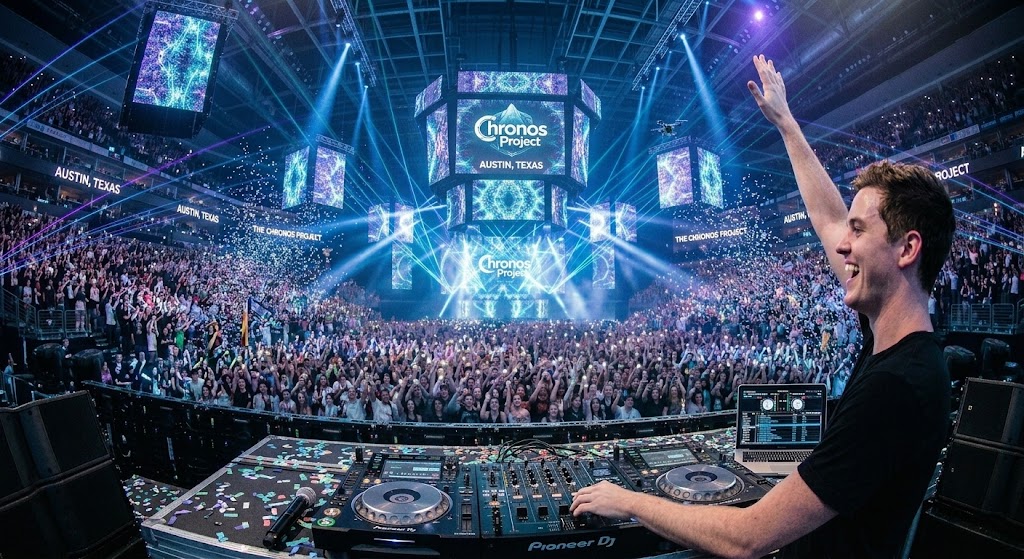
The moment for AI in music production isn’t just on the horizon; it’s upon us.
By 2026, the top producers, DJs, and engineers in the electronic dance music scene are seamlessly integrating artificial intelligence into every aspect of their workflow—from brainstorming initial ideas to producing the final streamed master. AI is not just a gimmick or a shortcut; it serves as a powerful tool that enhances creativity by streamlining technical tasks, allowing creators to focus on their artistic vision.
This article aims to differentiate between two key categories of AI tools for producers. Mixing them up can lead to poor purchasing choices and hinder creative outcomes.
The first category is creative AI, which generates music, stems, loops, and ideas based on prompts or references. These tools, including Suno, Udio, and SOUNDRAW, are highly regarded for their ability to spark inspiration and provide starting points for new projects.
The second category is technical AI, which incorporates tools within the production process to manage complex tasks such as mixing intelligence, mastering optimization, stem separation, noise elimination, and spectral balancing. Tools like iZotope Ozone 12, iZotope RX 11, iZotope Neutron 5, and Sonible’s smart suite fall into this category. Although they’re less glamorous, they are crucial for professional workflows.
This guide will explore both categories, offering rankings and reviews specifically for EDM producers to help you determine what’s worth your investment in 2026.
CATEGORY ONE: TECHNICAL AI — The Tools Pros Use Every Day
These AI tools are essential for your DAW, regardless of your experience level or genre focus. They do not replace your creative vision; they enhance the technical execution surrounding those creative decisions.
1. iZotope Ozone 12 — The Gold Standard of AI Mastering
Type: Mastering suite | Platforms: VST3, AU, AAX | Price: Tiers available: Elements / Standard / Advanced; Music Production Suite 8 bundle Best For: Final mastering, streaming loudness optimization, stem EQ during the mastering phase
iZotope’s Ozone suite has dominated the AI-assisted mastering landscape for over a decade. Released in December 2025, Ozone 12 brings unprecedented advancements, most notably its Stem EQ feature. This functionality allows producers to apply EQ to vocals, drums, bass, and instruments separately within a stereo master file, eliminating the tedious task of mix recalls when tonal inconsistencies arise. This is a monumental workflow breakthrough for anyone who has struggled with low-end balance or vocal clarity in a bounce without reopening the entire project.
The updated Master Assistant—Ozone’s AI-driven analysis tool—has been enhanced to allow greater creative input from producers while keeping its core features intact: it analyzes the track, identifies necessary mastering chain processing, builds a custom starting chain, and lets you adjust from there. In version 12, the IRC limiting algorithm within the Maximizer is revised to improve transient handling and maintain clarity at high loudness levels, which is vital for EDM, where the balance of perceived loudness and transient punch is a key aspect of mastering.
The Music Production Suite 8 bundle, which includes Ozone 12 Advanced alongside Neutron 5, RX 11 Standard, Nectar 4, and the full Catalyst series, offers the most comprehensive professional toolkit from a single vendor.
EDM-specific use case: Run your final bounce through the Master Assistant, let it create a chain, and then use the Stem EQ to reduce harshness around 3–5kHz in a vocal sample or enhance sub-bass in the kick without needing to reopen the session. This process previously necessitated returning to the mix. Now, it’s a one-step process using just one tool on one master file.
Honest assessment: The upgrade costs have frustrated long-time users, and CPU usage in the Advanced version is significant on older systems. While the value is evident, accessing it may require either a new subscription or the acceptance of upgrade fees.
2. iZotope RX 11 — AI Audio Repair That Sounds Like Magic
Type: Audio restoration and repair | Platforms: Standalone + VST3, AU, AAX | Price: Tiers available: Elements / Standard / Advanced Best For: Sample cleaning, recording cleanup, stem extraction from source tracks, vocal de-reverb
iZotope RX has garnered two Engineering Emmy Awards and a Scientific and Engineering Award from the Academy of Motion Picture Arts and Sciences. Such accolades underscore the cut-through quality of this tool.
RX 11 employs state-of-the-art neural network processing throughout the restoration pipeline. The Repair Assistant automatically detects and resolves noise, hum, clicks, and clipping in any audio file using machine learning for smarter, context-aware decision-making. Additionally, the Dialogue De-Reverb module (Standard and Advanced versions) utilizes a neural network for real-time ambience adjustment, a process that previously took hours of meticulous manual editing.
RX 11’s Music Rebalance feature, particularly useful for EDM producers, employs neural technology for separating elements from mixed files, making it invaluable for extracting usable stems from reference tracks, fixing recordings plagued by unwanted room sound, and cleaning up samples laden with original recording noise. The Streaming Preview and Loudness Optimize modules round out a comprehensive audio finishing workflow.
EDM-specific use case: When you receive a vocal recording from a collaborator recorded in a bedroom with noticeable reverb and low-frequency hum, RX 11’s Repair Assistant identifies all three issues and offers processing options within seconds. In a matter of minutes, you can export the cleaned audio and proceed, reducing what used to take 45 minutes of careful manual editing down to four minutes with better outcomes.
Honest assessment: The Standard and Advanced versions offer the most valuable neural network features. While Elements is enough for basic cleanup, it lacks Music Rebalance and Dialogue De-Reverb. If you’re on a budget, prioritize the Standard version over Elements.
3. iZotope Neutron 5 — AI That Learns Your Mix
Type: Mixing assistant plugin suite | Platforms: VST3, AU, AAX | Price: Available standalone or in the Music Production Suite bundle Best For: Multitrack mixing, identifying frequency masking, intelligent channel processing
Neutron 5 (updated to version 5.2.0 in February 2026) is iZotope’s mixing solution. Its primary selling point for EDM producers is the Mix Assistant, which analyzes every track in your session to identify frequency conflicts and establish an initial balance that you can refine. The Visual Mixer extension allows you to visualize frequency clashes in real-time—alerting you, for instance, that both your lead synth and mid-range pads are competing for space around 800Hz to 2kHz, quantifying the clarity cost of those conflicts.
Version 5 introduces three new modules, enhancing transient shaping, updating the saturation module, and improving compression handling for more transparent results, even at aggressive settings. For producers in genres like house and techno, these improvements are particularly relevant for managing the interaction between kick and bass—the task of allowing a kick’s punch to emerge without suffocating the sustained bass notes.
EDM-specific use case: Open the Mix Assistant in a 32-track session. It scans the entire composition, sets relative levels based on instrumental roles, identifies frequency masking from your hi-hat affecting vocal clarity in the 8–12kHz range, and suggests a high-shelf cut on the hi-hat bus. You can approve these adjustments with a single click, a task that would otherwise demand 20 minutes of manual adjustment.
4. Sonible smart:EQ 4 — The Spectral Mixing Intelligence Plugin
Type: AI-powered equalizer | Platforms: VST3, AU, AAX | Price: ~$109 per individual purchase; smart:bundle saves 40% Best For: Spectral balancing of individual tracks, unmasking in multitrack sessions, matching reference tracks
Sonible’s smart:EQ 4 takes a different approach than Neutron, focusing on the precise spectral intelligence of individual tracks. The smart:filter analyzes incoming audio, compares it to its library of trained models for specific instruments, genres, and mix buses, and suggests frequency adjustments for tonal harmony in mere seconds.
In Group mode, smart:EQ 4 excels in complex EDM sessions, allowing up to ten instances across different tracks to communicate with one another. The prioritized elements—like kick drum and lead synth—automatically receive dedicated frequency space, while supporting elements diminish in their frequency ranges. You can organize tracks in order of priority, and the AI manages the spectral relationship between them, allowing you to adjust the processing intensity.
The January 2026 partnership with Solid State Logic, which bundles smart:EQ 4 with SSL’s Bus Compressor 2 for $79.99, presents an attractive entry point into the Sonible ecosystem, along with one of the most trusted bus compressors in the industry.
The complete smart:bundle—consisting of smart:EQ 4, smart:comp 3, smart:reverb 2, smart:limit, smart:deess, and smart:gate—provides an AI-driven mixing toolkit that enhances every step of channel processing with intelligent, content-aware functionality.
EDM-specific use case: If you have 12 layers of synths competing in a pad section, apply smart:EQ 4 to each track, group these pads together, assign your lead pad the highest priority, and let the plugin automatically manage the frequency distribution across all tracks. Each supporting pad will dynamically adjust to allow the lead pad to shine, effectively achieving what would take a month of meticulous manual EQing in mere minutes.
5. LANDR — AI Mastering + Samples + Distribution in One Ecosystem
Type: AI mastering, sample AI, and distribution platform | Price: Various tiers; free trial available Best For: Quick professional mastering, AI-powered sample discovery, MIDI chord generation, and an all-inclusive platform for producers
LANDR has transformed from a straightforward AI mastering tool into a robust production ecosystem. By 2026, it stands out as the most comprehensive single-platform solution for independent EDM producers. Its original value proposition—an AI-driven mastering tool that analyzes your track, sets loudness targets, builds a custom mastering chain, and delivers a streaming-ready master—is particularly useful for those frequently releasing music, as it offers a reliable, professional finish without incurring per-track fees.
The AI capabilities of LANDR extend well beyond mastering. LANDR Composer can generate MIDI chord progressions from scratch, complete with playback on a dedicated timeline featuring over 60 synth presets—perfect for EDM producers facing writer’s block in their harmonic development. LANDR Selector employs AI to discover similar samples from a library of over three million, eliminating the time-consuming process of sifting through uninspiring kick drums. LANDR Stems enables efficient stem separation using AudioShake technology with minimal artifacts. Meanwhile, LANDR Sampler organizes your existing sample library by sonic qualities, mapping them to your MIDI keyboard and offering full sample editing and sequencing tools.
For EDM producers who release music frequently but lack access to a professional mastering engineer, LANDR’s batch processing feature—which applies consistent settings across an entire EP or album—offers one of the most underrated advantages within the AI music toolbox.
EDM-specific use case: After finalizing your five-track EP, upload all five to LANDR, apply your saved mastering profile, and receive five streaming-ready masters in just 20 minutes, ensuring consistent loudness and tonal balance across the release—without incurring any per-track fees or requiring back-and-forth communication with an engineer for revisions. It’s all done at once.
6. LALAL.AI — Stem Separation for Remixers and Sample Hunters
Type: AI stem separation | Price: Free (10 min); Lite $15 / Plus $25 / Master $35 Best For: Extracting stems from other tracks, remixing existing material, isolating samples from mixed audio
LALAL.AI has become the most dependable standalone stem separation tool available, and by 2026, it can separate vocals, drums, bass, guitar, piano, strings, wind instruments, and background noise from mixed audio files with quality that was previously accessible only through professional studio software.
For EDM producers, the benefits are clear: whether you want the vocal stem from a track to remix it, isolate a specific element from an online sample, or analyze the production of a reference track by separating its components, LALAL.AI proves quick and user-friendly through a browser interface that requires no installation or specialized knowledge.
The API integration allows for automation—an important feature for producers who frequently handle large sample volumes or want to create bespoke tools suited to their workflow.
Honest assessment: Given its pricing, LALAL.AI is a competitor to the stem separation features found in iZotope RX 11 and Suno Studio. Its standalone ease and browser-based access are significant advantages. If you’re already utilizing the iZotope system, it may be unnecessary, but for others, it offers the most straightforward method for achieving high-quality stem separation.
CATEGORY TWO: CREATIVE AI — Ideation, Inspiration, and Starting Points
Tools in this category generate actual music based on prompts, references, or other parameters. They can be genuinely beneficial for EDM producers, yet may be risky when used to substitute creative judgment.
The guiding principle is this: these tools work most effectively when they serve as starting points that you can dissect and reconstruct, rather than as finished products ready for direct upload. Even Suno v5’s finest outputs often require stem extraction and reprocessing within a traditional DAW.
7. Suno v5 + Suno Studio — The Most Capable AI Music Generation Platform
Type: AI music generation + DAW | Price: Free (10 songs/day); Pro $10/mo; Premier $30/mo (includes Studio) Best For: Quick ideation, vocal melody generation, hook samples, generative building blocks for stems
Suno v5, launched in September 2025, represents the pinnacle of AI music generation quality. Its vocal output has crossed a threshold, showcasing natural vibrato, breath control, and emotional phrasing, allowing it to outperform previous versions during blind listener tests. For EDM producers, the enhanced genre support and blending possibilities enable requests like “melodic techno with a trance breakdown and UK garage groove,” yielding results that sound cohesive rather than muddled.
A particularly groundbreaking feature for producers is Suno Studio—billed as “the world’s first generative audio workstation,” available to Premier subscribers ($30/month). This feature provides a multitrack timeline where users can arrange, layer, and edit AI-generated stems. Up to 12 instrument tracks (drums, bass, guitar, synths, backing vocals) can be generated and freely arranged. The February 2026 update introduced warp markers for timing adjustments, alternate take lanes, time signature flexibility beyond 4/4, and a “Remove FX” tool to strip effects from clips.
Additionally, Suno’s partnership with Warner Music Group (late 2025) grants it marketing legitimacy lacking in previous iterations. Nevertheless, the shift towards licensed-data-only models may eventually limit current free-tier capabilities.
EDM-specific use case: You’re working on a melodic house track and need a catchy topline for a drop. Generate five distinct prompts in Suno v5 for “female vocal hook, euphoric melodic house, E minor, 128 BPM, emotional, wordless.” Export the stems from the selection you prefer, process the vocals through iZotope RX for artifact cleaning, pitch it accurately, and integrate it into your session. Total time to assemble a usable topline: 15 minutes, compared to the four hours usually needed to book and guide a vocalist.
Honest assessment: Some audio artifacts persist on reference monitors, especially in sibilant vocals and cymbal sounds. Outputs from Suno are best regarded as high-quality demos in need of additional post-processing, rather than finalized samples. The cost of the Premier plan may be prohibitive for some users; its value heavily relies on how often you utilize Studio for generating stems.
8. Udio — The Producer’s AI Generator
Type: AI music generation with producer controls | Price: Free (10 songs/day); Standard $10/mo; Pro $30/mo Best For: Rapid ideation, specifically for electronic music, inpainting and section regeneration, stem downloads
While Suno v5 offers the highest quality output, Udio stands out for its focus on production workflows. It features inpainting (regenerating a specific section of a track without affecting the rest), stem separation during generation, and the ability to remix existing tracks into different genres while retaining the underlying melody.
For EDM producers, Udio’s prowess in electronic genres is widely recognized, producing crisp and well-mixed outputs that can rival quality boutique sample packs. The inpainting function proves especially useful for enhancing weak drops or extending arrangements from short loops—generate a section, regenerate only the bridge until it’s right, export the stems, and bring them into your DAW.
Udio has resolved its copyright litigation with Universal Music Group (October 2025) and Warner Music Group (November 2025), now operating under solid licensing agreements, which gives it a significant legal advantage over many competitors.
EDM-specific use case: Generate a 30-second techno loop in Udio, using inpainting to rework the percussion section until the groove feels right. Download the drum and bass stems separately, and import them into Ableton. You now have a unique rhythmic foundation born from AI-generated content, enhanced through your own EQ and compression setups. This hybrid workflow maximizes the benefits of creative AI.
9. SOUNDRAW — Royalty-Safe Beat Generation for Content and Starting Points
Type: AI beat/track generation | Price: Free (limited); Creator Plan $16.99/mo; Artist Starter plan available Best For: Background tracks, royalty-safe music for content, initial beats for producers
SOUNDRAW fills a specific, valuable niche: every AI-generated track comes from music recorded by SOUNDRAW’s in-house team, ensuring no copyright complications and providing worldwide commercial licensing for tracks you generate. This legal clarity sets it apart from Suno and Udio, which still navigate uncertain copyright landscapes.
While the production quality is functional rather than outstanding—sounding more like competent stock music than distinctive artistry—it serves its purpose well. For EDM producers creating content, teaching production, or requiring background music for visual projects, SOUNDRAW’s unlimited generation at $16.99/month offers tremendous value. Its genre support ranges from EDM to Techno, House, and Trap, among others; bar-level editing allows you to mute, solo, or adjust the dynamics of individual sections, and you can export STEMs in WAV format directly into any DAW.
EDM-specific use case: When producing a YouTube tutorial on sound design, you need a three-minute background track that won’t incur copyright flags. SOUNDRAW generates one in 90 seconds, with STEM exports available for adjusting the dynamic elements during spoken sections, allowing you to retain 100% of ad revenue. Total expenditure: a minor fraction of securing a track from a licensing library.
10. ElevenLabs Music — Voice-First AI Music for Vocally Complex Productions
Type: AI music generation with licensed training data | Price: Various tiers available; free tier offered Best For: Vocal-centric EDM demos, priority on legal safety, API-accessible generation
Introduced in August 2025, ElevenLabs Music leverages the company’s expertise in voice synthesis to deliver a platform trained only on licensed music from partners such as the Merlin Network and Kobalt Music Group. This makes it the most legally secure AI music generation platform currently in operation. ElevenLabs’ output quality of 44.1kHz audio excels particularly in vocal-heavy EDM genres, showcasing the advantages of its voice technology.
For producers catering to corporate clients, aiming for sync licensing projects, or needing a solid copyright chain, ElevenLabs Music stands out for its legal clarity—an advantage Suno and Udio currently can’t match. Furthermore, its API accessibility allows for scalable integration into production pipelines.
EDM-specific use case: If you’re creating music for a brand campaign that mandates thorough copyright indemnification documentation, ElevenLabs Music is the only AI generation platform that can guarantee this. Generate the track’s foundation, build upon it in your DAW, and deliver your project with complete licensing transparency.
Building an AI-Powered EDM Production Workflow
The most effective use of AI in 2026 is through a layered system rather than relying on individual solutions. Here’s how you can create a professional workflow:
Ideation phase: Use Suno v5 or Udio for rapid generation of melodic ideas, hooks, and harmonic references. Embrace the principle of generating often and exporting stems from the ideas that resonate most. Use SOUNDRAW for royalty-safe structural references.
Composition phase: When you’re stuck on harmonics, utilize LANDR Composer for MIDI progressions. Employ LALAL.AI to extract key elements from reference tracks that you wish to study or sample. Your DAW and physical instruments will handle the actual arrangement.
Mixing phase: Utilize Sonible smart:EQ 4 for spectral balancing and cross-channel unmasking. Pair it with iZotope Neutron 5 for comprehensive AI-assisted mixing. The synergy between these two tools proves beneficial; Neutron provides overall session insights while smart:EQ 4 delivers precision spectral interventions within individual groups.
Post-production and cleanup: Use iZotope RX 11 to repair everything from recordings with room noise to samples with hum, or any MIDI-triggered synth that has artifacts. Run every critical recording through the Repair Assistant before it enters your session.
Mastering: Employ iZotope Ozone 12 for the final master, allowing Stem EQ for nuanced tonal adjustments. Alternatively, use LANDR for batch mastering across a release with standard settings for both approaches providing immense value, depending on your needs.
What to Actually Buy: Prioritized Spending Guide
If you’re starting from scratch and have $50: A LANDR Studio subscription provides mastering, sample AI, MIDI generation, and stem separation all in one platform. This is a great starting point.
If you’re at an intermediate level and have $300: The iZotope Music Production Suite 8, which includes Ozone 12 Advanced, Neutron 5, RX 11 Standard, Nectar 4, and the Catalyst series, offers a complete technical AI toolkit.
If you’re already an industry player and wish to add creative AI: The Suno Premier plan at $30/month for Studio access, along with the Sonible smart:bundle at around $220. This combination covers creative generation alongside superior spectral intelligence.
Free tools worth exploring: The free tier of Suno (10 songs/day) is great for ideation, while LALAL.AI (10 minutes of separation) can be useful for experimentation. iZotope product trials offer full-featured options for you to evaluate before making a purchase.
The Honest Assessment: What AI Can’t Do (Yet)
The tools detailed in this guide are genuinely transformative but remain tools, not artists. Let’s examine the limitations as of 2026:
AI lacks contextual understanding. It doesn’t know your artistic history, your intended direction, or the emotional narrative behind your album. The Master Assistant is unaware if a track should serve as a euphoric climax in a DJ set, or needs heightened impact after the previous one. You do; consider AI suggestions as starting points and not final decisions.
Creative AI outputs require curation. Artifacts found in Suno v5 are still noticeable, especially in aspects like vocal sibilance. Outputs from all generative platforms in 2026 require careful review, selection, and post-processing. The most successful producers using these tools generate numerous ideas, selecting and refining the most compelling, rather than uploading the first output.
The technical AI tools rely on human ears. While Neutron’s Mix Assistant and Ozone’s Master Assistant offer solid recommendations, they can’t discern whether you want your mix to emulate a club record or cater to home listening. That judgment remains yours.
The right mindset is simple: AI in 2026 handles the technical labor; you make the artistic decisions. Aligning these two roles will lead to more significant improvements in your production output this year than any previous time in your career.