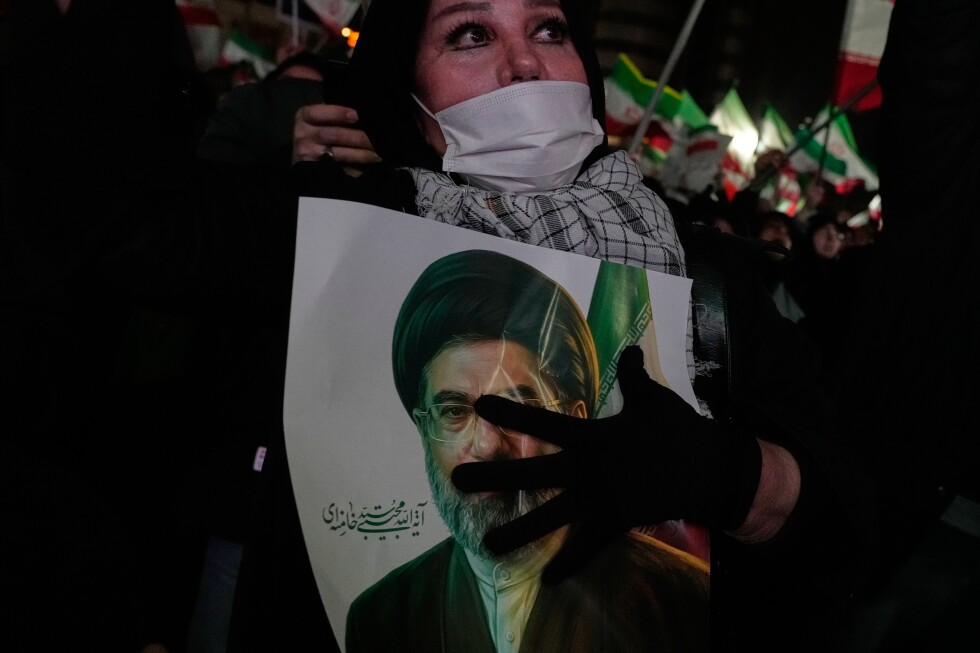
As tensions escalate in the Middle East, the situation between Iran and the United States remains fraught. With both sides entrenched in their positions, the potential for further conflict looms large. Recent developments indicate a dangerous stalemate, affecting not only the parties involved but also the global economy.
Iran and U.S. Positions Hardening
DUBAI, United Arab Emirates (AP) — Iran and the United States appeared at an impasse Thursday, with each side hardening its position over talks and setting the stage for another potential escalation in the Middle East war. Thousands more U.S. troops neared the region, while Tehran tightened its grip on the crucial Strait of Hormuz.
Sirens over Israel warned of barrages of incoming Iranian missiles, and Gulf nations worked to intercept fire. Heavy strikes were reported in Iran’s capital and other cities.
In a war that appears defined by who can take the most pain, the U.S. has offered shifting but ambitious objectives, including ensuring Iran’s missile and nuclear programs are no longer a threat and ending Tehran’s support for armed groups in the region. Washington at one point also pushed for the overthrow of Iran’s theocracy.
While the U.S.-Israeli campaign has hit Iran’s military and government hard, killing top leaders and striking scores of targets, Iran continues to fire missiles and there is no sign of an uprising against the government.
AP AUDIO: Iran and the US harden their positions as Tehran tightens its grip on the Strait of Hormuz
AP correspondent Karen Chammas reports on the latest on diplomatic efforts on both sides to end the Iran war.
For Iran’s leadership, merely enduring the assaults could be framed as a victory. They may aim to compel the U.S. to retreat by disrupting the global economy through their control of the Strait of Hormuz, thereby increasing prices for consumers and businesses worldwide.
Should a negotiated solution evade them, the U.S. would likely require a significant escalation to halt Iran’s attacks and restore the free flow of goods through the strait, which sees 20% of all traded oil and natural gas transported during peaceful times. Iran has rebuffed U.S. demands while offering its own terms.
Trump vowed to strike Iran’s power plants if it does not fully reopen the strait, with a looming deadline this weekend that marks one month since the war began. Meanwhile, a Gulf Arab bloc reported on Thursday that Iran is now charging tolls for ships to guarantee their safe passage through the waterway.
Iran Seen as Operating Strait of Hormuz as ‘De Facto Toll Booth’
Iran has been blocking ships from the strait that it associates with the U.S. and Israeli war efforts, allowing only a select few through.
Jasem Mohamed al-Budaiwi, secretary-general of the Gulf Cooperation Council, which consists of six Gulf Arab nations, stated that Iran was imposing fees for safe passage.
The Fars and Tasnim news agencies, associated with Iran’s paramilitary Revolutionary Guard, quoted lawmaker Mohammadreza Rezaei Kouchi as saying that parliament was working to formalize this practice, asserting that it was “natural” for ships to pay for it.
Lloyd’s List Intelligence described it as a “de facto ‘toll booth’ regime,” noting that at least two vessels have made payments in yuan, China’s currency.
Iran’s hold over the strait and its unrelenting attacks on Gulf energy infrastructure have resulted in a dramatic spike in oil prices and heightened fears of a global energy crisis. Brent crude, the international benchmark, traded at $104 on Thursday, over 40% higher since February 28, when the war commenced. Germany’s Defense Minister Boris Pistorius labeled it a “catastrophe” for the world’s economies.
Israel claimed it killed Commodore Alireza Tangsiri, head of the Iranian Revolutionary Guard’s navy. Israeli Defense Minister Israel Katz stated that Tangsiri was responsible for bombing operations that hindered ships crossing the waterway. Iran has yet to acknowledge the killing.
Trump Says Iran Needs to ‘Get Serious’ About Negotiations
Using Pakistan as an intermediary, Washington has delivered a 15-point ceasefire proposal to Iran that includes the reopening of the Strait of Hormuz.
A day after indicating that Iran wanted to negotiate, Trump expressed on social media Thursday that Tehran needs to “get serious soon” about ending the war “before it is too late, because once that happens there is NO TURNING BACK, and it won’t be pretty!”
He did not elaborate further but insisted that Iran should engage in negotiations since “they have been militarily obliterated, with zero chance of a comeback.”
Iran’s Foreign Minister Abbas Araghchi stated in a state TV interview that his government has not engaged in talks to conclude the war and has no plans to do so.
Araghchi noted that the U.S. had attempted to send messages to Iran through other nations, but he asserted that “that is not a conversation nor a negotiation.”
Press TV, Iran’s English-language state broadcaster, reported that Iran has its own five-point proposal, which includes reparations and recognition of its sovereignty over the Strait of Hormuz.
In the meantime, a group of ships, including the USS Tripoli, approached the Mideast with around 2,500 Marines. Additionally, at least 1,000 paratroopers from the 82nd Airborne, trained for rapid deployment in hostile settings, have been dispatched to the region.
A Wave of Israeli Airstrikes Hits as Iran Fires on Israel and Gulf Neighbors
Israel confirmed it executed a series of strikes targeting Iranian infrastructure early Thursday, and air defense alarms sounded in Tehran. Heavy assaults were also reported near Isfahan, which houses a significant Iranian air base and military sites, including a nuclear facility bombed by the U.S. during the 12-day war in June.
Loud explosions resonated throughout Israel as it faced repeated missile barrages from Iran. In the United Arab Emirates, two individuals lost their lives due to shrapnel resulting from a missile interception over Abu Dhabi.
Since the war erupted, over 1,900 fatalities have been recorded in Iran, as confirmed by Deputy Health Minister Ali Jafarian to Al Jazeera.
Seventeen people have died in Israel, with three Israeli soldiers also killed in Lebanon. At least 13 American service members have been killed, and numerous civilians in the occupied West Bank and Gulf Arab states have also lost their lives.
Authorities reported nearly 1,100 fatalities in Lebanon, where Israel has targeted the Iran-backed Hezbollah militant group, which has retaliated with strikes into Israel. In Iraq, where Iranian-supported militant groups have become involved in the conflict, 80 members of the security forces have died.
___
This story has been updated to correct that 17 people have been killed in Israel, not 20.
___
Rising reported from Bangkok. Associated Press writers Julia Frankel in Jerusalem, Rod McGuirk in Melbourne, Australia, and Giovanna Dell’Orto in Miami contributed to this report.
Key Takeaways
- The U.S. and Iran remain at a stalemate, with escalating military presence from both sides.
- Iran continues to control the Strait of Hormuz, imposing fees on ships for safe passage.
- Oil prices have surged due to heightened tensions and Iranian military actions.
- Diplomatic efforts are ongoing, but each side is entrenched in its demands.
- Heavy casualties have occurred on both sides since the commencement of the conflict.
FAQ
What is the current state of the conflict between Iran and the U.S.?
The situation is tense, with both nations holding firm in their positions and ongoing military escalations.
How does Iran control the Strait of Hormuz?
Iran is blocking ships linked to the U.S. and Israeli war efforts and is reportedly charging fees for safe passage.
What are the implications of rising oil prices?
Increased oil prices pose risks for global economies, affecting fuel costs for consumers and businesses alike.
Are negotiations ongoing between Iran and the U.S.?
Diplomatic discussions are taking place but have yet to yield any significant progress or agreements.
What military actions have been reported recently?
Israel has conducted airstrikes on Iranian infrastructure, while Iran has launched missile barrages towards Israel and Gulf nations.