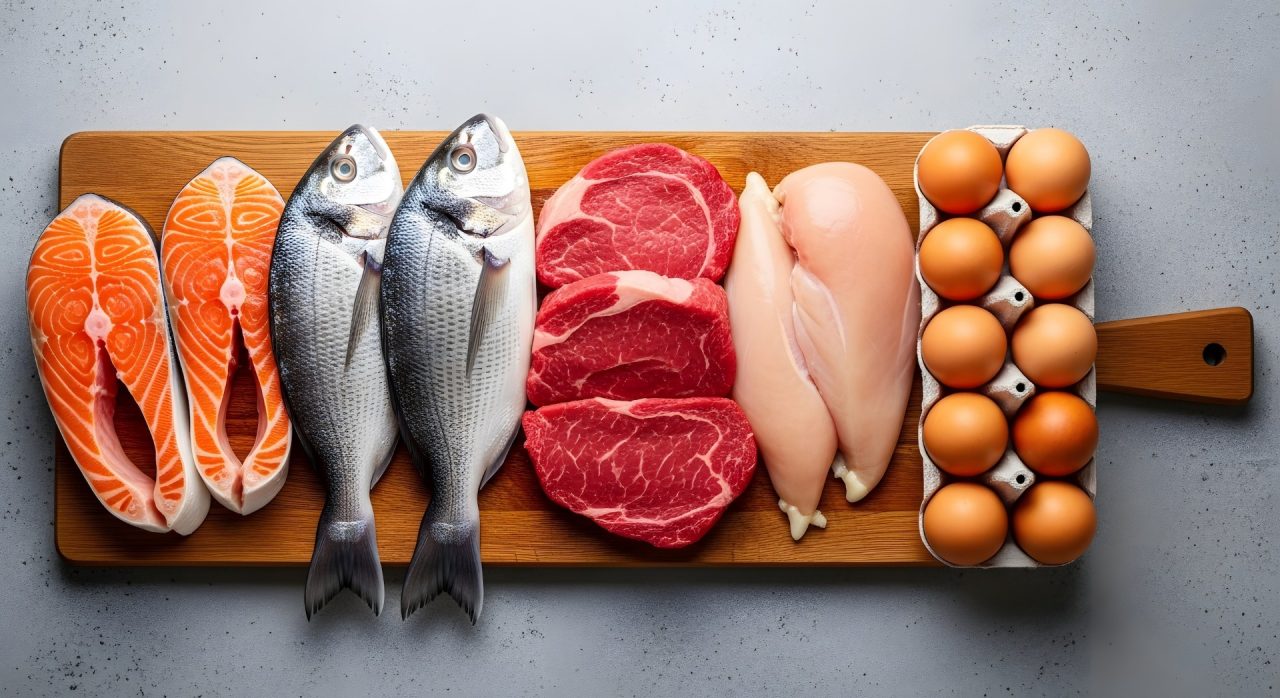
In recent shopping trips, you may have observed a surprising trend: products like potato chips, pastries, and even bottled water now often come in protein-enhanced varieties. This shift is part of a growing movement, often referred to as “protein-maxxing,” which encourages consumers to maximize their protein intake at every meal. Fueled by social media and recent nutrition guidelines from the federal government advocating for increased protein consumption, this trend shows little sign of abating.
But the question remains: how much protein do we really need? Should we be swapping out whole grains for steak?
“Protein has become the darling of the diet world—sort of like low-fat foods were in the ’90s. We’ve placed a health halo around it,” explains Marily Oppezzo, PhD, a dietitian and medicine instructor at the Stanford Prevention Research Center. “Yes, protein is important, but it’s not the miracle solution that trends on Instagram suggest.”
To get to the bottom of protein’s role in our diets, we consulted Oppezzo and other experts from Stanford Medicine. Here are five crucial insights about protein consumption.
1. Protein Intake Supports Vital Bodily Functions
Despite the mixed messages in dietary advice, it’s undeniable that protein plays a crucial role in our nutrition. All food can be categorized into three macronutrients: carbohydrates, fats, and proteins. Each calorie must be derived from one of these sources.
Protein is integral to numerous bodily functions. At its core, dietary protein provides essential building blocks that our bodies need to manufacture their own proteins, which in turn facilitate almost every bodily function.
“Protein constitutes our muscles, hair, skin—essentially everything,” says Jonathan Long, PhD, an associate professor of pathology. “You can’t obtain these components through fats or carbohydrates alone.”
Just like dietary proteins, the proteins in our bodies are composed of various molecules called amino acids. Out of the 20 amino acids, nine are classified as essential since our bodies cannot synthesize them. We need to obtain these essential amino acids from our diet.
When we consume dietary proteins, our bodies dismantle these long chains of amino acids into individual units that are then repurposed to construct new proteins. Think of it as taking the beads off a necklace to create new jewelry.
2. Adequate Protein is Crucial for Muscle Retention
The previous federal recommended dietary allowance (RDA) for protein stood at 0.8 grams per kilogram of body weight. For a 150-pound adult, this translates to about 55 grams of protein daily, roughly the amount found in an 8-ounce steak. The new guidelines suggest a range of 1.2 to 1.6 grams per kilogram, adjusting the recommendation for a 150-pound individual to between 80 and 110 grams.
This significant change raises questions about the underlying science. “The guidelines didn’t change based on new evidence; rather, they have been heavily marketed,” states Christopher Gardner, PhD, director of nutrition studies at the Stanford Prevention Research Center.

Marily Oppezzo, Jonathan Long and Christopher Gardner
“Were we really misjudging our protein needs by that much? There hasn’t been new evidence to suggest this,” Gardner adds. “Protein has become a massively marketed commodity, and products with added protein are everywhere.”
Oppezzo takes a more nuanced approach, particularly concerning adults over 40 and those on weight-loss medications. Research indicates that higher protein intake can help prevent the muscle loss that often occurs as we age or lose weight.
For individuals with a body mass index over 30, an “adjusted body weight” should be used rather than actual weight when calculating protein needs. Those actively losing weight, such as individuals taking weight-loss medication, may benefit from consuming 1.6 grams of protein per kilogram of their adjusted body weight to counteract muscle loss from calorie restriction.
However, Oppezzo emphasizes that strength training is the most effective strategy for preserving muscle, more so than increasing protein intake. Her mentor, McMaster University’s Stuart Phillips, PhD, astutely remarks that exercise is the cake, while protein is merely the frosting.
“The cornerstone of preventing muscle loss is strength training,” Oppezzo explains. “The additional benefits of higher protein intake are relatively minor.”
3. Existing Protein Levels May Be Sufficient
The revisions to protein guidelines might be unnecessary since Americans already consume an adequate amount of protein. According to the National Health and Nutrition Examination Survey, American men consume roughly 90 to 100 grams daily, while women average 65 to 75 grams—aligning well with the new recommendations.
Some assume that the former RDA was merely a minimum and that more protein is always better; this is a misconception, Gardner clarifies. Protein needs for adults were initially calculated through controlled studies in the 1980s that closely monitored dietary intake and output.
These findings, known as the estimated average requirement for protein, yielded 0.66 grams per kilogram. The RDA was then set 20% higher to ensure the needs of the entire U.S. population were met. Gardner emphasizes that this RDA of 0.8 grams per kilogram wasn’t intended to be a minimum to exceed.
4. The Focus on Protein Could Overshadow Fiber Intake
While high protein consumption is unlikely to pose any health risks on its own, it’s crucial to consider the source of that protein, Gardner cautions. An emphasis on red meat, as recommended in the updated guidelines, raises concerns about excessive saturated fat intake.
If diets centered on protein-rich foods crowd out fiber, essential for gut health and reducing the risk of chronic diseases, this becomes problematic. Only 5% of Americans currently meet the RDA for fiber—a stark contrast to protein consumption levels.
“There are numerous antioxidants that can reduce inflammation and combat cancer, and they aren’t found in meat or protein bars,” Gardner points out.
Many plant-based foods, such as beans, legumes, and whole grains, provide both fiber and protein. Unfortunately, these are not often prioritized when individuals seek to increase their protein intake.

Mila / Adobe Stock
“Americans tend to eat very few legumes,” Gardner notes. In fact, the average American consumes less than 10 grams of legumes daily. “Increasing this intake could boost dietary fiber, antioxidants, and plant-based protein.”
5. The Myth of Incomplete Protein
One common misconception that Gardner wishes would disappear is the idea of incomplete proteins. For years, it was believed that plant-based proteins were incomplete compared to animal proteins. Nutrition advice often suggested pairing beans and legumes with certain grains to form a complete protein source.
However, Gardner sets the record straight: plant proteins are not missing any of the 20 amino acids. While legumes may have slightly lower amounts of one particular amino acid, this isn’t typically an issue for most diets, which provide ample overall protein intake.
If an individual needs 50 grams of protein daily and meets that requirement, then they can afford some flexibility in their protein sources. “Most Americans consume between 80 and 100 grams of protein daily,” Gardner states. “At this point, precision is less crucial.”
Gardner and his colleagues addressed the incomplete protein myth in a 2019 publication, examining amino acid distributions across various animal and plant foods and found them to be nearly identical. A recent study even demonstrated that a vegan diet can effectively support muscle building, comparable to an omnivorous diet.
Oppezzo points out other misconceptions as well, such as the idea that your body can only absorb a certain amount of protein at a time and that it needs to be evenly distributed across meals. While it may be easier to consume 25 grams in three meals compared to 75 grams all at once, studies indicate that there is no notable difference in protein metabolism based on timing. For older adults, however, distributing protein intake across meals can be especially beneficial for muscle protein synthesis.
Additionally, it’s a common belief that immediate protein intake post-exercise is vital; while there’s a so-called anabolic window for muscle repair, this window lasts around 24 hours. Oppezzo recommends focusing on balanced meals throughout the day rather than worrying about immediate post-workout protein consumption.
Lastly, it’s important to remember that exceeding the RDA for protein can potentially limit the intake of other essential nutrients found in fruits, vegetables, whole grains, and nuts.
“While a high-protein diet isn’t necessarily detrimental, one must consider what else is being omitted from the diet,” Oppezzo cautions. “Nutrients such as fiber, vitamins, phytochemicals, and antioxidants are critical for overall health.”


