By Anash.org reporter
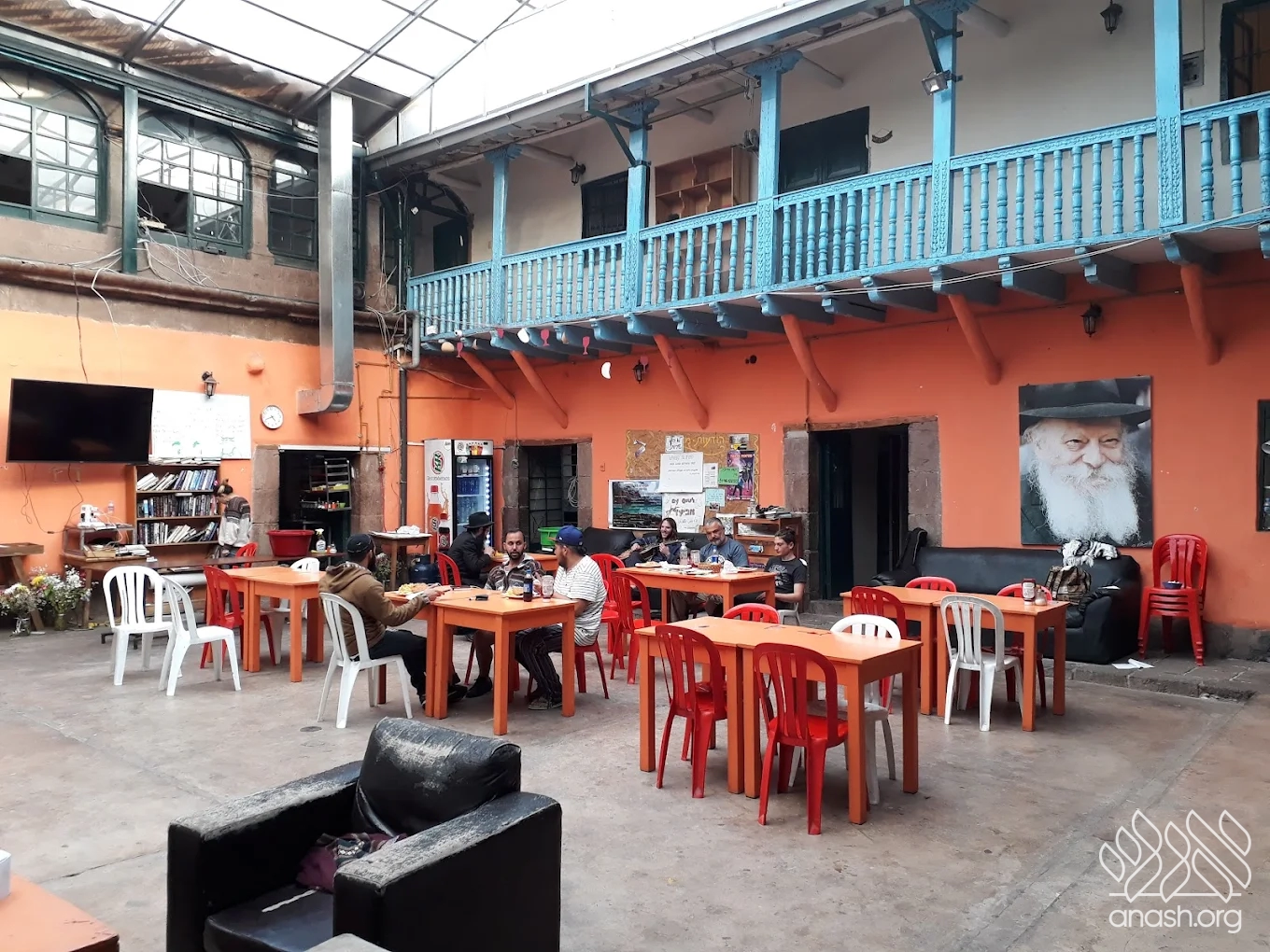
In an unusual turn of events in Cusco, Peru, an Israeli restaurant tried to position itself as a kosher venue under the supervision of Chabad in order to draw in crowds for a public Pesach Seder. This situation raises important questions about authenticity and transparency in kosher dining.
The restaurant, Shefa Mishlochim, offers both meat and dairy dishes while claiming that its meat is “kosher l’mehadrin from the Chabad shechita in Lima.” However, it appears that the establishment merely sourced its meat from a Chabad-affiliated supplier without securing any legitimate kosher certification for itself.
For the Pesach holiday, the restaurant promoted a public Seder aimed at attracting the numerous Israeli travelers and backpackers who frequent the area. Once again, it underscored its purported connection to Chabad and its kosher claims.
However, the promotional material also indicated that the Haggadah would be read over a microphone during the event and that a camera crew would be filming the evening. Furthermore, the wine offered, billed as locally produced, was labeled yayin nesech.
This situation is particularly troubling given that Chabad of Cusco, led by Rabbi Ofer and Yael Kriper, has been diligently serving both Jewish travelers and the local community for the past two decades.
In response to this incident, Merkos issued an official statement emphasizing that the restaurant has “no connection to Chabad whatsoever” and that using the Chabad name without permission is strictly prohibited.
“Merely purchasing meat from a Chabad shechita does not render a restaurant a Chabad establishment,” the statement read, further stating that such advertisements “are misleading the public.”
Merkos also cautioned business owners, asserting, “We take very seriously the exploitation of the Chabad name for misleading marketing. Using the name ‘Chabad’ without explicit written authorization constitutes significant harm to those who observe kashrus.”
The statement urged the public to “exercise caution, remain vigilant, and differentiate between sourcing raw ingredients and having comprehensive supervision over the establishment.”
This incident serves as a reminder of the importance of trust and transparency in the food industry, especially when it involves religious dietary laws. The need for clear and accurate marketing is paramount to avoid misleading consumers.