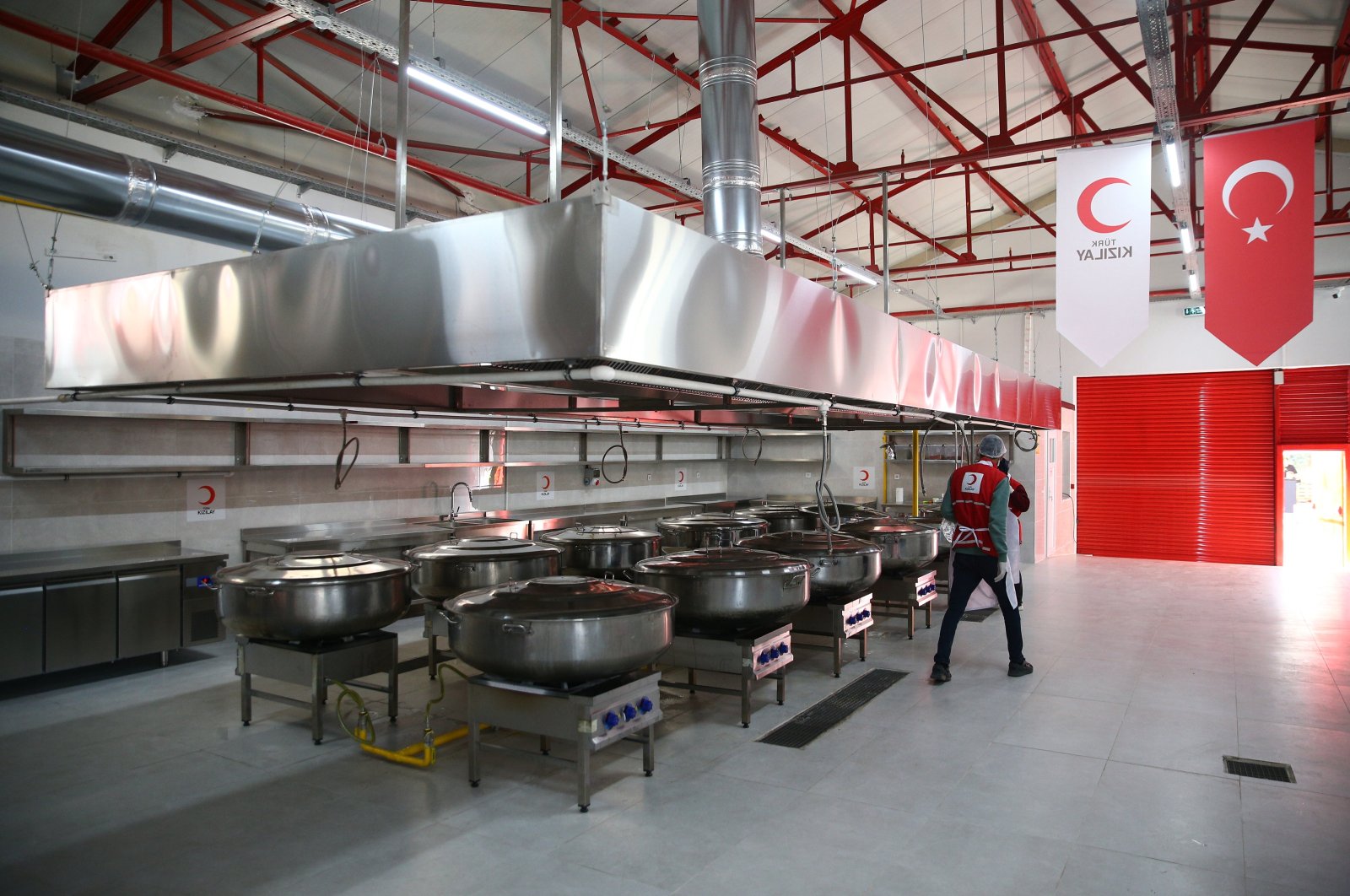
In Adana, Türkiye, a new soup kitchen has opened its doors as part of the Turkish Red Crescent’s (Kızılay) “81 Soup Kitchens in 81 Provinces” initiative. This expansion underscores a commitment to enhancing food assistance and disaster response across the nation, making a significant impact in the lives of many individuals in need.
New Soup Kitchen Opens in Adana
The recently inaugurated facility, situated at the Kızılay Disaster Center in the Yüreğir district, aims to serve daily meals to thousands while functioning as an emergency food distribution center during crises. Officials emphasized the importance of this soup kitchen at the opening ceremony.
Commitment to Vulnerable Groups
Kızılay President Fatma Meriç Yılmaz highlighted that the soup kitchen is vital for providing meals to vulnerable populations, such as the elderly, individuals with disabilities, and those unable to prepare food at home.
“We assure those who are alone that ‘we are right by your side.’ This is especially true for our elderly citizens, individuals with disabilities, and those who find it difficult to cook at home. While the spirit of solidarity thrives during Ramadan through iftar programs, these soup kitchens will continue to operate every day of the year, 365 days,” Yılmaz stated.
Infrastructure and Capacity
The Adana facility is designed with scalability in mind, prepared to meet everyday community needs, as well as to respond to emergencies. Yılmaz explained that the soup kitchen is currently capable of serving 3,000 meals a day, with potential to increase to 11,000, and during critical times, even up to 30,000 meals.
Expanding the Network Across Türkiye
Yılmaz also elaborated on Kızılay’s broader strategy to widen its network of soup kitchens with the assistance of donors and volunteers.
“We began with 46 soup kitchens across Türkiye and have rapidly introduced them with the support of our donors. We plan to establish 22 additional locations in 2026, with many being constructed from scratch,” she explained.
The long-term goal is to ensure that each province in Türkiye has at least one operational soup kitchen, with larger cities hosting multiple facilities. “By the end of two years, we aim to establish at least one soup kitchen in each of the 81 provinces, with more than one in significant cities like Istanbul, where at least 10 are necessary,” Yılmaz noted.
She emphasized that the success of this initiative relies on public support and the efforts of the volunteer network. “The more donations we receive, the greater our responsibility and motivation. Our energy amplifies as we reach out to more people,” she added.
Community and Support
Yılmaz also highlighted the significance of Kızılay’s extensive volunteer base, which consists of over 450,000 individuals ready to assist wherever help is needed.
“As Kızılay, we are like a large family. The greater our workload and donations, the stronger our commitment becomes,” she remarked. The soup kitchen network seeks to ensure that no one in Türkiye is left unsupported.
Governor’s Remarks
During the opening ceremony, Adana Governor Mustafa Yavuz emphasized Kızılay’s vital role in community support during both emergencies and everyday life, stating that the organization has consistently provided aid during challenging times.
Yavuz mentioned that the newly established kitchen will function not only as a daily support facility but also as an essential resource during emergencies. “This facility is more than just a soup kitchen; it symbolizes stability. A city with food and work is a city at peace,” he concluded.
He added that Kızılay’s efforts extend beyond food distribution to include shelter assistance, clothing provisions for those in need, and health services through blood donation programs, urging citizens to support the cause through volunteering and donations.
Adana’s Rich Tradition
Later, Kızılay also hosted a warm and celebratory iftar on the historic Stone Bridge over the Seyhan River, bringing together 3,000 participants to share the blessings of Ramadan.
Governor Yavuz remarked on Adana’s unique geographical and cultural wealth, stating, “Adana is exceptional, not only for its landscape but also for its history and gastronomy. By harnessing these qualities, we will enhance Adana’s profile further.”
He concluded by noting that one of the city’s traditional beverages, Şalgam, recently acquired international recognition from the European Union through geographical indication registration. “We will promote our products that contribute to Adana’s visibility both nationally and internationally,” he stated.
Key Takeaways
- Kızılay opened a new soup kitchen in Adana under the “81 Soup Kitchens in 81 Provinces” initiative.
- The facility aims to provide daily meals to vulnerable populations while serving as an emergency food hub.
- The soup kitchen has a current capacity of 3,000 meals per day but can expand to 30,000 during emergencies.
- Kızılay plans to establish more soup kitchens across Türkiye, with a focus on accessibility in every province.
- The initiative relies on public donations and the active participation of over 450,000 volunteers.
- Community leaders emphasize the overall societal benefits of food security and social support.
FAQ
What is the purpose of the soup kitchen?
The soup kitchen provides meals to vulnerable populations, including the elderly and individuals with disabilities.
How many people can the soup kitchen serve?
Currently, it can serve 3,000 meals per day, with a potential to expand capacity significantly during emergencies.
What is Kızılay’s long-term goal?
The goal is to ensure every province in Türkiye has at least one operational soup kitchen.
How can individuals support Kızılay?
Support can be given through donations, volunteering, and participating in blood donation programs.
The new soup kitchen in Adana marks a significant step forward in addressing community needs, ensuring that support is available year-round. With Kızılay’s commitment and the backing of volunteers, the initiative aims to provide essential services to those in need, fostering a sense of solidarity in the community.