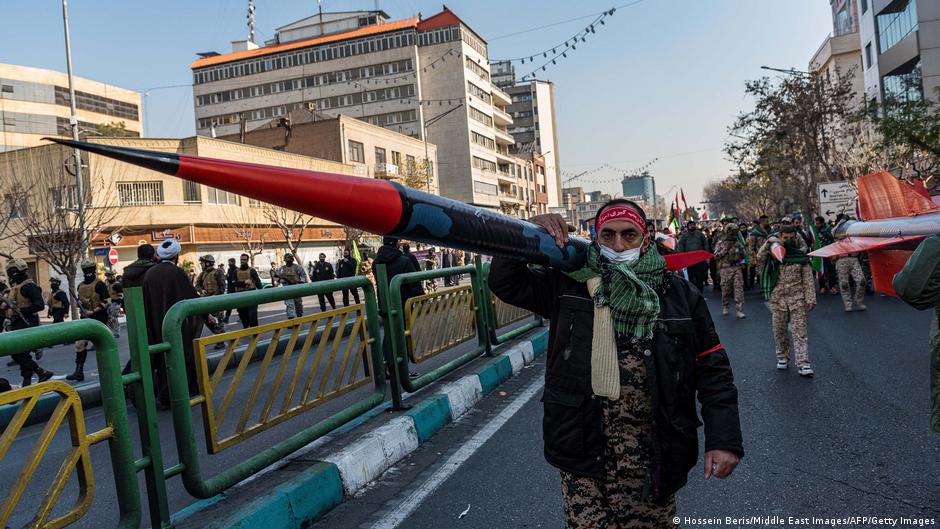
As the conflict between the US-Israel alliance and Iran enters its third week, the implications for the region are significant. Iran’s ongoing military actions against Saudi Arabia and Bahrain highlight the escalating tensions, particularly following the recent appointment of Mojtaba Khamenei as Iran’s supreme leader, who has expressed intentions to keep the Strait of Hormuz closed.
Current Tensions in the Persian Gulf
Iran’s Arab neighbors in the Persian Gulf appear hesitant to openly respond to the changes in leadership within Iran. Sebastian Sons, a senior researcher at the Center for Applied Research in Partnership with the Orient, notes that Gulf capitals are seeking clarity on the evolving situation.
Philipp Dienstbier, who leads the Gulf States regional program at the Konrad Adenauer Foundation from Jordan, states that the current conflict has acted as a unifying force among the Gulf states. He observed, “In the early days of the crisis, there were numerous expressions of solidarity, even between states that were previously at odds.”
Sons emphasized that the Iranian threat necessitates regional cooperation, predicting a potential shift towards closer integration of air and missile defense systems among Gulf nations.
According to Sons, the prolonged nature of the conflict could adversely impact the Gulf economy. He remarked that attacks on critical infrastructure, such as energy facilities and airports, would disrupt the region’s economic lifeblood. Consequently, Gulf states must navigate a delicate balance, making it clear to Iran that certain boundaries have been crossed, while also recognizing the need for a diplomatic approach moving forward.
Regional Diplomacy and Stability
The conflict presents a considerable challenge to the Gulf states’ security strategy, which has leaned towards broad-based diplomatic engagement in recent years. Sons indicated that the objective was to foster relations with various actors, including both the United States and Iran, in order to prevent the region from devolving into a battlefield.
Dienstbier noted that the Gulf states have intentionally adopted a balanced diplomatic stance, aiming for de-escalation. Countries like Oman and Qatar have played mediator roles in regional tensions. However, the recent hostilities have strained this trust. Even if the conflict were to resolve quickly, he believes reverting to previous dynamics will be increasingly difficult.
‘Fundamental change’ unlikely
Overall, reactions to Iran’s military actions from the Gulf region have been mixed. Dienstbier suggested that Gulf governments interpret Iran’s new leadership as a signal of continuity rather than change. Khamenei is seen as closely aligned with the Revolutionary Guards and is expected to maintain Iran’s existing policies.
He stated, “No one in the Gulf is currently expecting a fundamental change in political course.” The future actions of Khamenei remain uncertain, given his lack of prior political office experience.
Sons echoed this sentiment, seeing Khamenei as a continuation of the established regime, yet he also holds the potential for a balance of power that could lead to feasible political management of relations with Iran in the future.
Key Takeaways
- The conflict between the US-Israel alliance and Iran continues to escalate, impacting regional stability.
- Iran’s new supreme leader, Mojtaba Khamenei, may signal continuity in Iran’s policies.
- The Gulf states are cautiously coordinating in response to the Iranian threat.
- Recent hostilities have strained the trust previously established among Gulf nations.
- Regional diplomacy is tested, with the potential for a collective security strategy.
- Iran’s military actions could significantly impact the Gulf economy.
FAQ
What is the significance of the Strait of Hormuz in this conflict?
The Strait of Hormuz is a critical shipping lane for oil and gas, and Iran’s threats to close it could disrupt global energy supplies.
How are Gulf states responding to the Iranian threat?
Gulf states are exploring closer military cooperation while maintaining a balanced diplomatic approach with all parties involved.
What challenges do Gulf states face moving forward?
Gulf states must navigate rising tensions and potential economic impacts while seeking to maintain stability and preserve diplomatic relations.
Can diplomacy resolve the ongoing tensions in the region?
Experts suggest that while the current situation is tense, diplomacy remains the most viable long-term strategy for managing relations with Iran.
This article was originally written in German.