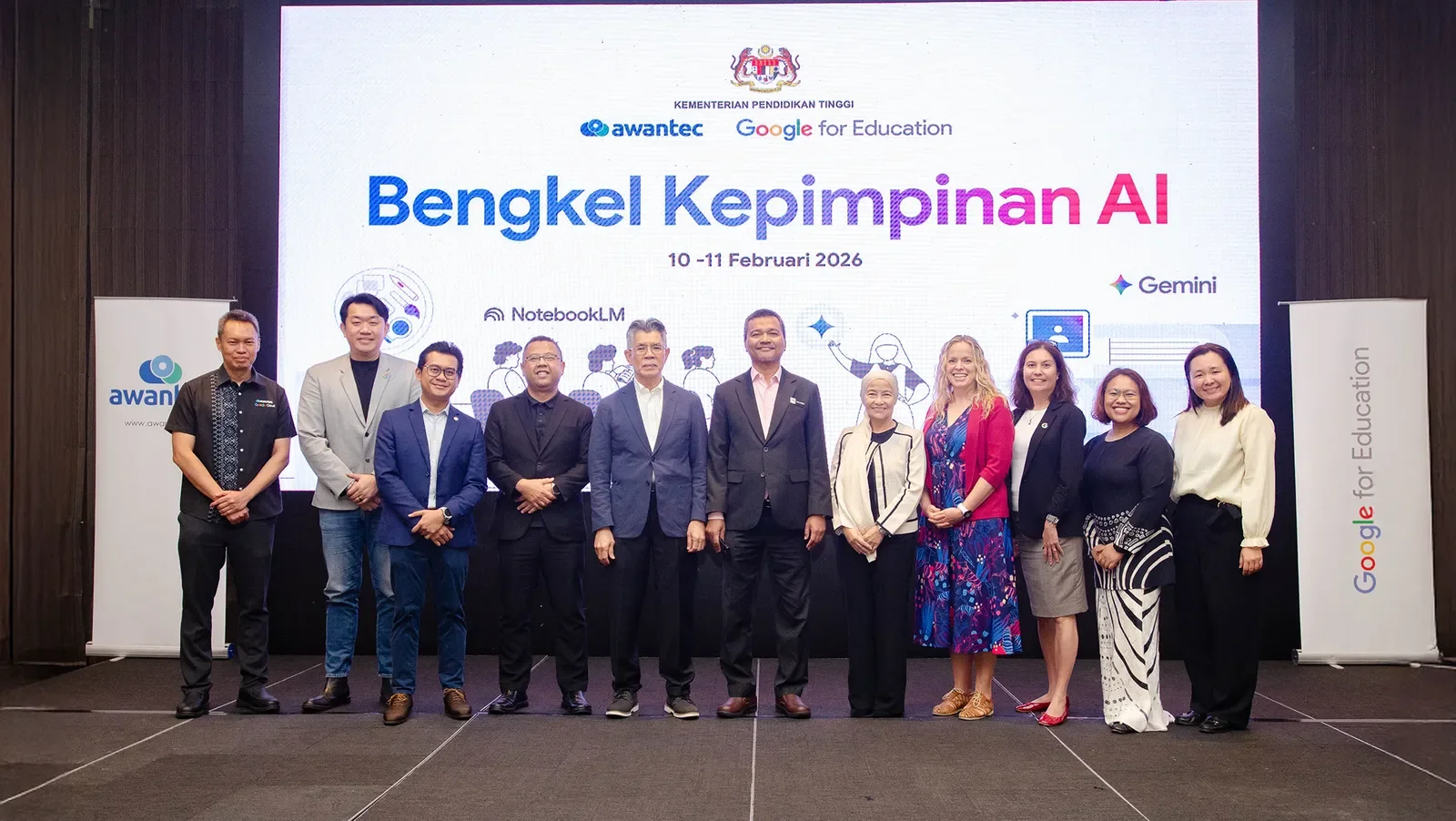
All 20 public universities in Malaysia have adopted Gemini for Education, granting nearly 600,000 students and 75,000 faculty members access to Google’s AI tools via existing Google Workspace for Education.
This initiative enhances the availability of generative AI features for teaching, research, and administrative functions. The Malaysian Ministry of Higher Education has enabled 40,000 faculty members to access Google AI Pro for Education, which includes premium AI models, while also providing 128,000 students with access to NotebookLM Enterprise for research and academic support.
According to Google, this rollout is part of Malaysia’s broader strategy to develop national AI capabilities by 2030, as well as to integrate AI literacy and tools within higher education settings.
Integration of AI tools in university education and research
With Gemini for Education, students and faculty members can utilize Gemini 3.1 Pro, a reasoning model paired with LearnLM, Google’s suite of AI models tailored for educational purposes.
Among the features available to universities are Guided Learning, which aids in exploring concepts and solving problems, and Deep Research, a research assistant that helps in gathering and analyzing data.
To further enhance AI literacy across the university sector, the deployment includes various training and certification programs. Google mentions several initiatives, including Gemilang, the Google Skills platform, AI training courses, Gemini certification for college students, and the Google Career Launchpad.
Universities implementing AI in real coursework
Several Malaysian universities have already begun to incorporate these tools into their academic curricula and projects.
At Universiti Malaysia Perlis (UniMAP), a lecturer developed a customized Gemini “Gem” to assist electronic engineering students with their integrated circuits design and microelectromechanical systems courses. This tool acts as a tailored study assistant throughout the duration of the course.
Similarly, at Universiti Sains Islam Malaysia (USIM), communications students are leveraging the Deep Research capabilities of Gemini, alongside NotebookLM, to analyze social media content and delve into digital communication practices. They also upload lecture notes to NotebookLM to create summaries, study guides, and practice questions.
Additionally, research from Universiti Putra Malaysia (UPM) has examined the effects of NotebookLM on student learning. The findings indicate that undergraduate students have utilized the tool for literature reviews and to convert study materials into audio formats, showing early signs of enhanced engagement with research tasks.
Faculty training and certification initiatives underway
Universiti Malaysia Sarawak (UNIMAS) has prioritized training its faculty to effectively utilize these tools in their teaching.
At UNIMAS, over 500 lecturers have completed Google Workspace for Education training, with 120 achieving certification as Gemini Certified Educators. Nearly 500 students have also participated in certification programs associated with this initiative.
These training endeavors aim to promote the practical application of AI tools in academic settings while fostering technical skills among both students and faculty members.
According to Google, this expansive rollout throughout Malaysia’s public university system signifies a shift towards integrating AI into daily academic workflows, encompassing research, writing, course preparation, and assessment support.
ETIH Innovation Awards 2026
The ETIH Innovation Awards 2026 have opened for entries, celebrating educational technology organizations that make a significant impact across K–12, higher education, and lifelong learning. These awards welcome entries from the UK, the Americas, and internationally, with submissions evaluated based on evidence of outcomes and practical application.
In conclusion, the adoption of AI tools in Malaysian public universities marks a significant milestone in enhancing educational practices. With the tools aimed at fostering learning, teaching, and research, the initiative positions the nation as a leader in incorporating technology into higher education. As these innovations continue to evolve, both students and faculty stand to benefit greatly, reshaping the educational landscape for future generations.