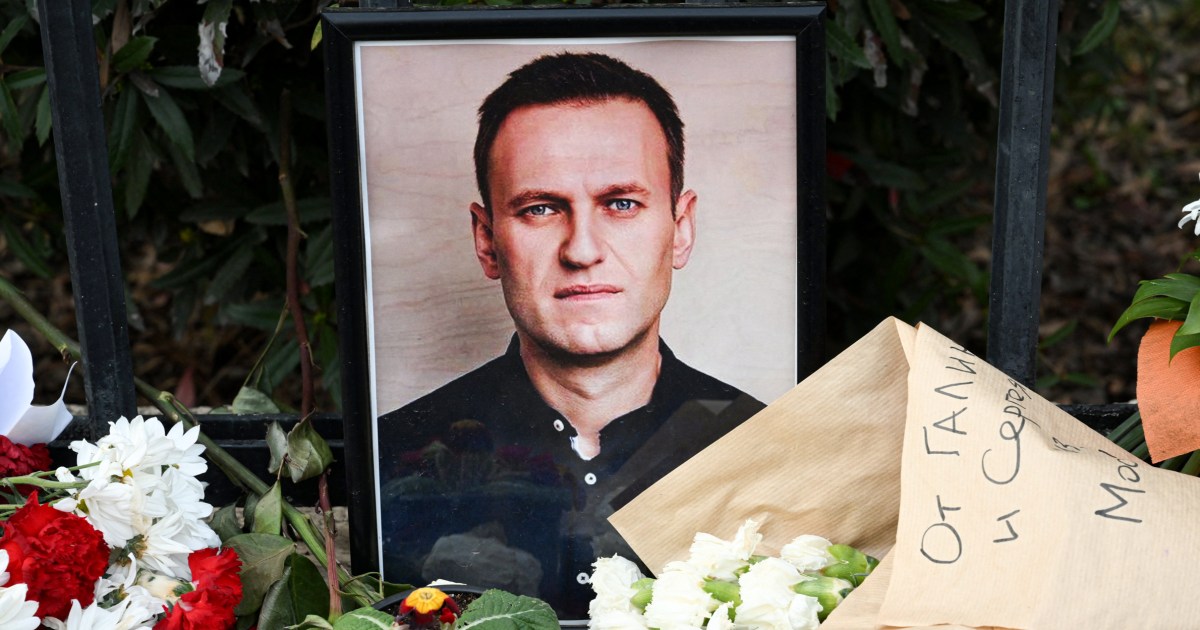
In recent years, poison has transitioned from being a mere relic of medieval intrigues to a prominent tool of geopolitical maneuvering. The recent accusations surrounding Russian opposition leader Alexei Navalny highlight this unnerving trend.
Allegations of poisoning linked to Russia resurfaced this week following lab analyses that detected the rare, frog-derived toxin epibatidine in samples from Navalny’s body. This compound is known to be associated with Ecuadorian poison dart frogs.
These claims contribute to a long-standing and contentious narrative regarding high-profile poisoning incidents in Vladimir Putin’s Russia, which range from radioactive tea to nerve agents. Moscow has consistently denied any involvement in these events, which have significantly impacted its global image.
On Saturday, a joint statement from the U.K., France, Germany, Sweden, and the Netherlands revealed forensic tests confirmed the presence of epibatidine, a potent neurotoxin, in Navalny’s system after his death in a Siberian penal colony in 2024.
According to Russia’s prison service, Navalny, aged 47, died after feeling unwell following a walk around a high-security facility located in a remote town above the Arctic Circle, where he was serving a cumulative 30½-year sentence.
British officials asserted that only the Russian government possessed both the capability and opportunity to administer the toxin to Navalny, prompting them to report the incident to the Organization for the Prohibition of Chemical Weapons. French Foreign Minister Jean-Noël Barrot stated that this occurrence highlights Vladimir Putin’s willingness to utilize chemical agents against his own citizens to retain authority.
U.S. Secretary of State Marco Rubio expressed his awareness of the “troubling” findings during a news conference on Sunday and indicated he sees no reason to dispute them.
In response, Russian Foreign Ministry spokesperson Maria Zakharova remarked that Russia would provide comments “where there are test results, where there are formulas of the substances.”
Despite Russia’s dismissal of the claims, the incident has drawn attention to the extraordinary toxicity of epibatidine, an exotic poison noted for its potency. Experts argue that the production and deployment of such a substance could only be feasibly managed by a state with advanced chemical capabilities.
Anthony’s poison arrow frog, or Epipedobates anthonyi, is typically about 22 mm long, and its skin harbors enough epibatidine to lethally affect a human many times over, with fatal doses quantified at as little as 1.4 micrograms.
The British Foreign Ministry noted in a joint statement that epibatidine “is not naturally found in Russia,” but emphasized that this fact is irrelevant if a state has the means to synthesize and utilize it.
Professor Alastair Hay, an environmental toxicology expert from the University of Leeds, explained, “The structure is known and it’s possible to synthesize it chemically, so you wouldn’t have to go to Ecuador looking for brightly colored frogs, wash them down and get the toxin off their skin.”
“You could make it in the lab,” he stated.
Key Takeaways
- Allegations of poisoning against Russian opposition leader Alexei Navalny have resurfaced.
- Laboratory tests found epibatidine, a neurotoxin linked to poison dart frogs, in Navalny’s body.
- Western officials attribute the use of this toxin solely to the Russian government.
- The incident raises concerns about state-sponsored chemical weapon capabilities.
- Expert analysis indicates epibatidine can be synthesized in a laboratory environment.
FAQ
What is epibatidine?
Epibatidine is a potent neurotoxin derived from certain species of poison dart frogs, known for its extreme lethality even in small amounts.
What was Alexei Navalny accused of?
Navalny has been accused of being poisoned, with evidence suggesting the presence of the toxin epibatidine in his system.
What do experts say about the toxin’s accessibility?
Experts assert that epibatidine can be synthesized in a laboratory, making it potentially accessible to state actors with advanced chemical capabilities.
How has Russia responded to the allegations?
Russia has categorically denied involvement and has stated they will comment further when concrete test results are available.
In conclusion, the recent accusations of poisoning involving Alexei Navalny shed light on the disturbing reality of modern political tactics. As the situation unfolds, it underscores the need for vigilance regarding the potential use of chemical agents in geopolitical conflicts.