The emergence of nuclear weapons has fundamentally altered the landscape of conflict. For the first time, a single weapon had the power to obliterate an entire city. However, instead of ending the relentless quest for military superiority, this development prompted military strategists to find ways to integrate these immensely destructive weapons into established concepts of deterrence, battlefield tactics, and military success.
This pursuit led to the creation of tactical nuclear weapons. Designed primarily for limited military objectives rather than city annihilation, these weapons aimed to deliver nuclear firepower against targeted military assets. With their relatively low yields, a range of delivery methods, and specific battlefield applications, tactical nuclear weapons appeared to offer a mechanism for leveraging nuclear superiority without triggering full-scale nuclear warfare.
Despite their potential, the viability of tactical nuclear weapons waned due to advancements in precision-guided conventional warfare, fears of nuclear escalation, and an evolving moral taboo against their use. As the Cold War drew to a close, the deployment of these weapons decreased significantly. However, renewed interest in low-yield nuclear options has emerged, largely influenced by theories of managed escalation. This article explores the evolution of the rationale behind tactical nuclear weapons, shifting from instruments of battlefield destruction to speculative tools designed for escalation control, and examines the perilous assumption that theoretical management of nuclear conflict can enhance global safety.
Understanding Tactical Nuclear Weapons
The distinction between tactical and strategic nuclear weapons is often murky. Strategic nuclear arms are typically aimed at crippling an adversary’s military infrastructure, industrial capabilities, or civilian centers, while tactical nuclear weapons, also known as non-strategic nuclear weapons, are focused on limited military engagements such as targeting troop concentrations, military bases, airfields, or naval units. Their classification relies more on their intended missions and operational roles than on their explosive yield.
Nuclear yield, measured in kilotons (thousands of tons) or megatons (millions of tons) of TNT equivalent, underscores the destructive potential of these arms. The bomb dropped on Hiroshima had an approximate yield of 15 kilotons. Contemporary tactical nuclear weapons can vary widely, with yields ranging from less than one kiloton to tens of kilotons, with some even surpassing the bombs utilized against Japan in 1945. Their delivery systems can span from a few dozen kilometers in aerial strikes to long-range capabilities facilitated by submarine-launched ballistic missiles.
Unlike conventional explosives, nuclear weapons generate unique destructive effects. The blast wave can devastate large areas, while intense thermal radiation can ignite fires and inflict severe burns. Additionally, prompt ionizing radiation may incapacitate or kill exposed personnel, and dangerous radioactive fallout can contaminate vast regions, posing a threat to populations far beyond the immediate blast site. The significance of these effects varies based on factors such as weapon yield, burst altitude, terrain, and weather conditions. Even a relatively small nuclear detonation can create widespread destruction uncontrollable by its initial target specifications.
During the Cold War, the U.S. and the Soviet Union amassed a striking array of tactical nuclear capabilities, including artillery shells, short-range ballistic missiles, gravity bombs, nuclear depth charges, torpedoes, and nuclear air-defense systems. Some of these were developed in response to anticipated conventional military limitations, while others aimed to annihilate concentrated enemy forces using fewer munitions.
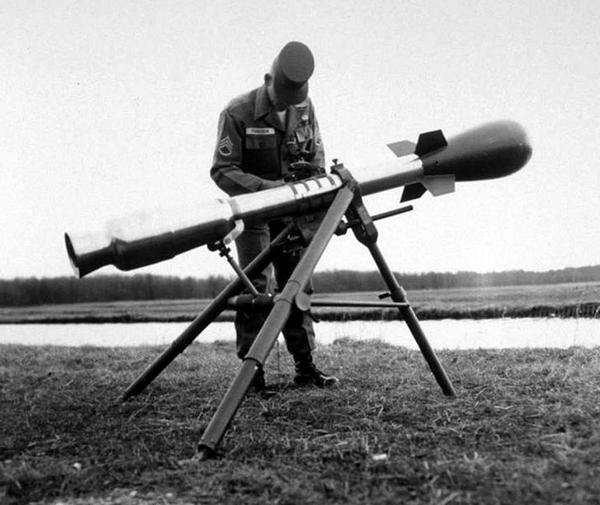
Davy Crockett artillery weapon with W54 nuclear warhead – Too close for comfort?
Most of these specialized systems were eliminated from U.S. stockpiles after the Cold War. Today, the U.S. non-strategic nuclear arsenal mainly consists of B61 gravity bombs deployed by aircraft. The B61-12 model features selectable yields and an improved guided tail assembly for enhanced accuracy. Additionally, the U.S. has introduced the W76-2, a low-yield warhead carried by Trident submarines, which, despite being housed in a strategic delivery system, offers limited nuclear response capabilities.
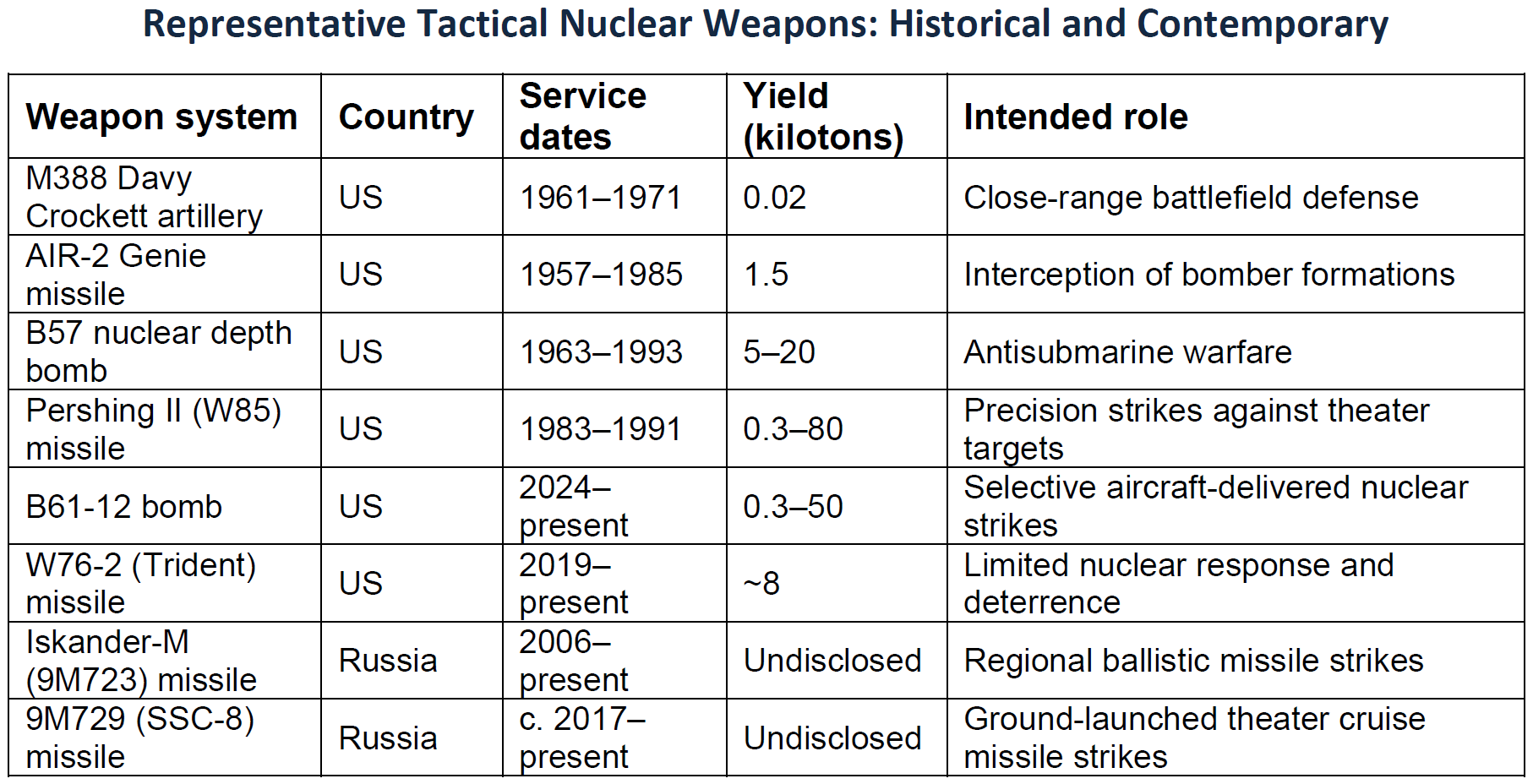
In contrast, Russia maintains a diverse array of non-strategic nuclear assets, linked to air, land, and naval delivery systems. These weapons play a central role in Russian nuclear strategy and in Western analyses of Russian military capabilities. Other nuclear states possess arms and delivery methods potentially suitable for limited nuclear actions, although their inventories and operational roles are often less clearly defined.
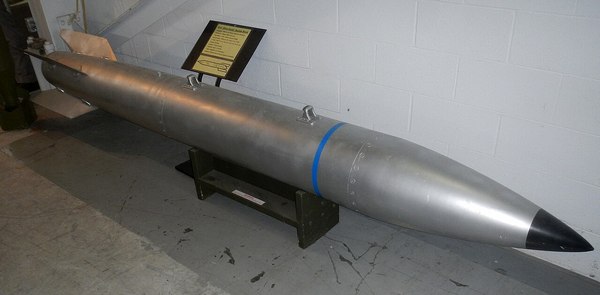
B-61 nuclear bomb with adjustable yield
The assorted nature of these systems highlights a core dilemma regarding the tactical classification. A weapon may be designated for limited battlefield use, but the consequences of its deployment do not necessarily remain confined. A low-yield warhead launched from a strategic submarine could be indistinguishable mid-flight from a more powerful nuclear weapon. An attack on a military target may inadvertently lead to significant civilian casualties or extensive radioactive fallout. Critically, the adversary subjected to a nuclear strike is under no obligation to perceive it as a limited engagement simply because that was the attacker’s intent. Thus, the distinction between tactical and strategic nuclear weapons serves better to explain intended use than to predict the actual aftermath of their deployment.
Eroding Utility of Tactical Nuclear Weapons
The original justification for tactical nuclear weapons stemmed from their capability to destroy targets that conventional munitions would struggle to hit or could do so only with excessive ammo costs. Nuclear explosives compensated for limited accuracy by creating widespread destruction. A singular nuclear detonation could achieve what would typically require hundreds or even thousands of conventional bombs or shells.
However, advancements in precision-guided conventional munitions have significantly undermined this advantage. Modern missiles, guided munitions, and artillery rounds can successfully eliminate specific threats without wreaking havoc on surrounding areas. Enhanced targeting and surveillance systems have only improved the effectiveness of conventional responses. While the sheer destructive power of nuclear arms remains unmatched, their broad area effects are becoming increasingly unnecessary for engagements that once seemed to justify their deployment.
In fact, the extensive destructive fallout from nuclear weapons can often backfire for military strategy. Today’s military operations focus on mobility, spread-out formations, concealment, and decentralized tactics. Rather than concentrating large units ready for nuclear strikes, forces may now be distributed over vast terrains or mixed among civilian populations, making them difficult targets. The capability to devastate everything within a wide radius becomes less beneficial when the enemy is obscure and dispersed.
Moreover, the introduction of nuclear arms complicates military operations. Radioactive fallout may contaminate areas that forces aim to occupy or navigate through. Nuclear explosions can damage essential infrastructure, including transport and communication networks necessary for subsequent strategies. Depending on the situation, the electromagnetic effects of nuclear detonations could disrupt friendly equipment and command systems, limiting the operational advantage that nuclear might otherwise confer.
Comparable issues have also led to the diminished military appeal of chemical and biological weapons. Like nuclear arms, these options promise considerable destructive or debilitating consequences, yet they introduce significant challenges regarding targeting discrimination, reliability, and operational command. Chemical agents can endanger friendly forces, obligating protective measures while contaminating operational zones. Biological agents pose even graver risks due to their unpredictable nature and potential to spread uncontrollably. Advances in conventional precision munitions have only reduced the attractiveness of these indiscriminate tools. Furthermore, strict international prohibitions and the stigma attached to chemical and biological warfare have restricted their viability in military practice. While each category presents unique challenges, they all highlight the drawbacks of weapons whose extensive effects might turn into liabilities rather than advantages.
Reducing the yield of nuclear weapons doesn’t erase these issues. Lower-yield options may lessen local destruction from specific detonations; however, they also compromise some of the area effects that initially set nuclear arms apart from conventional explosives. When conventional precision methods suffice, employing nuclear arms exposes significant political and strategic risks without yielding concomitant military benefits. As conventional capabilities have matured, the scenarios that permit nuclear options to deliver meaningful advantages have diminished, even as the potential strategic fallout from nuclear deployment retains immense significance.
Korea: A Crucible for Nuclear Restraint
The Korean War marked the first major examination of nuclear weapon utility post-Hiroshima and Nagasaki. The U.S. held undeniable nuclear supremacy, while neither North Korea nor China possessed any nuclear arms. Despite this, the Truman administration opted against atomic weapon usage, even in the face of significant military setbacks following Chinese interference late in 1950.
Nuclear deployment was hotly debated, particularly as General Douglas MacArthur pushed for expanding operations into China and sought authorization to target military sites with atomic bombs. Nevertheless, U.S. officials doubted the existence of sufficiently concentrated targets to justify decisive nuclear strikes. A State Department review in November 1950 concluded that atomic arms were unlikely to sway the conflict’s outcome and cautioned against potential Soviet participation as well as alienating Asian populations. The clash of military strategy between MacArthur and President Truman ultimately led to the general’s dismissal in April 1951.
Nuclear options remained a consideration during the Eisenhower administration. In 1953, Eisenhower and Secretary of State John Foster Dulles discussed potentially deploying atomic weapons to break the military stalemate in Korea. They expressed frustration over an emerging taboo against nuclear employment, with debates ongoing about whether U.S. nuclear threats influenced the armistice in July 1953.
The Korean experience highlighted a significant contradiction in the early nuclear era. Although nuclear weapons offered remarkable destructive capabilities against adversaries lacking similar arsenals, their efficacy was limited by targeting constraints and fears of escalating conflict. The ability to unleash extraordinary devastation didn’t guarantee the achievement of political objectives tied to the conflict. Truman’s decision underscored the need to differentiate between winning a battle and safeguarding broader strategic interests for the United States.
Vietnam: Evaluating Nuclear Battlefield Value
Throughout the Vietnam War, American conventional forces struggled to secure decisive victories against an opponent that relied on agile tactics, infiltration, and prolonged conflict strategies. While the U.S. enjoyed overwhelming nuclear superiority, it raised questions about whether tactical nuclear weapons could succeed where conventional firepower faltered.
In 1967, scientists from JASON, a Department of Defense advisory organization, published a study titled Tactical Nuclear Weapons in Southeast Asia. Major contributors included prominent physicists Freeman Dyson and Steven Weinberg. The study analyzed target availability, the effectiveness of nuclear assaults, and the vulnerability of American forces to potential nuclear retaliations.
The findings were disheartening. The communist forces typically spread thinly, vastly limiting the utility of nuclear area effects. Their logistical supply routes traversed difficult landscapes and could be repaired or circumvented. While nuclear strikes might impose temporary disruptions, maintaining long-term control over a distributed logistical network would be challenging. The profound destruction characterized by nuclear detonations did not consistently yield sustainable military advantages.
The study also revealed a concerning asymmetry. U.S. forces were reliant on concentrated bases, ports, airfields, and logistical support, making them appealing nuclear targets. Even with a robust nuclear advantage in Southeast Asia, introducing nuclear elements could spur China or the Soviet Union to equip North Vietnam similarly. Consequently, U.S. forces could find themselves increasingly exposed due to implementing weapons intended to fortify their position.
The political ramifications were equally complex. A simultaneous CIA assessment contemplated the consequences of U.S. nuclear deployment against Chinese forces intervening in Vietnam. Predictions included widespread international condemnation, damage to American alliances, and significant erosion of the taboo against nuclear warfare. Thus, breaking the nuclear restraint could weaken U.S. efforts to deter other nations from pursuing nuclear capabilities.
The Vietnam analysis therefore exposed two interconnected dilemmas. Tactical nuclear weapons offered limited advantages against dispersed opponents relying on resilient logistical frameworks, while their introduction risked transforming a conventional conflict into one with broader strategic implications. Immunity from the devastating effects of a substantial nuclear arsenal did not translate into practical means for achieving political victory in Vietnam.
Iran: The Current Coercive Nuclear Dilemma
Contemporary Iran poses a unique military challenge with a parallel strategic question. Its nuclear research and development facilities are hardened and deeply buried, complicating conventional military attacks aimed at neutralizing them. The immense destructive capacity of nuclear weapons can be appealing for planners looking to dismantle installations that conventional arms might not eradicate.
Both the United States and Israel have executed conventional strikes against Iranian nuclear sites in 2025 and 2026. The long-term effectiveness of these actions on Iran’s nuclear capabilities remains uncertain. Damaged facilities do not necessarily equate to the total dismantling of enriched uranium stores, specialized equipment, and scientific expertise relevant to future nuclear endeavors. Furthermore, international inspectors face challenges verifying the status of Iran’s nuclear resources.
A hypothetical nuclear strike on a fortified site could achieve more physical destruction than a conventional assault. However, even full obliteration of a particular installation does not ensure an enduring political closure. Scientific expertise isn’t destroyed via bombing, and residual personnel or materials can support the resurgence of Iran’s nuclear ambitions.
Nuclear employment would also entail consequences transcending the immediate target. Civilian casualties, radioactive contamination, international backlash, and regional ramifications could overshadow the military gains achieved. Most critically, such actions could reinforce Iran’s resolve to develop its nuclear deterrent, transforming efforts to thwart proliferation into incentives for it.
This scenario invokes a foundational question: if the objective is to prevent Iran’s nuclear arsenal from emerging, will nuclear strikes further that aim, or will they generate a heightened motivation for Iran and similarly threatened nations to pursue their own nuclear capabilities?
The Misconception of Nuclear Shock
A separate rationale for nuclear deployment hinges on the presumed psychological impact of nuclear attacks. It is believed that the unprecedented destruction caused by even limited nuclear operations could shock an adversary into submission, yielding political results disproportionate to the number of weapons used. This view conflates destructive power with effective political coercion. Governments often do not respond to devastation by complying with aggressor demands; instead, they may perceive significant destruction as an existential threat, prompting more vigorous resistance and complicating potential compromises.
The historical record casts doubt on this assumption. Extensive conventional bombardment did not compel North Vietnam to negate its objectives. Similarly, during World War II, the vast destruction inflicted on many nations failed to consistently yield immediate political acquiescence. The Japanese surrender following the atomic bombings was predicated on various factors, including the Soviet Union’s entry into the conflict, complicating straightforward conclusions regarding the coercive influences of nuclear destruction.
Nuclear shock can undoubtedly affect political dynamics, but its implications depend on the adversary’s objectives, leadership dynamics, domestic conditions, and perceptions of imminent danger. It cannot be presumed to produce capitulation rather than intensified resistance.
The Limits of Nuclear Monopoly
The possession of nuclear arms does not negate a non-nuclear adversary’s capacity to retaliate. Various means—conventional missiles, drones, assaults on regional military installations, and other asymmetric strategies—remain options even after an overwhelming nuclear strike. As a result, the initiating state may cause great destruction without establishing dominance over the ensuing conflict. Nuclear supremacy does not guarantee an absence of regional escalation, continued resistance, or political turmoil.
The longer-lasting consequences could prove even more detrimental. A nuclear strike against a non-nuclear adversary would send a signal that abstaining from nuclear development offers no safeguard against nuclear strikes. Other governments might interpret such assaults as a revelation underscoring the need for independent nuclear deterrents. A military engagement aimed at neutralizing a nuclear threat could inadvertently bolster the proliferation of additional nuclear menaces.
Korea, Vietnam, and the modern Iranian confrontation illustrate varied military circumstances, yet they all reveal a limited capacity of nuclear might: the ability to deliver substantial destruction does not ensure effective control over political outcomes. While nuclear weapons can eliminate certain targets, they do not eradicate the strategic ramifications of their use.
Revising the Justification for Incremental Nuclear Deterrence
As the battlefield utility of tactical nuclear arms has declined, a new defense for limited nuclear capabilities has gained traction. Rather than emphasizing their destruction capabilities, advocates argue that such weapons could enhance deterrence through credible responses to limited nuclear assaults. The justification for nuclear arms has shifted from their tactical effectiveness to how their availability may shape an adversary’s choices.
This reasoning operates under the perception of a gap in conventional nuclear deterrence. If an adversary were to activate a relatively low-yield nuclear weapon during a regional conflict, anticipating that it would compel its opponent to capitulate, would the United States genuinely threaten substantial nuclear retaliation—potentially igniting a broader nuclear conflict? If the adversary believes that counteractions might not occur, it might view limited nuclear use as a viable risk.
The 2018 U.S. Nuclear Posture Review highlighted this point. It cautioned that Russia might mistakenly perceive limited nuclear escalation as leading to favorable outcomes without triggering a significant American response. The recommended approach was to broaden the array of credible nuclear response options, thereby eliminating any perceived advantage stemming from limited nuclear action.
The most notable embodiment of this strategy is the W76-2 low-yield warhead, launched from Trident missile submarines beginning in 2019. By modifying an existing warhead, the U.S. secured a comparatively low-yield option deployable via a highly survivable strategic platform. The 2022 Nuclear Posture Review reiterated the significance of this capacity in deterring limited nuclear use.
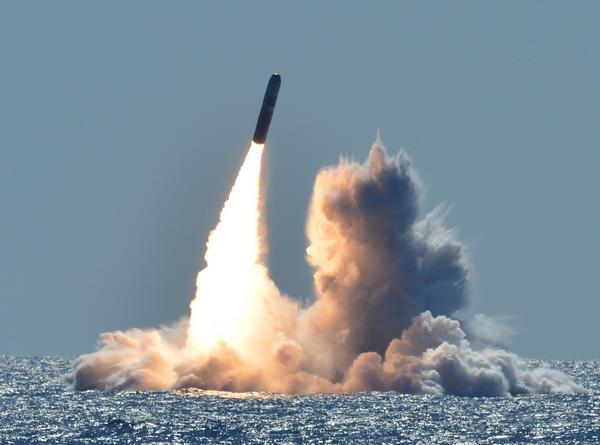
Trident missile launch from ballistic missile submarine – Tactical or not?
Utilizing a strategic delivery method for the W76-2 opens additional risks. An adversary detecting a Trident launch cannot differentiate between whether it bears a low-yield W76-2 warhead or a more powerful strategic armament. Thus, the pursuit of a limited nuclear option introduces the genuine potential that what was intended as a controlled escalation may be read as the onset of a strategic nuclear offensive.
The foundational logic echoes the Cold War’s flexible response doctrine. Instead of presenting an adversary with an ultimatum of total capitulation or massive retaliation, nuclear states strive to maintain a spectrum of responses. A minimal nuclear strike could theoretically elicit proportionate nuclear retaliation, demonstrating resolve while sidestepping immediate escalation into broader nuclear conflict.
This premise has surface-level appeal. Deterrence relies partly on an adversary’s belief that threatened reprisals will indeed occur. Consequently, a threat rooted in limited nuclear escalation may be perceived as more credible than one involving disproportionate destruction. Hence, presenting additional options could potentially deter an adversary from initiating conflict in the first place.
However, this rationale is built upon a variety of tenuous assumptions. The adversary must recognize the range of response options, trust in their potential application in the event of conflict, and assess that the repercussions would outweigh its perceived benefits. The deterring nation must also accurately interpret the adversary’s motivations and willingness to gamble. None of these variables is guaranteed through merely deploying an additional nuclear warhead.
A further complication arises from the assumption that escalation dynamics occur symmetrically. A limited nuclear strike is presumed to trigger an equally limited response, which of course the original attacker would recognize as proportionate—leading them to refrain from increasing their counter-strike. However, differing interpretations of significance regarding the targets hit, weapons employed, and surrounding political contexts may blur the lines of mutual proportionality. What one side considers a restrained response might appear as intolerable escalation to the other side.
This represents the fallacy of escalatory symmetry. Nuclear conflict does not unfold within a mutually recognized scheme of proportionality. Each party evaluates the encounter based on unique objectives, vulnerabilities, fears, and interpretations of the opponent’s intentions. Thus, acquiring further low-yield capabilities does not guarantee converging perceptions.
The risks are compounded by disparities in nuclear doctrines. Russia’s November 2024 nuclear doctrine reserves the right to utilize nuclear weapons in reaction to conventional aggression threatening its sovereignty. Specifically, it outlines conditions under which nuclear deployment may occur, including the detection of ballistic missiles aimed at Russia or its allies and attacks on critical nuclear command structures. Without necessitating a proportionate response or differentiating high- from low-yield deployments, an American nuclear response deemed controlled in Washington may be interpreted by Moscow as a justification for much harsher retaliation.
The resurgence of incremental nuclear deterrence effectively replaces a tactical battlefield rationale with a speculative deterrence theory. Its purported benefit is not greater military efficacy but instead establishing more credible threats and enhancing manageable escalation. The security implications of these extended options hinge on the reliability of assumptions regarding adversary behavior and perceptions, which remain challenging to verify.
The Escalatory Trap
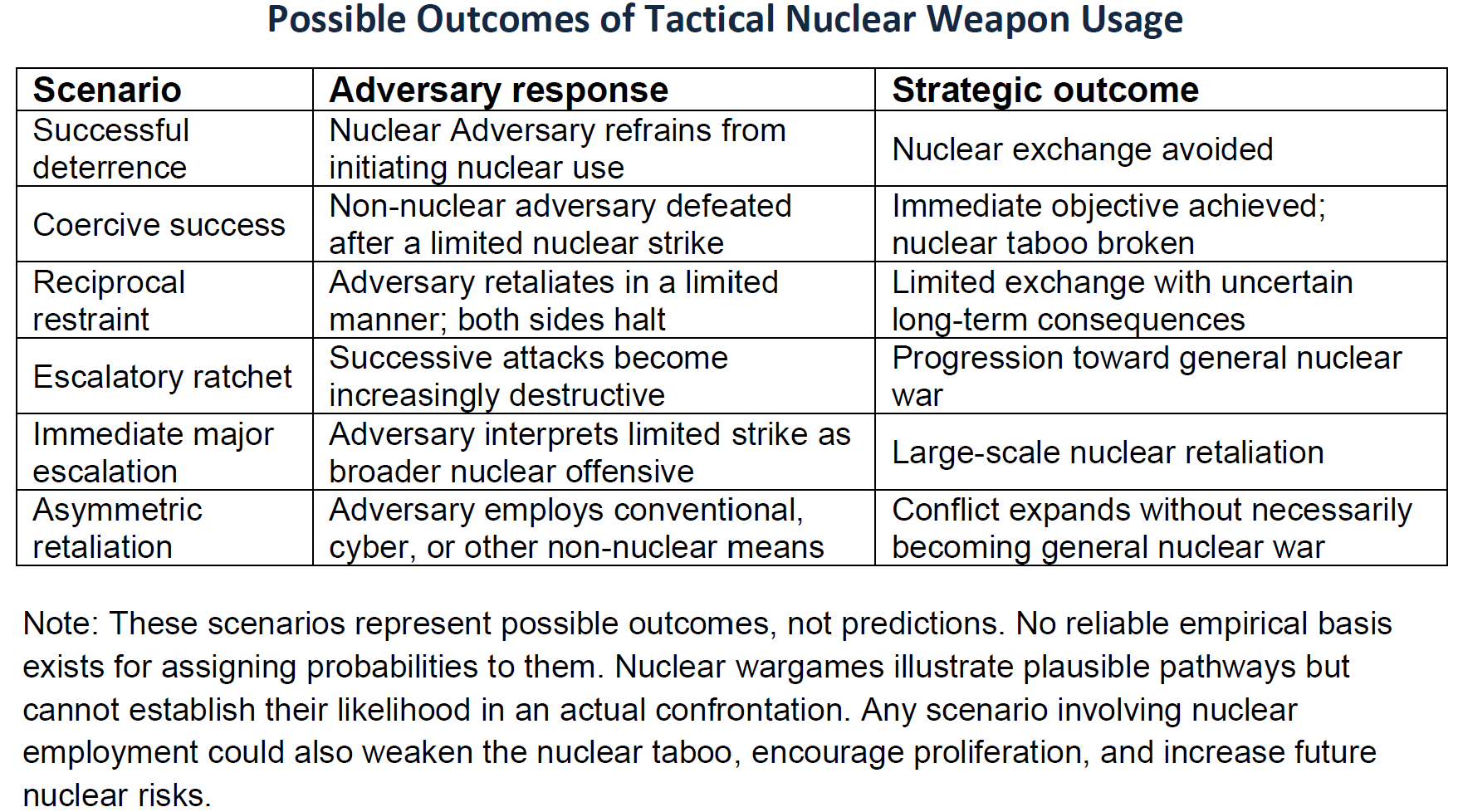
Engaging in limited nuclear actions can trigger a dangerous escalation cycle, propelling participants further up the conflict’s escalation ladder. Each side interprets its actions as necessary responses to aggression, while perceiving the other’s retaliatory move as further confirmation of hostile intentions. Simply matching the previous attack might not appear sufficient to restore deterrence, urging pressure for a more forceful counteraction.
This cycle need not originate from intentional pushes toward global nuclear war. Both participants may wish to avert catastrophe while concluding that failing to respond forcefully could invite increased hostilities. Domestic political turmoil, military setbacks, uncertainties surrounding the adversary’s motivations, and fears of perceived vulnerability could all amplify this trend. The escalatory cycle makes retreat increasingly complicated, even as the stakes of subsequent escalation could be catastrophic.
The lack of a commonly accepted escalatory framework exacerbates this challenge. Nuclear powers may assign different meanings to specific targets, weapon yields, or forms of retaliation. Moreover, they are unlikely to reach a consensus on the threshold that differentiates a limited nuclear exchange from a strategic nuclear confrontation. Hence, each successive attack may be interpreted as crossing boundaries established by prior engagements— even if its instigator believes the action to be measured and proportionate.
Nuclear war games have illustrated the plausibility of this escalation mechanism. A National Research Council review highlighted RAND simulations where a limited U.S. nuclear strike intended to restore deterrence was perceived by adversaries as the onset of nuclear hostilities, thereby provoking widespread nuclear retaliation. Yet other simulations also led to scenarios of restraint or de-escalation. More recent exercises from the Center for a New American Security demonstrated that limited nuclear exchanges could occur across several iterations of retaliation without escalating to a general nuclear conflict. These sessions do not confirm that uncontrolled escalation is inevitable; rather, they demonstrate that initiating nuclear deployments can prompt reciprocal actions neither side can accurately forecast or contain.
Breaking the Nuclear Taboo
Since the bombings of Hiroshima and Nagasaki in August 1945, nuclear weapons have not been utilized again in warfare. In the eight decades since, numerous large-scale conflicts have occurred, including those involving nuclear states, without subsequent nuclear detonations in combat. This striking record cannot be solely ascribed to nuclear deterrence. An influential political and moral inhibition against nuclear warfare, often referred to as the nuclear taboo, has also emerged.
This taboo does not constitute a formal prohibition universally accepted among nuclear powers. Instead, it reflects a widely shared norm that differentiates nuclear weapons fundamentally from conventional arms. Their unparalleled destructive capabilities, potential for indiscriminate casualties, and association with catastrophic escalation make their use politically unacceptable in circumstances where conventional military force could suffice. The restraint shown during the Korean and Vietnam conflicts played a role in establishing and reaffirming this distinction.
Employing even a single tactical nuclear weapon would dismantle this enduring eight-decade precedent. While immediate international backlash may involve widespread condemnation, demonstrating that nuclear weapons can again be wielded in warfare could compromise expectations of their continuous non-use. If the initiating state managed to gain apparent military or political leverage without incurring devastating retaliation, it might embolden other nuclear states to explore similar courses of action. Gradually, limited nuclear deployment could become an accepted practice of military coercion.
The fallout for nuclear proliferation could be particularly severe. The international nonproliferation agreement hinges on the belief that states can ensure their security without needing indigenous nuclear arsenals. Attacks against non-nuclear opponents could dismantle that belief. Faced with nuclear-armed neighbors, states might determine that international diplomacy, agreements, and conventional defenses offer inadequate safeguards against nuclear coercion.
Israel presents a particularly precarious case. Its acknowledged, yet officially undeclared, nuclear weapons provide it with regional nuclear dominance. However, its geographical compactness, dense population, and exposed infrastructures render it especially vulnerable to nuclear strikes. Should additional states in the Middle East acquire nuclear arms, it could significantly threaten Israeli security.
If Israel employed nuclear weapons against a non-nuclear regional adversary, it might trigger a proliferation of nuclear weapons in the region. Other nations could view such an attack as proof that reliable safety can only be achieved through independent nuclear capabilities. A strike intended to neutralize a security threat could thus inadvertently encourage the spread of weapons that could compromise Israel’s survival. Defensive strategies geared toward conventional missiles would fall dramatically short in countering the exponentially graver risks associated with nuclear conflict and fallout.
The erosion of the nuclear taboo could have cascading effects beyond the immediate area of a renewed nuclear strike. States previously viewing nuclear warfare as politically inconceivable might begin integrating limited nuclear capabilities into their military strategies. As this shift occurs, the division separating conventional combat from nuclear conflict could slowly dissolve.
Thus, the strategic implications of tactical nuclear weapons extend well beyond their immediate military impact. Deploying a weapon to achieve temporary gains in one conflict could weaken the constraints protecting all nuclear-armed nations from future nuclear assaults. The instigator might achieve its immediate military aims, spawning a more precarious international security landscape that jeopardizes its own long-term vulnerability.
Conclusion
The evolution of tactical nuclear weapons showcases a profound transformation in military doctrine. Originally crafted to offset the inadequacies of conventional conflicts, they have transitioned into tools of incremental deterrence and escalation management. As their comparative effectiveness in battlefield scenarios has waned, their justification has increasingly leaned towards untested hypotheses about adversary psychology and the controllability of nuclear risks.
The contradictions at the heart of this approach remain unresolved. Proposals designed to mitigate the dangers of nuclear escalation often introduce new avenues for escalation. The capacity to launch a limited nuclear strike does not inherently provide control over how an adversary will respond. The repercussions could include retaliatory cycles, devastating destruction, and the disintegration of the restraints that have successfully curbed nuclear conflicts for nearly sixty years.
The revival of tactical nuclear arms highlights a broader problem in military strategizing: the relentless pursuit of additional capabilities without clear evidence that they enhance intended security outcomes. The potentially dire effects of miscalculations are overshadowed by speculative gains, leading to a grave misjudgment where the ability to conduct limited nuclear maneuvers is confused with the ability to engage in limited nuclear warfare.