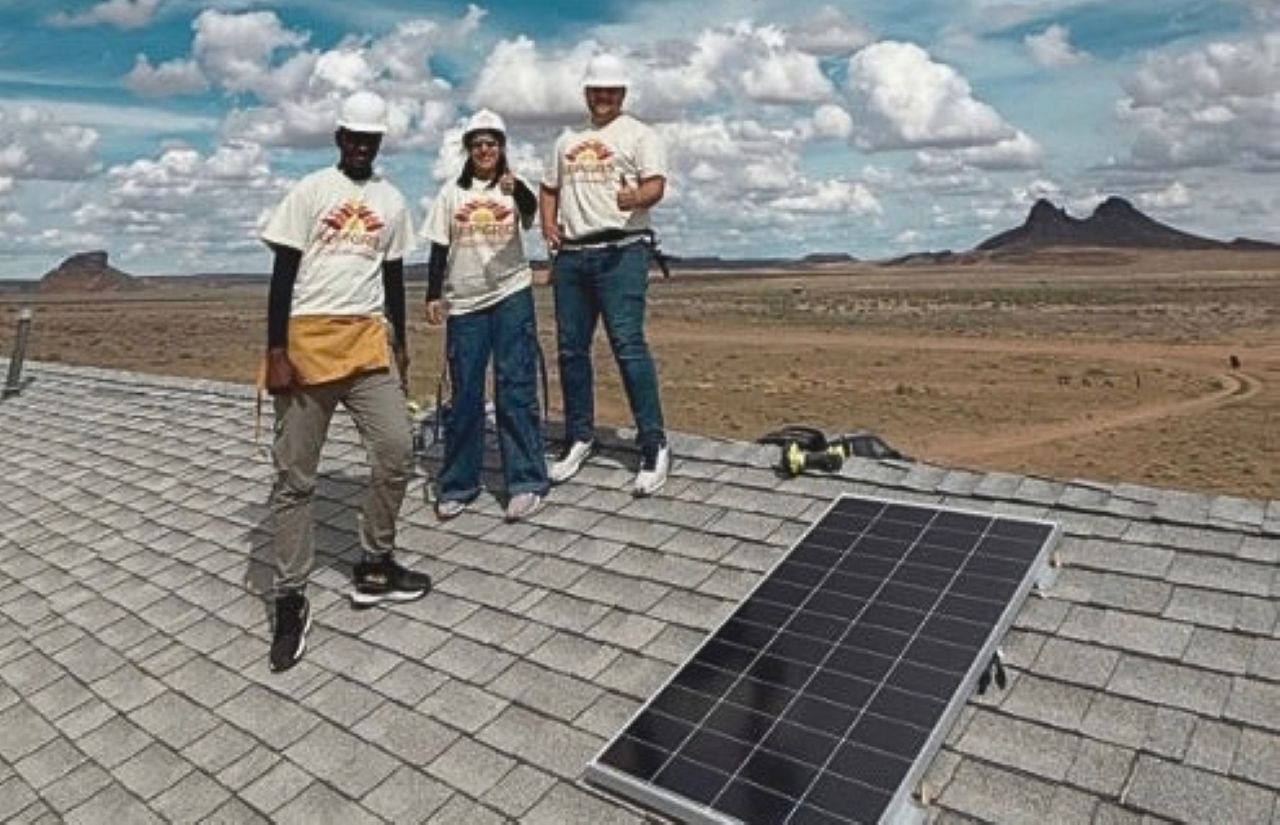
Illinois State and Heartland Community College Students Provide Solar Power to Navajo Nation
Introduction:
Nine students from Illinois State University and two from Heartland Community College recently traveled to the Navajo Nation to install off-grid solar power systems for families without electricity. This initiative aimed to bring sustainable energy to those living in remote areas.
Project Overview:
The project was part of the Heart of America’s “Skip the Grid” program, co-founded by Mylo Fowler, a renowned Navajo photographer and solar advocate. This initiative focuses on delivering sustainable lighting and power to off-grid families on the reservation.
Leadership and Teamwork:
Leading the delegation were Illinois State’s Director of Sustainability, Elisabeth Reed, and Dr. Srishti Slaria from the economics department, alongside Heartland Community College’s leadership team. They guided an interdisciplinary group of students studying energy, construction management, chemistry, and environmental science, with three international students contributing their global perspectives.
Hands-On Experience:
The students gained practical experience, applying classroom knowledge in real-world settings. Many families on the Navajo Nation lack access to electrical grids, which can lead to significant daily challenges, especially for schoolchildren needing to study in dark homes.
Solar Power Installation:
The “Skip the Grid” initiative provided families with immediate solar solutions, featuring solar panels, LED lights, a battery power station, and an energy-efficient refrigerator/freezer. Students carried out full systems installations, bridging theory and practice.
Community Outreach:
Beyond installations, students educated local youth about solar energy and engaged in cultural exchange, fostering an understanding of the challenges faced by Navajo families regarding energy access.
Cultural Insights:
Participants described the experience as impactful, realizing the profound differences in daily life without electricity. Many expressed that the cultural immersion was as significant as the technical installations.
Reflections:
Students reported how the experience reshaped their perspectives on energy equity, emphasizing that firsthand experiences can reveal the realities of life without electricity.
Future Plans:
Thanks to funding from Constellation and Siemens, Illinois State University and Heartland plan to return to the Navajo Nation with an expanded team to continue this vital work, helping more families gain access to solar power.
Conclusion:
The installations culminated in the simple yet profound moment of flipping a switch to illuminate homes. This hands-on project not only provided immediate benefits to families but also educated students about the transformative power of renewable energy and the importance of civic engagement.


