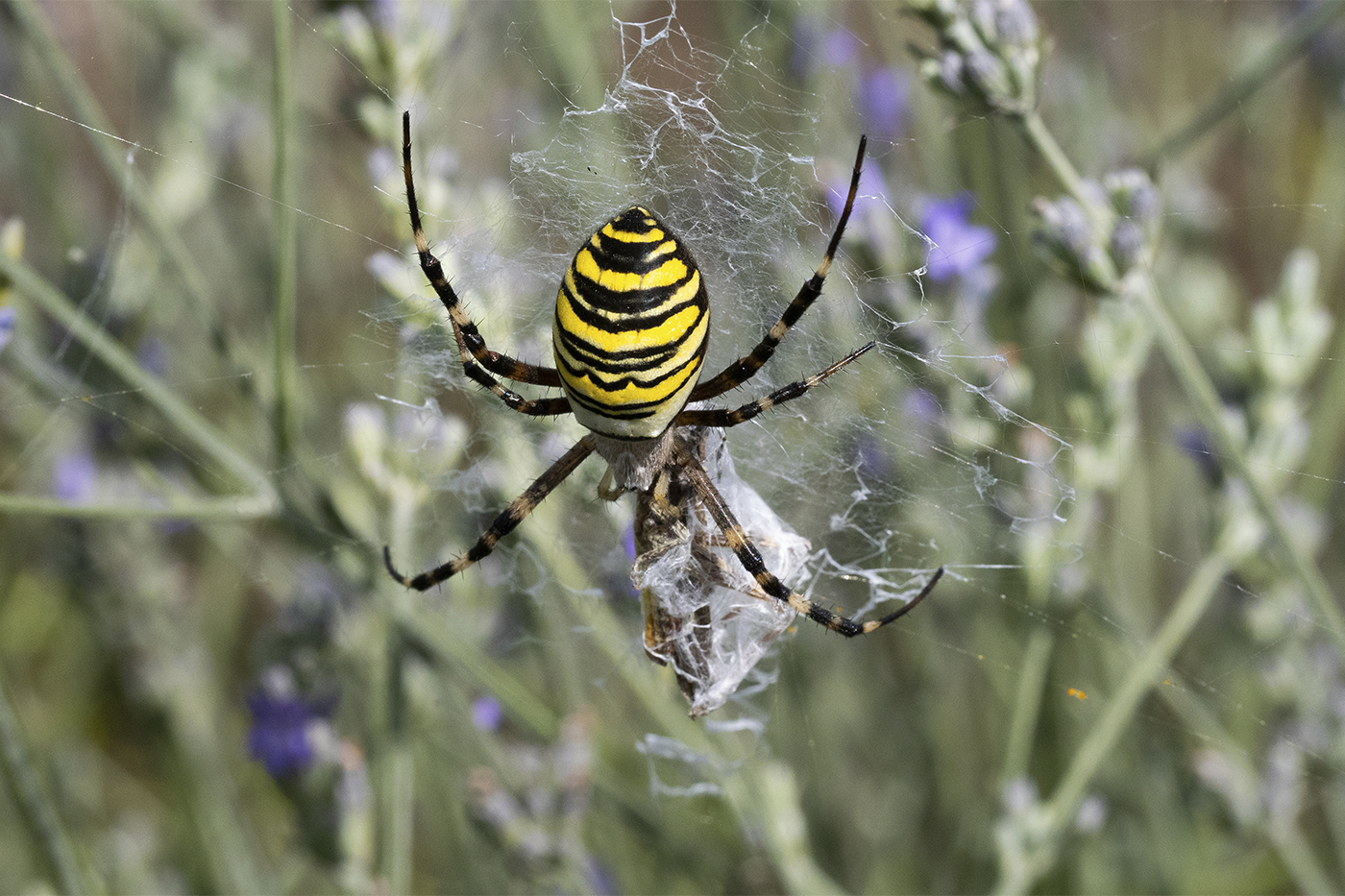
A spider masquerading as a wasp has been making waves at Chester Zoo in Cheshire, England. Dubbed “Wendy,” the Argiope bruennichi, known as the wasp spider, closely resembles a yellowjacket wasp until its eight legs come into view. This striking mimicry provides the spider with a means of protection from predators, as its size of 2 cm makes it seem like a mere snack.
Originally common in southern England and parts of Europe, North Africa, and Asia, Wendy’s sighting in Cheshire marks the first recorded instance of this species in North West England. Experts suggest that she might be expanding her range northward, a phenomenon noted by zoologists and conservationists due to changing climate conditions and ecosystem dynamics.
Spider recorder Edward Milner reassures that while the wasp spider looks intimidating, it’s harmless, although female wasp spiders are known to consume their mates after reproduction for nutritional reasons. This unique behavior has sparked discussions about species migration and habitat expansion, focusing on how and why organisms like Wendy move to new territories.
The spider’s range expansion aligns with the idea that certain species, like the wasp spider, may be benefiting from warmer climates and altered ecosystems, which provide an abundance of food sources, particularly grasshoppers. Chester Zoo’s head of field programs, Scott Wilson, has highlighted that this trend reflects broader ecological shifts resulting from climate change.
In exploring these aspects, scientists emphasize the importance of understanding how new and non-native species can affect existing ecosystems. As Wendy’s story unfolds, the potential consequences of such expansions could significantly alter local biodiversity and ecosystem balance.