Upcoming Celestial Events: Moon and Mars
Early Morning View: October 5
If you’re an early riser, catch a beautiful sight in the east-northeast sky after 2 a.m. local daylight time on October 5. You’ll see a 30% illuminated waning crescent moon, accompanied by a bright orange-yellow Mars located just to the upper right of the moon.
Mars Brightening in the Sky
Currently, at a distance of 152 million miles (245 million km) from Earth, Mars will become more prominent in the morning sky, gradually increasing in brightness as it approaches us.
Next Celestial Highlights
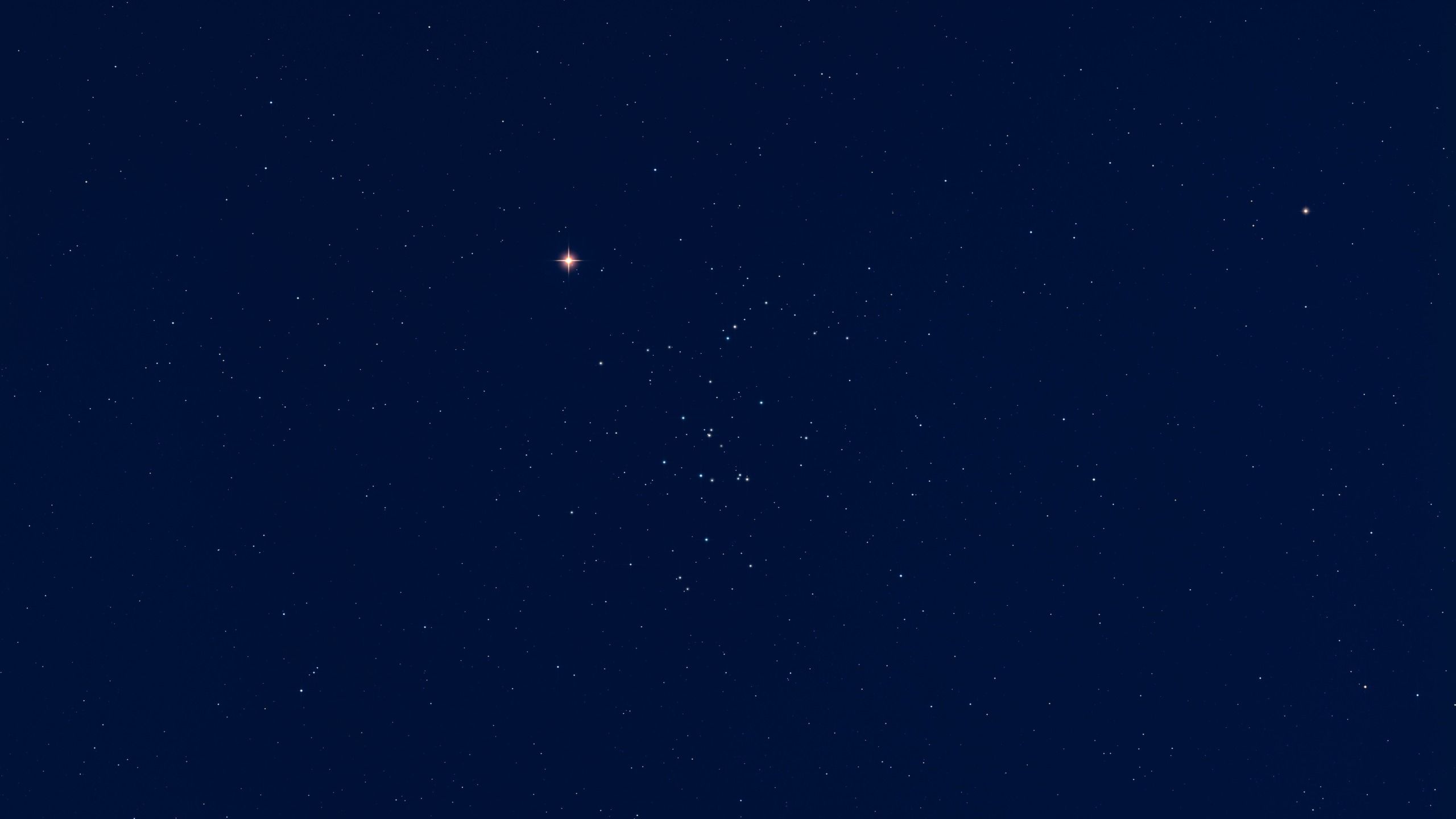
October 10-12: Mars will be positioned near the Beehive star cluster (M44).
- October 10: Near the western edge of M44
- October 11: In the center of the cluster
- October 12: At the eastern edge
The Beehive cluster is one of the brightest open star clusters, located in Cancer the Crab, and offers a stunning view when observed through binoculars or a small telescope.
Dual Identity of the Beehive Cluster
The Beehive, also known as Praesepe, is rich in history. Galileo first resolved it into stars in 1610. The name “Beehive” emerged when early observers compared its star formations to a swarm of bees.
Coming Attractions in October
- Mars will move closer to the star Regulus in Leo the Lion by October 31.
- On November 16, Mars will pass just north of Jupiter.
For anyone looking to observe Mars through a telescope, keep in mind that it currently appears as a small dot of light with no visible features. However, it will approach Earth until its closest point on February 19, when it will be 63 million miles (101 million km) away.
Written by Joe Rao
Joe Rao is a lecturer at New York’s Hayden Planetarium and writes about astronomy for various publications.


