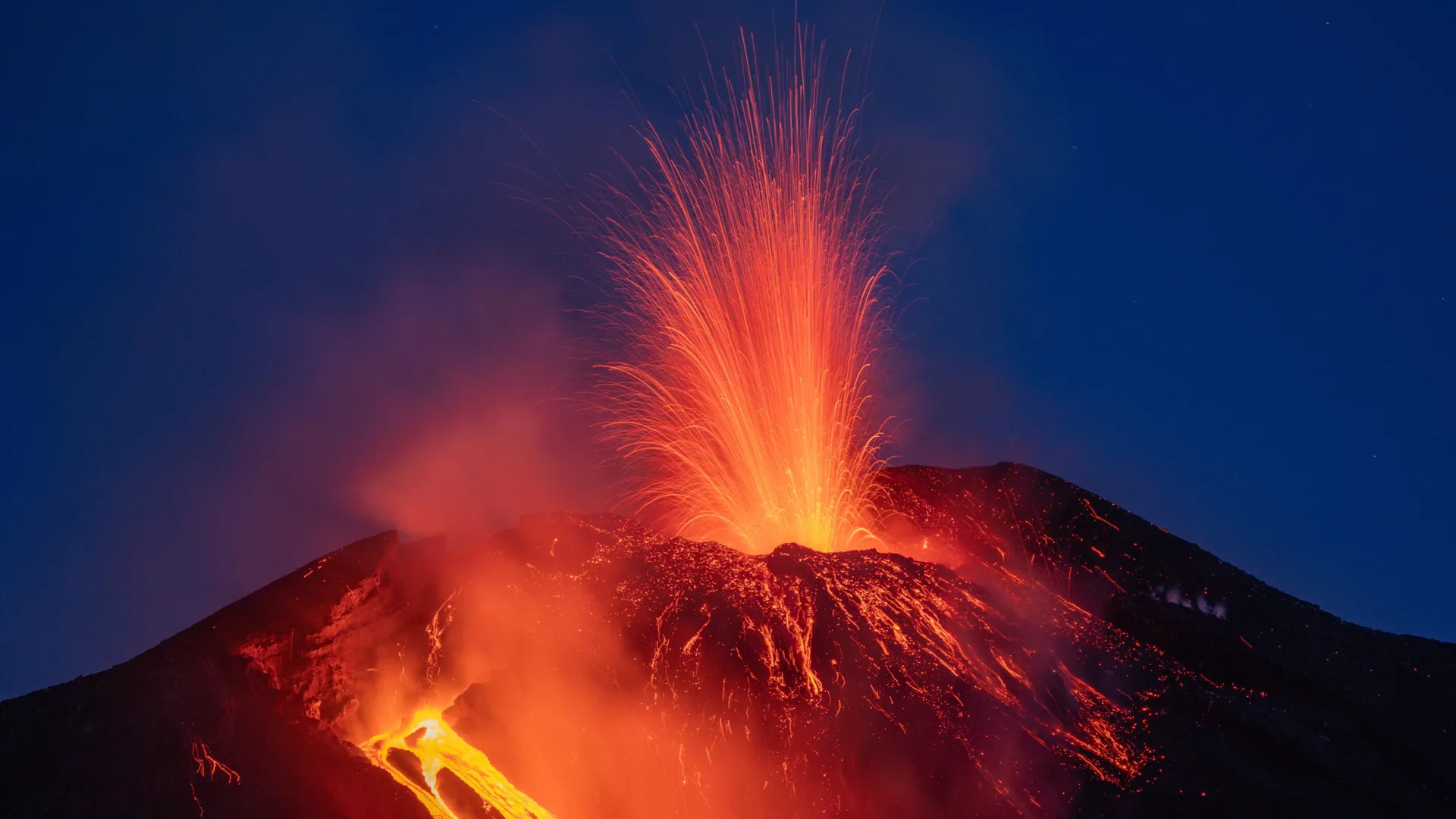
Research on Mount Etna’s Volcanic Activity
Overview
A Cornell-led research team has conducted an in-depth analysis of Mount Etna in Italy, revealing how magma pathways and eruption processes can vary significantly even within a single volcano. Their study, published in Geochemistry, Geophysics, Geosystems, focused on reconstructing two major eruptions, providing insights into volcanic behavior and enhancing risk assessment modeling for future eruptions.
Key Findings
- Varied Magma Pathways: The team reconstructed two historic eruptions and found that magma traveled through distinct routes and at varying speeds toward the surface.
- Explosiveness Factors: The explosiveness of a volcano is influenced by the viscosity of magma and the amount of volatile materials, particularly water and carbon dioxide. Recent research indicated that carbon dioxide can also trigger eruptions, challenging the traditional view that water was the primary volatile.
Research Techniques
- The team utilized Raman spectroscopy to analyze crystals formed in magma and measure the gas bubbles trapped within. This technique allowed them to derive the density of carbon dioxide, transforming it into pressure and depth estimates within the volcano.
Eruption Analysis
-
122 B.C. Eruption:
- Magma rose from 22 km depth but stalled at 2 to 5 km for several weeks, gradually releasing gas before erupting.
-
Fall Stratified Event (4,000 years ago):
- Magma ascended rapidly from 24 to 30 km depth, erupting within hours due to a high concentration of carbon dioxide.
These contrasting behaviors illustrate how the balance between carbon dioxide and water influences eruption dynamics.
Implications for Volcano Risk Assessment
The researchers are now applying their methodology to study volcanoes in other regions, such as Chile and Hawaii. Understanding the ascent of magma and its volatile components is vital for creating accurate eruption models that can inform risk assessments.
Cultural Connections
Gazel noted a fascinating link between the geological findings and Greek mythology, drawing parallels between the volcanic plumbing systems and the mythological giants Typhon and Enceladus, further enriching the cultural narrative surrounding Mount Etna.
Conclusion
This research sheds light on the complex behavior of volcanic eruptions and emphasizes the need for comprehensive studies on volcanoes worldwide to improve safety and preparedness for future volcanic events.


