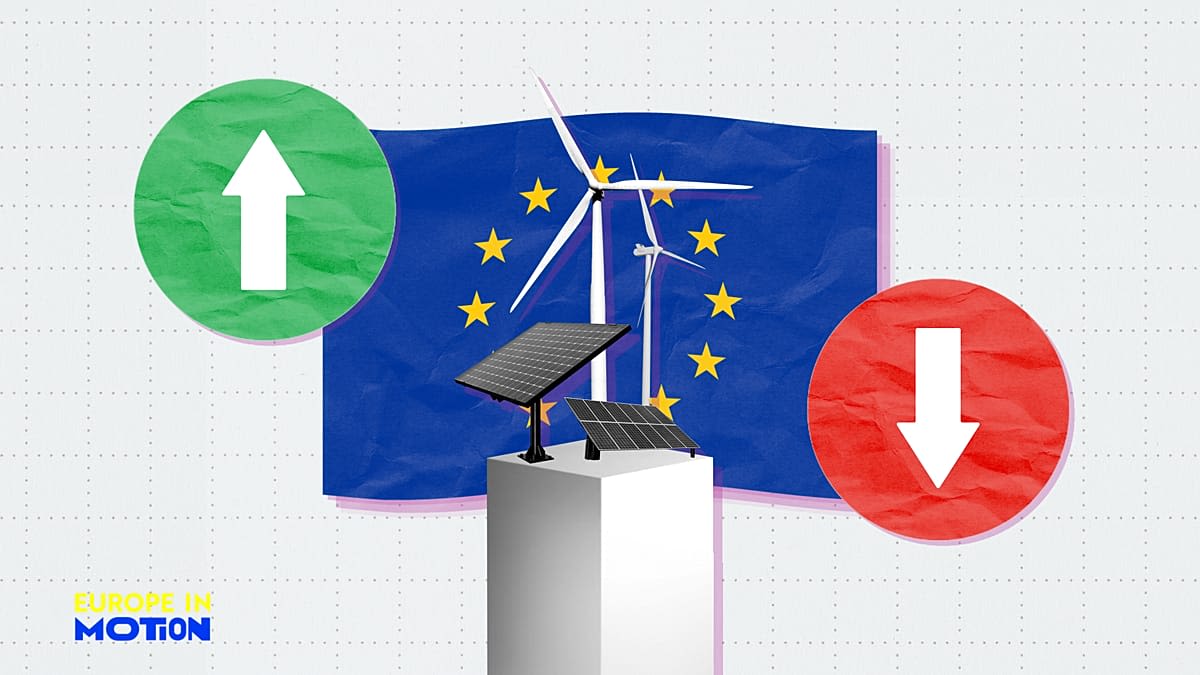
The State of Renewable Electricity in the EU
Recent Eurostat data reveals that as of the second quarter of this year, 54.1% of the European Union’s electricity was generated from renewable sources. This percentage indicates that renewables, including biofuels, are outperforming both combustible fuels and fossil energy.
Yearly Comparison and Growth Trends
While this figure shows a slight year-on-year decrease from 54.3% last year, it represents a notable increase from 41% at the start of the year. Overall renewable electricity generation saw a 2.8% increase year-on-year, while total electricity generation rose by 3.2%. Notably, gas-fired generation increased by 3.9% during the same period.
Major Contributors to Renewable Energy
Solar power has emerged as the largest contributor to electricity generation within the EU, accounting for 41.6%—a rise from 37% in the previous year. Wind energy follows, contributing 27.7%, with hydro-power at 22.6%. Other renewable sources, such as combustible renewable fuels and geothermal energy, make up the remaining share.
Disparities in Renewable Energy Generation
The report highlights significant disparities across the EU. Latvia leads the way with an impressive 97.7% of its electricity derived from renewables, primarily from hydro and solar energy. Denmark and Croatia follow closely, with 94% and 92.2%, respectively.
Conversely, Slovakia and Czechia lag behind, with only 19.8% and 20.9% of their electricity coming from renewable sources, relying heavily on nuclear and fossil fuels.
Renewable Energy in Overall Energy Consumption
Electricity is just one part of the EU’s energy consumption landscape; renewable sources made up 26.2% of total energy consumption last year, up from 25.2% in 2024. The EU aims to increase this figure to 42.5% by 2030, with a long-term goal of climate neutrality by 2050.
Countries like Sweden (65.4%), Finland (53%), and Denmark (48.2%) lead the way in terms of overall renewable energy consumption, while others, such as Belgium (14.9%) and Slovakia (16.3%), remain considerably behind.
Conclusion
The pathway to a greener future in the EU is evident, yet challenges remain. While recent data indicates promising trends in renewable electricity generation, infrastructure bottlenecks and skepticism in certain member states hinder the pace needed to meet ambitious targets.


