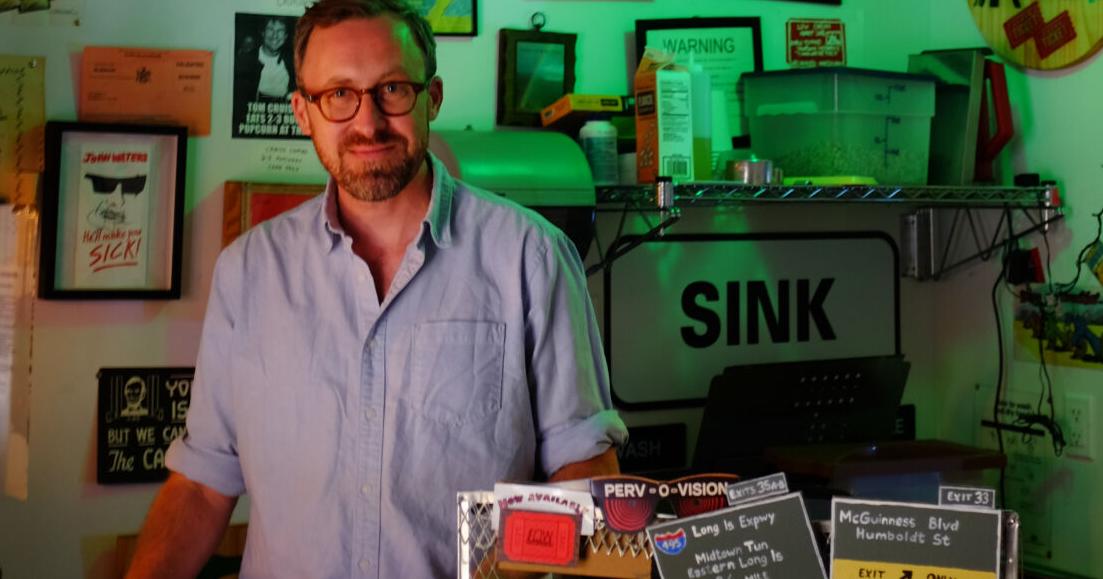
John Wilson: An Unconventional Filmmaker
New York – Years ago, John Wilson began just walking through New York City with his camera. Fresh out of college, Wilson sought to make a name for himself as a filmmaker but faced his own natural timidity.
“I did a cappella in college for a little while, and I felt like that was the most embarrassing thing you could possibly do,” Wilson reflects. “Once you do that, you can do pretty much anything.”
What drew the 39-year-old filmmaker was a blend of curiosity and a desire to capture the fleeting moments of urban life. He didn’t just want to make films; he aimed to preserve the often unnoticed details of our surroundings.
The Artistic Vision
“I think while I’m shooting: What would another film be too afraid to put in?” Wilson challenges. “The project of changing the way people see things is never-ending. It’s what art-making should do.”
In an age dominated by blockbuster films, Wilson is defining his unique voice. Last year, he co-opened the Low Cinema in Ridgewood, a micro-theater filled with character and an eclectic program often consisting of old 16 mm reels.
A Micro-Revolution in Film
“People just roll the dice constantly,” Wilson explains. Audiences are willing to take chances on unconventional films. Recently, he screened two versions of “Changing Lanes” – the 2002 Ben Affleck film and a 2025 bike lane documentary. He often brings in vintage VHS tapes like “The Birds” and “Endless Summer II.”
“I opened this place maybe unconsciously, partially, so I would have a place to premiere my own movie, in case no one wanted to buy it,” Wilson says, humor shimmering through his smile.
His debut feature, “The History of Concrete,” may have premiered in just one theater, but it sold nearly all available tickets, exemplifying Wilson’s ability to attract an audience curious about his creative viewpoints.
Exploring Concrete
“Concrete” investigates the world’s second-most utilized material, prompting reflections on permanence, civic life, and creativity. It begins with Wilson tackling a flooded basement but spins into engaging stories involving diverse characters, such as a liquor salesperson and a musician named Jack Macco.
“I was shooting potholes all day,” he recounts. “My camera broke. Then I ran into him at the liquor store, and I ended up spending the next year and a half with him.”
Wilson’s projects often delve into the absurd and existential, resulting in unique narratives that differentiate him from mainstream filmmakers.
A Skeptical Eye on Film
Wilson remains critical of how the film industry operates, calling extravagant budgets for historical epics “silly.”
Meanwhile, he continues to shoot new material for a long-form project and maybe another episodic series. “Nothing is real and I’m just shooting what’s out there,” he says candidly.
“What’s so fun about it is that a movie can be whatever you want,” he reveals, embodying the freedom and creativity he champions in his approach to film.
As he looks around Low Cinema, Wilson reflects on a cardboard E.T. displayed there, a product of simple materials and creativity. “Even if it’s the most poorly made thing – by the end of it, you have a product,” he says, underscoring the joy and satisfaction found in creation.
John Wilson’s journey is emblematic of a filmmaker who embraces authenticity, challenging norms while celebrating the overlooked aspects of life through his lens.


