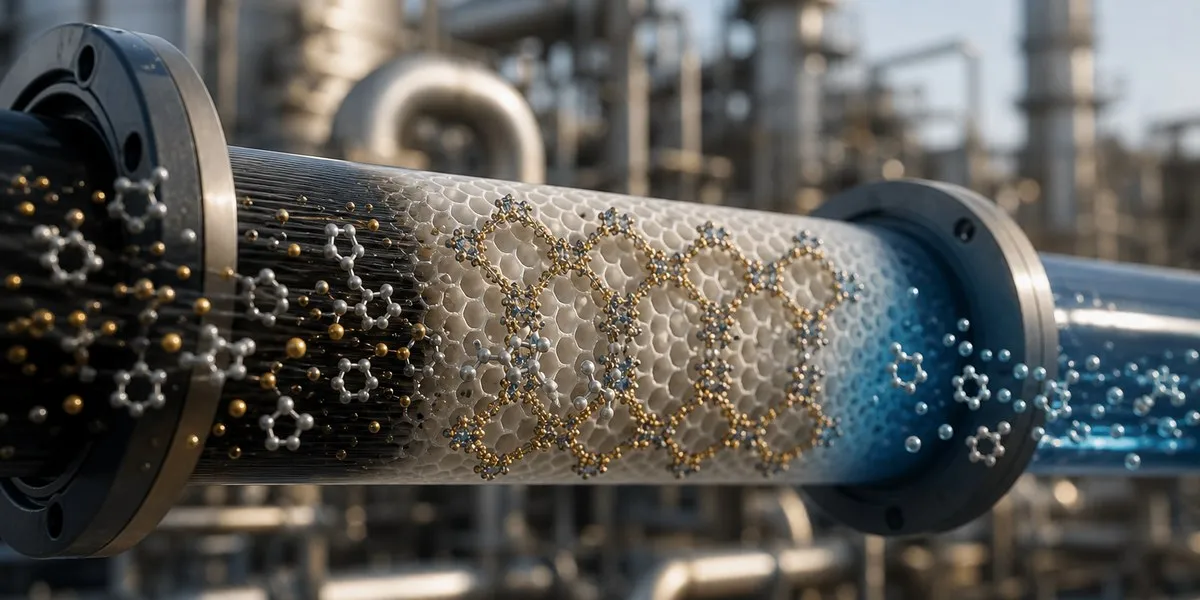
Scientists from the Dalian Institute of Chemical Physics in China have developed a groundbreaking oil refining technique called “molecular refining,” which potentially uses about 91% less energy than traditional distillation methods. This innovative approach employs membranes made from metal-organic frameworks to separate oil components at a molecular level, avoiding the energy-intensive heating and cooling processes typical of distillation.
Key Features:
-
Energy Efficiency: The new method drastically reduces energy consumption, promising lower production costs and decreased emissions if industrially scaled.
-
Molecular Separation:
- The process operates through two stages of membrane sorting.
- First Stage: Molecules are sorted by size (approximately 0.1 nanometers), focusing on smaller alkanes for ethylene production.
- Second Stage: Targets molecules with size differences smaller than 0.01 nanometers, separating aromatic compounds from branched alkanes, which are crucial for gasoline and plastics.
-
Membrane Technology: Researchers used micro-etching techniques with tannic acid to fine-tune the membrane’s pore sizes and surface properties. In laboratory tests, they achieved a recovery rate of 85-90% when separating a model mixture of oil components.
This research highlights a significant advancement in the oil refining industry, promising more efficient processing and higher value products. The full findings were published last month in the National Science Review.


