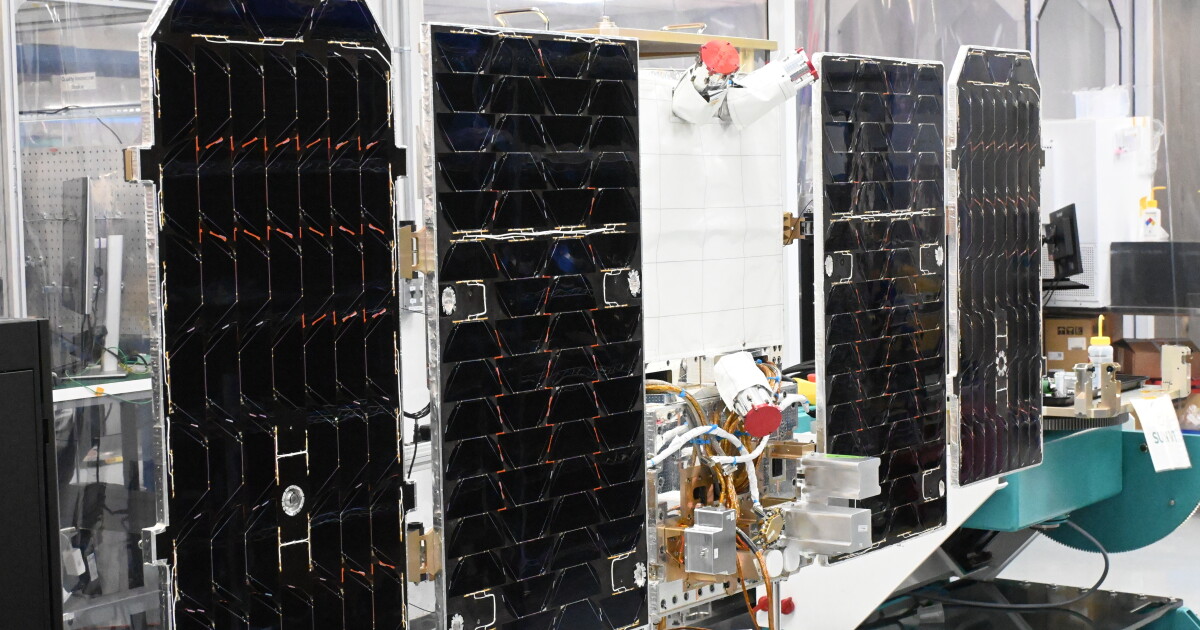
Google has launched a refrigerator-sized satellite equipped with Tensor Processing Units (TPUs) as part of Project Suncatcher, which aims to explore the feasibility of solar-powered AI data centers in space. The prototype will test how these specialized chips handle the harsh conditions of space, including heat management and radiation, by running a version of Google’s Gemma AI model.
Demand for AI services has surged, prompting Google CEO Sundar Pichai to predict a dramatic increase in capital expenditures to build computing infrastructure. Given the growing opposition to terrestrial data centers, Google is exploring the unique advantages of placing data centers in orbit, where solar energy is abundant.
The satellite will be in a sun-synchronous orbit ensuring constant solar panel exposure, thus eliminating the need for heavy batteries. Alongside partners like Planet, Google envisions clusters of satellites forming space-based data centers, capable of laser communication with each other and Earth.
However, challenges abound, including heat management in space and the complexities involved in maintenance compared to Earth-based systems. While Elon Musk supports the idea of space as the future for data centers, the economic viability remains uncertain, and for the foreseeable future, both terrestrial and space data centers may coexist. The endeavor is acknowledged as a “moonshot,” requiring significant time and innovation.


