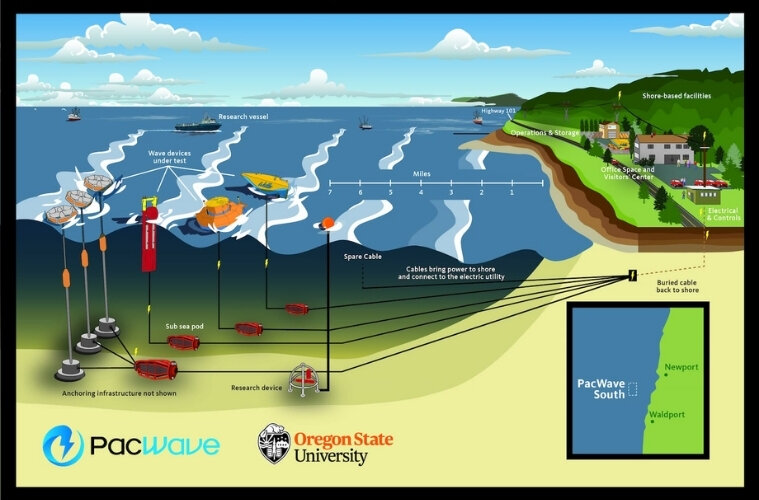
The PacWave South facility at Oregon State University marks a significant advancement in wave energy testing, demonstrating how shared infrastructure can streamline the commercialization of emerging energy technologies. After 15 years of meticulous planning, it has become the first pre-permitted, grid-connected wave energy test facility in the continental U.S., designed to reduce the lengthy permitting process for developers.
Key Highlights:
-
Operational Facility: PacWave South is situated about seven miles off the coast of Oregon and can accommodate up to 20 wave energy converters, with a total capacity of 20 MW. It features dedicated subsea cables connecting to the regional electricity grid.
-
Permitting Efficiency: By concentrating much of the permitting into a shared infrastructure, PacWave allows future testers to bypass extensive site-specific approvals, potentially accelerating development timelines for new energy technologies.
-
Economic Implications: In November 2025, a significant power purchase agreement was established with Bonneville Power Administration, allowing developers to test their devices’ performance in a real-world grid-connected environment.
-
Challenges Ahead: Despite its operational status, no devices have yet been tested due to delays in federal funding, underscoring the ongoing hurdles in getting emerging technologies to market.
-
Broader Implications: The model raises important questions about efficiency in energy infrastructure development. By establishing shared, pre-permitted sites, the industry could potentially save time and resources, easing the pathway for commercialization.
Overall, PacWave stands as a pivotal initiative for the wave energy sector, demonstrating a collaborative approach to overcoming common infrastructure challenges faced by technology developers.