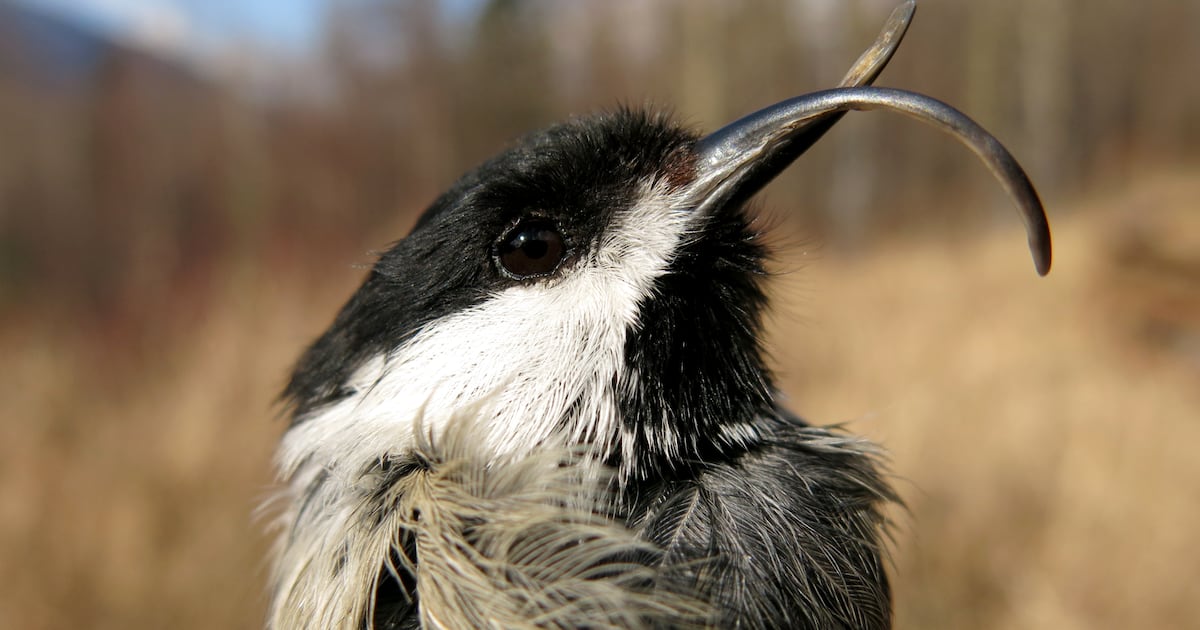
The article discusses a concerning health issue affecting black-capped chickadees in Alaska, specifically a disorder known as avian keratin disorder, which results in beak deformities.
Key Points:
- Discovery: The deformities were first noted in the early 1990s, with residents in King Salmon observing chickadees with unusually curved beaks.
- Statistics: Over 3,000 cases have been documented since 1999, making it the highest concentration of deformities recorded in a wild bird population.
- Cause: The deformities are linked to a virus named poecivirus, which has been found in 100% of infected birds showing symptoms.
- Impact: Affected birds struggle to feed, leading to higher mortality rates, especially during harsh winter conditions. Other issues include difficulties with maintaining feather cleanliness, which affects insulation.
- Reproductive Challenges: While the disorder doesn’t prevent reproduction, it harms the survival rates of eggs and nestlings.
- Current Status: Despite the prevalence of the disorder, black-capped chickadee populations are currently stable in Alaska.
What Can Be Done?
Observers are encouraged to report any sightings of chickadees or other birds with beak deformities to assist ongoing research efforts.
For more information or to report observations, you can visit the USGS Alaska Science Center website.
This situation highlights the importance of monitoring wildlife health and emphasizes the need for further research to understand the virus and its impact on bird populations.


