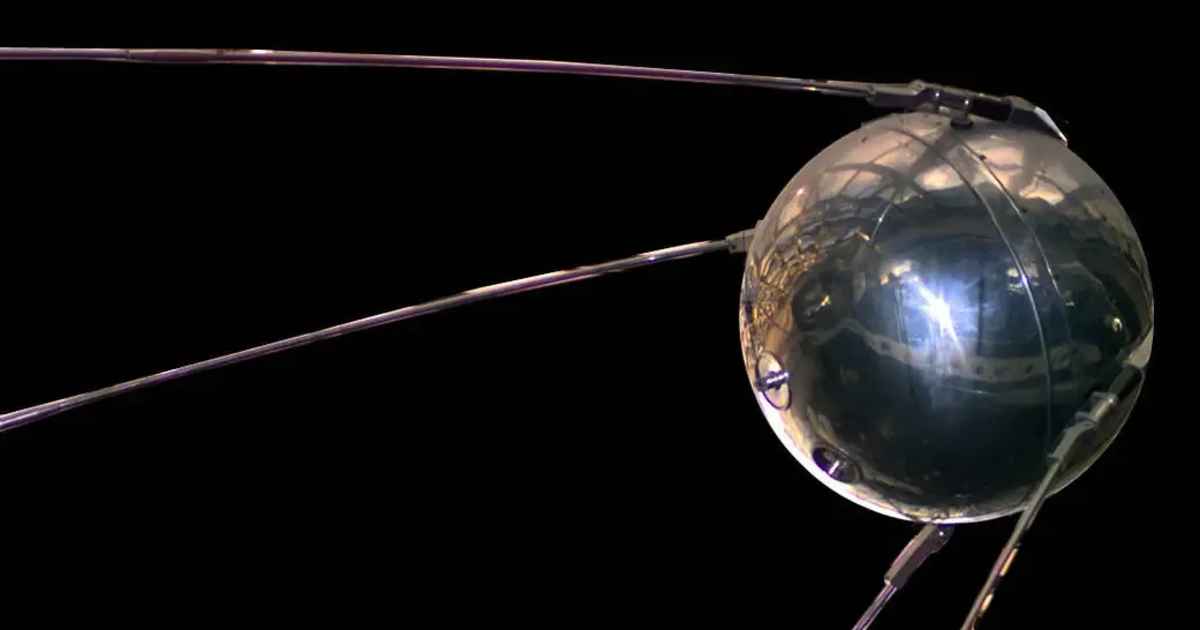
On October 4, 1957, the Soviet Union launched Sputnik 1, the first artificial satellite, marking the beginning of the Space Age. This event spurred significant scientific and technological advancements in both the U.S. and the Soviet Union, resulting in transformative technologies that impact modern life.
Sputnik 1, named for “fellow traveler” in Russian, was launched during the International Geophysical Year and was ten times larger than the U.S. satellite planned for launch. Its launch triggered fears in America about the implications of Soviet satellite technology, which suggested that a rocket capable of launching a satellite could also deliver nuclear warheads.
While the U.S. government was somewhat prepared for the launch, it created widespread concern among the public. This anxiety escalated with Sputnik 2‘s launch, which carried Laika, the first living creature to orbit Earth. The realization led to a political push in the U.S. to strengthen its scientific and engineering capabilities, resulting in significant funding for universities and research.
NASA was established shortly thereafter, beginning operations on October 1, 1958, just shy of a year after Sputnik’s launch. Driven by President John F. Kennedy’s goal of landing a man on the moon before the decade’s end, NASA’s Apollo program prompted vast innovation and employed approximately 400,000 people at its peak, with funding skyrocketing from under half a billion in 1959 to over $5 billion by 1965.


