Jamie Dimon’s Path to Success
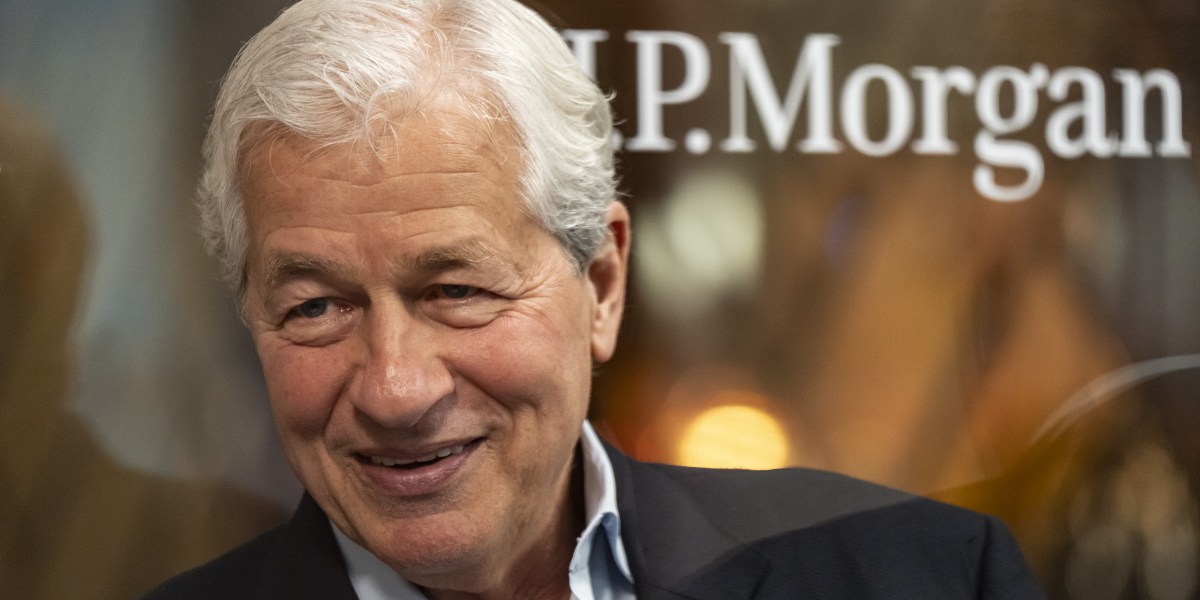
Like legendary investor Warren Buffett, JPMorgan CEO Jamie Dimon’s finance career began in childhood. Dimon spent hours playing investment simulation games with his father, Theodore, who was a Wall Street stockbroker.
Early Training in Investment
Dimon recounted on The Master Investor Podcast how his father would challenge him with real business scenarios. “He would give me an industry you might know something about, like a restaurant, and say, ‘Okay, look at this. Look at the history. Read the annual report. Study the industry if you want. What would you pay for the stock?’” This foundational training set him on the path to becoming a leading figure in banking.
By high school, Dimon engaged in what he called “leisure reading,” focusing on psychology, economics, and accounting. “I read Graham and Dodd in high school—I was a nerd,” he admitted. At 14, guided by his father, he bought his first stock and never looked back.
Educational Background and Early Career
Dimon graduated from Tufts University and earned an MBA from Harvard Business School. His first Wall Street role began as an assistant to American Express president Sanford “Sandy” Weill, where he adopted the mindset to “learn something and not say anything until I could add some value.” Under Weill’s mentorship, he advanced rapidly, ultimately becoming CFO at Commercial Credit by age 30.
Leadership at JPMorgan Chase
Dimon became the CEO of JPMorgan Chase in 2006 and has led the bank for nearly two decades. Today, JPMorgan is the largest bank in the U.S. and ranked prominently on the Fortune 500 and Global 500 lists. In 2025, the bank generated $185.6 billion in revenue.
Dimon has weathered the ups and downs of the financial landscape, remaining one of the few Wall Street CEOs from the 2008 financial crisis. His leadership has been marked by a pragmatic philosophy focused on discipline rather than sheer ambition.
Dimon’s Philosophy on Success
When asked if he always believed he would lead JPMorgan Chase to a market capitalization near $1 trillion, Dimon candidly responded, “No.” He draws inspiration from elite athletes, noting, “I think you get in trouble if you say, ‘I want to be the biggest bank in the world.’” Instead, he preaches hard work: “You can’t hit a home run every time you’re at the bat. You keep working, stay humble, and work hard.”
Today, Dimon’s financial acumen has translated into personal wealth, with a net worth of $3.2 billion. His approach echoes the lessons taught by his father: always do the work and understand the ‘why’ behind decisions.