Astrobiology Research: Exploring the Possibility of Interplanetary Life Transfer
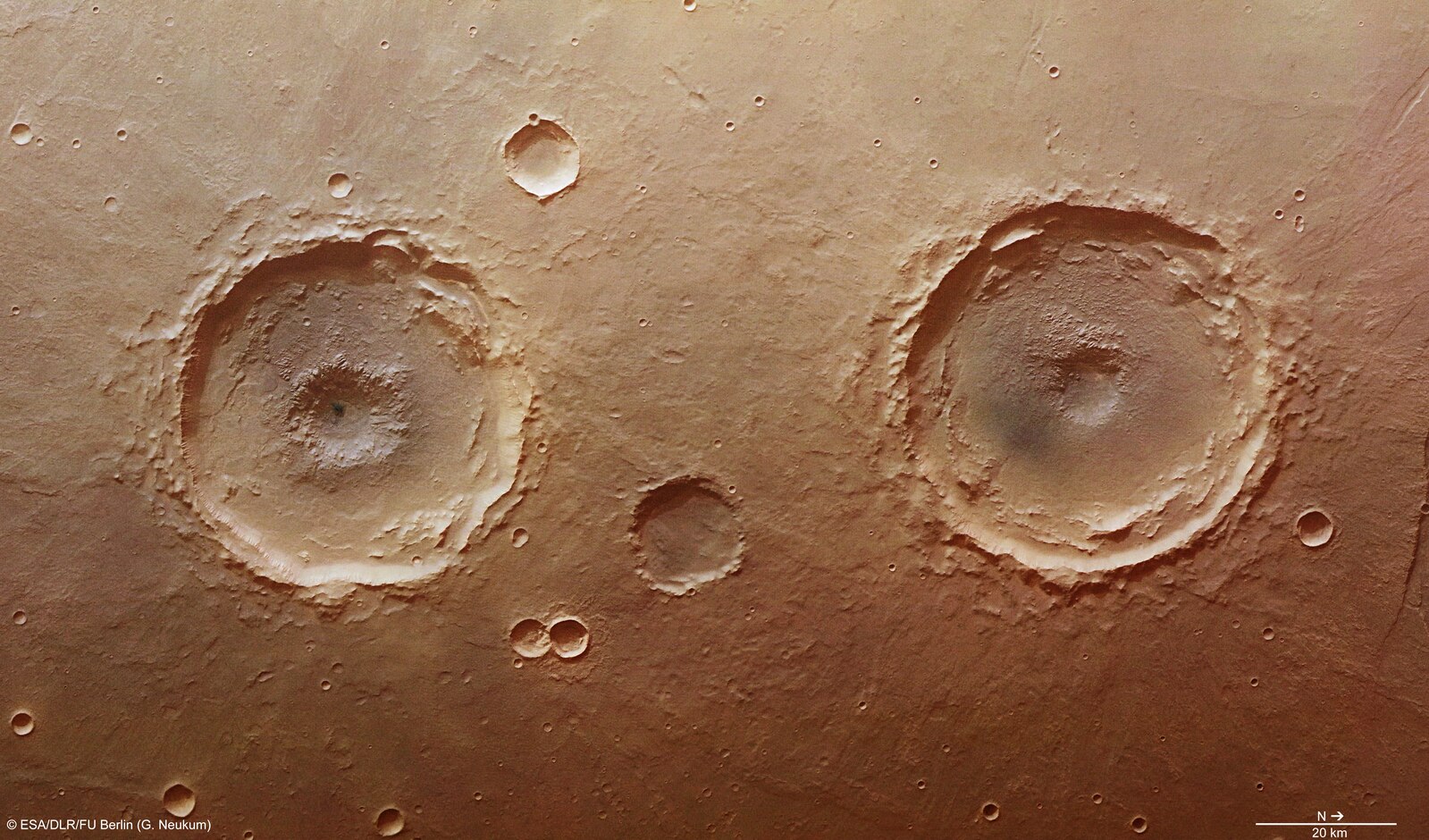
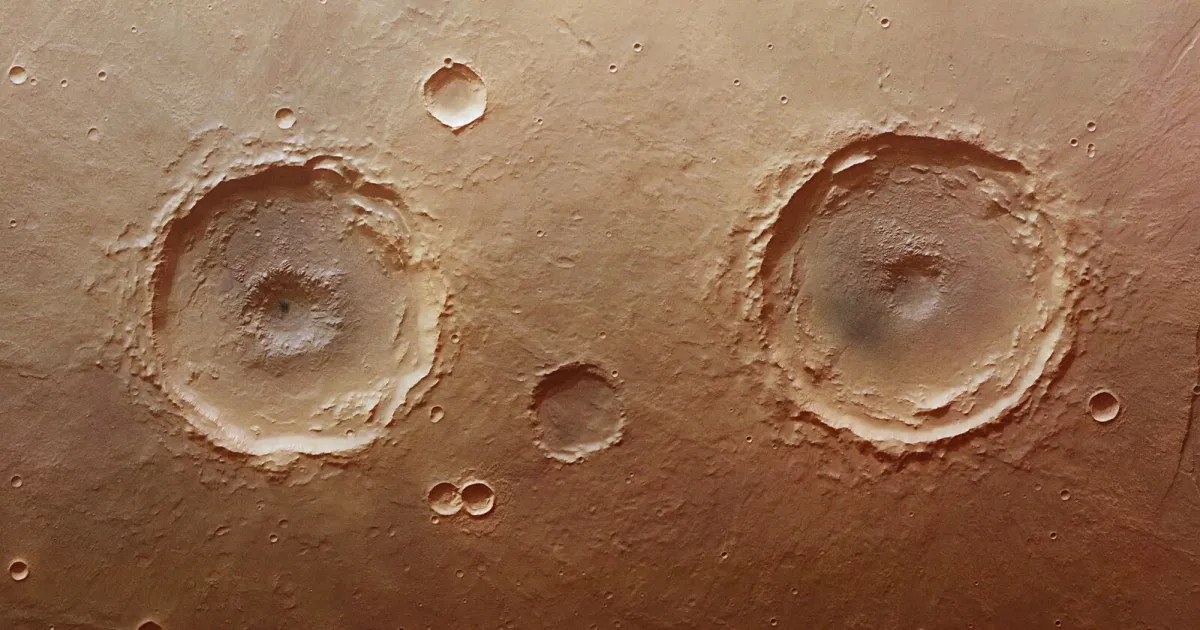
Two craters scar the surface of Mars, each roughly 31 miles (50 km) wide, captured by ESA’s Mars Express spacecraft. A study suggests that asteroid impacts that formed these craters may have propelled microbial life into space. (Credit: ESA/DLR/FU Berlin)
Highlights of the Study
-
Microbial Resilience: Researchers tested Deinococcus radiodurans, a hardy bacterium that thrives in extreme conditions, to determine if it could survive the pressures generated by asteroid impacts.
-
Key Findings: The study showed D. radiodurans can survive initial impacts and the potential journey to another planet, supporting the panspermia theory—the idea that life can spread between planets through space debris.
Surviving Impact and Pressure
Lily Zhao, the study’s lead author, mentioned, “We have shown that it is possible for life to survive large-scale impact and ejection. Maybe we’re Martians!” The researchers simulated an impact environment by slamming steel plates together, mimicking the pressures expected during an asteroid event.
- Experiments: The bacteria were subjected to pressures of 1 to 3 GPa (up to 4,000 times greater than standard atmospheric pressure). Remarkably, D. radiodurans maintained a survival rate around 60% even at high pressures.
Implications for Space Exploration
The findings raise questions about planetary protection protocols for space missions to Mars, highlighting the need to consider the implications for nearby celestial bodies, such as Phobos, should microbial life be present.
- Future Considerations: K.T. Ramesh stated, “We might need to be very careful about which planets we visit,” suggesting that the implications of microbial transfer are broader than previously thought.
The Broader Context
This research contributes to a deeper understanding of the lithopanspermia hypothesis and poses important considerations for astrobiology and planetary protection. While the study indicates that microorganisms like D. radiodurans can withstand the violent conditions of interplanetary transfer, the question of whether life has actually traveled between planets remains unsolved.
Conclusion
The discovery reinforces the idea that life might not be confined to Earth and could very well exist elsewhere in the universe. As researchers continue to explore these possibilities, each finding edges us closer to understanding our place in the cosmos.