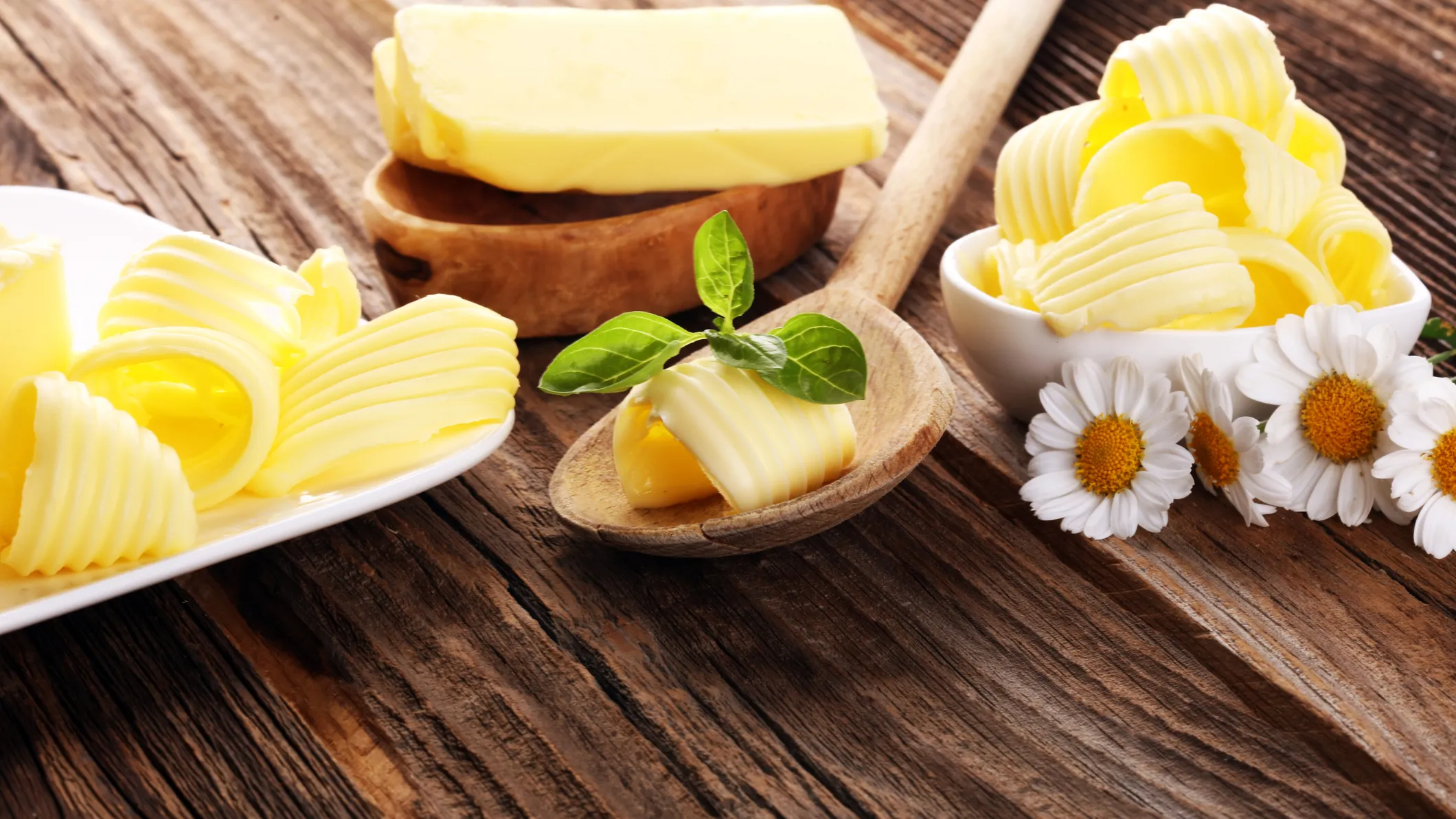
Butter vs. Margarine: A Comprehensive Comparison
Overview
Butter and margarine are staples in kitchens worldwide, often used interchangeably. Despite their similar appearances and functions in cooking, they differ significantly in composition, origin, and health implications.
What are Margarine and Butter?
-
Butter:
- A dairy product made by churning cream to separate fat from liquid, resulting in a solid product.
- Contains cholesterol and is higher in saturated fats.
-
Margarine:
- Originally developed as a cheaper alternative to butter.
- Made from vegetable oils (e.g., soybean, canola, sunflower) that are solidified through processing.
- Generally contains more unsaturated fats compared to butter.
Nutritional Differences
-
Butter:
- Rich in saturated fats and may raise LDL (“bad”) cholesterol levels when consumed excessively.
- Contains vitamins A, D, E, K, and butyrate, which may support gut health.
-
Margarine:
- Higher in unsaturated fats, linked to better heart health.
- May include additives for texture and stability, raising concerns about processing.
Health Considerations
-
Downsides:
- Excessive consumption of butter can be associated with cardiovascular risks.
- Margarine, while often healthier in terms of fat composition, may have concerns due to its processing.
-
Caloric Density:
- Both contain about 100 calories per tablespoon, which can contribute to weight gain if not consumed mindfully.
Which is Healthier?
- The healthfulness of butter versus margarine is nuanced and may depend on individual dietary needs and preferences.
- For heart health, softer margarine with unsaturated oils might be preferable.
- Those favoring minimally processed foods might choose butter in moderation as part of a balanced diet.
Conclusion
Ultimately, the choice between butter and margarine should reflect personal health goals and dietary preferences rather than a blanket judgment on one being better than the other. Staying mindful of portion sizes and overall dietary context is key to making a healthful choice.