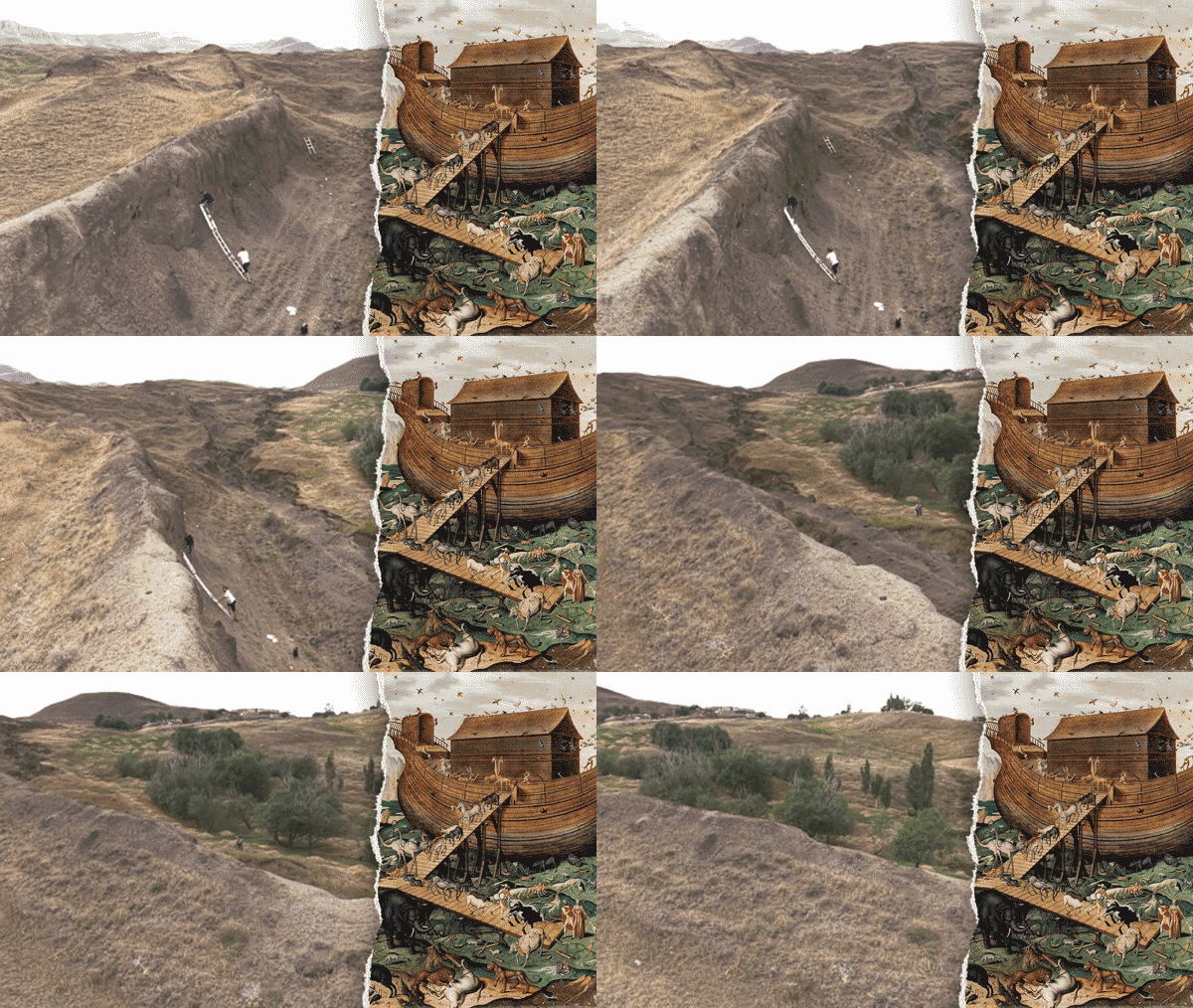
Researchers have completed their first full field season at the alleged site of Noah’s Ark, located near Mount Ararat in eastern Turkey. The Noah’s Ark Research Project, supported by Ağrı İbrahim Çeçen University, drilled over 60 feet deep at the Durupınar site, collecting hundreds of soil samples now being analyzed in labs.
First noted in 1959, the boat-shaped structure has sparked debate, with some geologists deeming it a natural formation. However, the current research employs deep-core drilling to explore beneath the site, a first for the team, and aims to determine if any findings suggest human activity or evidence of materials like decayed wood.
In previous studies, notable differences in soil compositions were detected, prompting deeper drilling this season. The researchers hope to uncover evidence that may challenge the prevailing view of the site as merely a geological formation.
While ancient pottery has been found nearby, it has not been found within the formation itself. Further investigations will consider whether ancient settlements near the site could have historical significance. The team emphasizes the need for caution and extensive lab analysis before drawing definitive conclusions.