Any DDR5 Kit Will Run Your Games
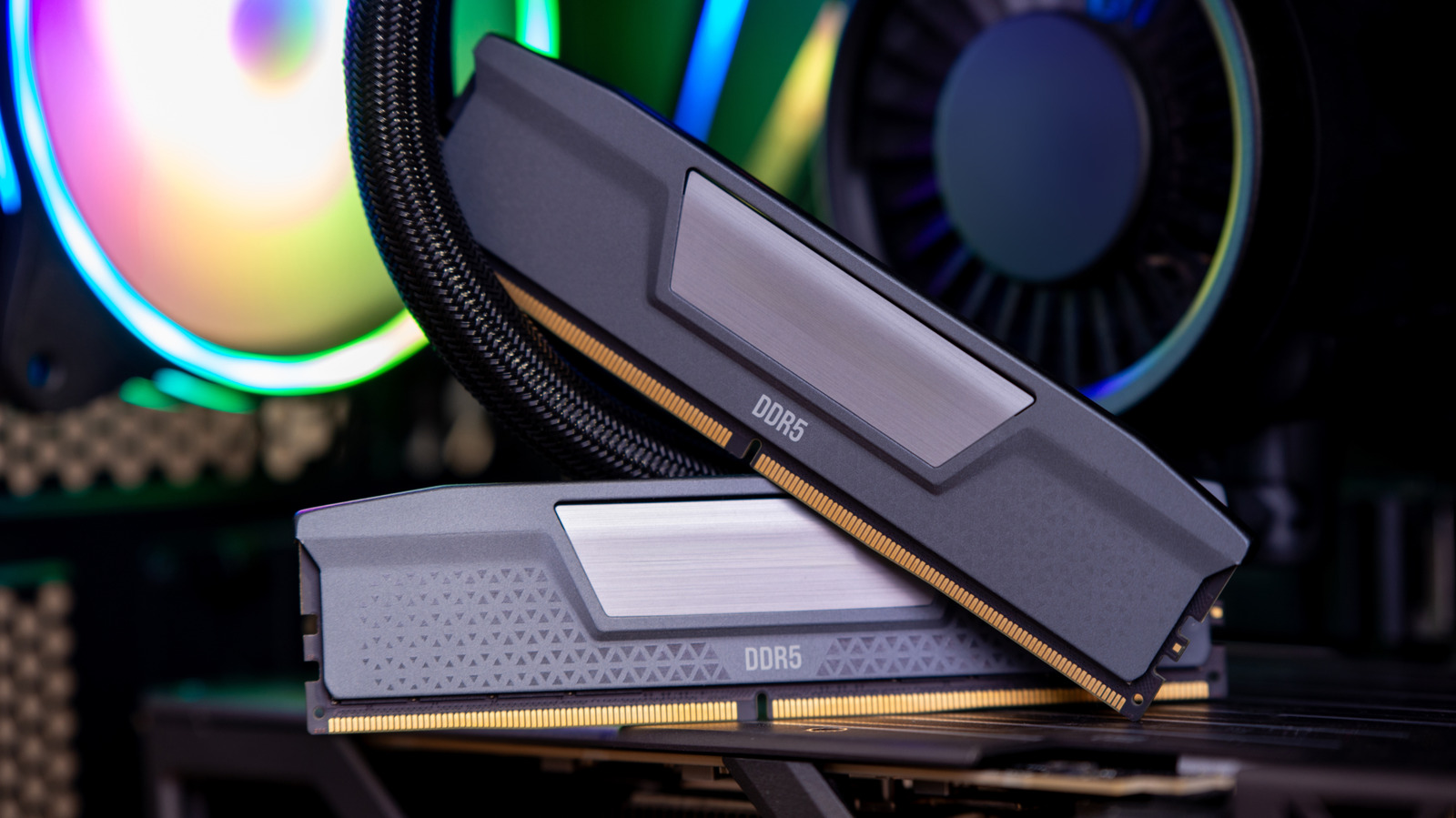
DDR5 memory has become increasingly popular in gaming setups, but there’s a common misconception about its various speeds. Here’s what you need to know.
The Numbers, Mason, What Do They Mean?
DDR5 kits are labeled with a four-digit number. For example, a kit labeled DDR5-6000 CL30 indicates:
- DDR5-6000: The data rate, which is 6,000 million transfers per second.
- CL30: The CAS latency, which refers to how many clock cycles it takes for the memory to respond.
It’s important to note that the clock speed of a DDR5-6000 kit is actually 3,000 MHz, as data is moved on both the upward and downward strokes of the clock cycle.
Processor Limitations Matter More
The performance of your memory can be limited by the capabilities of your processor. For instance:
- AMD’s Ryzen 9000 series supports DDR5-5600, while the Ryzen 7000 series supports DDR5-5200.
- Although many users opt for DDR5-6000 kits, the Ryzen memory controller may revert to half the memory’s clock speed, canceling out the benefits of higher-speed RAM.
Intel’s new chips, such as the Core Ultra 200S, can accommodate DDR5-6400, providing more flexibility.
TL;DR: Is DDR5-4800 Too Slow?
Not at all. DDR5-4800 is the baseline speed for most DDR5 processors and is entirely adequate for gaming. Research indicates that even lower-end kits perform competitively.
In summary, while DDR5 speeds may vary on paper, most modern gaming applications won’t see significant performance disadvantages from lower-speed kits, making DDR5-4800 or DDR5-5200 perfectly acceptable choices for gamers.