Introduction
The ongoing conflict in Ukraine has intensified, leading to significant impacts on both the local community and international relations. As the situation unfolds, both civilians and leaders are navigating the challenges posed by military actions, diplomatic pressures, and shared resolve.
Sergei Lavrov urged the US to evacuate staff from its embassy in Kyiv during a phone call with US Secretary of State Marco Rubio on Monday. Russia has threatened “systematic strikes” on the capital and demanded that foreigners leave. The Ukrainian Foreign Minister, Andrii Sybiha, called on Kyiv’s allies not to succumb to “Russian blackmail”. Katarina Mathernova, the head of the EU mission in Kyiv, reiterated that the 27-member bloc was “not going anywhere.” She stated, “Russia seeks to instill fear, panic, and isolation in Ukraine. It will not succeed. The EU is committed to remaining in Kyiv. We stand with Ukraine.”
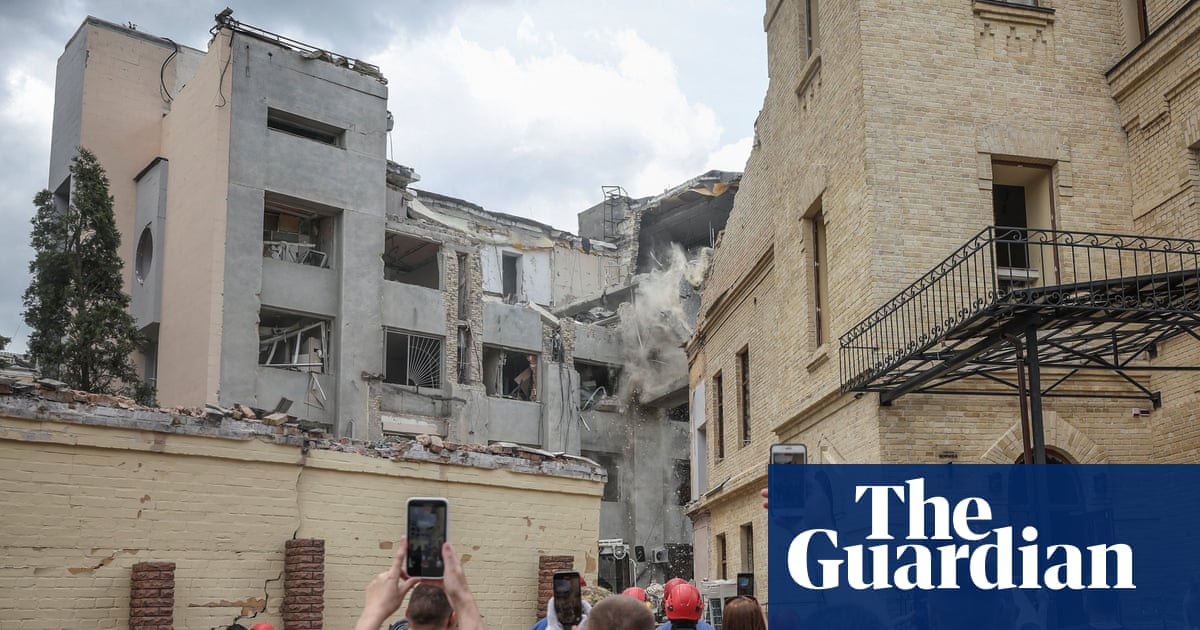
In Kyiv, rescuers worked through the aftermath of Sunday’s strikes, which authorities reported resulted in at least four fatalities and injured 91. More than 70 foreign diplomats visited the heavily damaged neighborhood of Lukyanivka to pay their respects to the victims. Agence France-Presse noted that residents of Kyiv returned to their daily routines on Monday—sunbathing on terraces, playing in the streets, and enjoying coffee at cafes—despite some expressing a sense of desensitization after over four years of conflict.
“We’re accustomed to it,” stated Roman, a 36-year-old firefighter, who was assisting in the clean-up of one of the destroyed buildings. “Emotions take a back seat,” he remarked as a young man carefully stepped over a pile of charred debris while sipping a latte macchiato. Nearby, children played just meters from the site of a recent Russian attack. “Watch out for glass!” a concerned woman called out to them.
After a coffee shop sustained damage from a strike, a wave of Kyiv residents showed their support for the reeling business by lining up to order drinks. The shop’s owner, Yevgen Prusak, gained popularity on social media for serving hot beverages to rescuers through the shattered windows of his cafe. “Yesterday, I thought I might have to close for good,” Prusak, the 35-year-old owner of Hogo cafe, shared. But with customers returning, “I realized who I’m working for.”
Among the buildings affected was the Kyiv-Mohyla Academy, a small liberal arts college. Mykola, 17, and Maksym, 18, attended class despite the recent attack. “We don’t dwell on it too much. Life goes on,” Mykola expressed. “It impacts sleep the most. I’m used to it now, but it was quite stressful at the beginning.”
In a recent commentary for the Guardian, Nathalie Tocci stated: “I visited Kyiv a few weeks ago and look forward to returning next month. At no point since late 2022 have I felt such grounded confidence.” Ukrainians recognize that the end of the conflict is not imminent—it resembles a bloody war of attrition, with a gradual decrease in Russian advancement. However, they also observe the visible cracks in the Russian economy and feel reassured by their ability to continue resisting despite the resources funneled into Russia’s military efforts.
Exiled Belarusian opposition leader Sviatlana Tsikhanouskaya made a significant visit to Kyiv on Monday, marking her first trip to Ukraine. Ukraine has announced increased security measures along its northern border with Belarus in anticipation of potential new Russian assaults from that direction. Tsikhanouskaya was forced into exile following the 2020 presidential elections in Belarus, which saw dictator Alexander Lukashenko claim victory despite widespread opposition claims.
She paid her respects at the grave of Maria Zaitseva, a Belarusian woman who participated in anti-Lukashenko protests and defended against Russia’s invasion prior to her death. “Maria represents a new generation of Belarusians—those who understand that the freedom of Belarus and the freedom of Ukraine are interconnected,” Tsikhanouskaya stated.
Ukraine has intensified its offensive actions against Russian infrastructure and industrial assets. Kyiv’s general staff reported a strike on a Russian oil depot in the Bryansk region, identifying it as a critical component in the fuel supply chain for the Russian military.
In Russia’s Belgorod region, a missile and drone assault collapsed power and water supplies, resulting in one fatality, according to local authorities. Denis Pushilin, the Russia-installed leader of parts of Ukraine’s eastern Donetsk region, claimed that Ukrainian attacks resulted in seven deaths. Reuters has not independently verified these claims. Both Russia and Ukraine maintain they do not intentionally target civilians since the conflict began in February 2022.
In areas controlled by Ukraine, two individuals died and 16 were injured from Russian strikes within 24 hours in the southern Kherson region, as stated by regional governor Oleksandr Prokudin. Following a missile attack on Monday in Derhachi near Kharkiv, two were killed and over 20 were injured, according to officials.
In the Black Sea port of Odesa, officials confirmed that one person was killed and three were injured due to a Russian strike. Additionally, 14 individuals sustained injuries in the southeastern Dnipropetrovsk region, with emergency services reporting drone strikes on a nine-story apartment building in the town of Pavlohrad. The governor of the Ukrainian-held sections of Donetsk, Vadym Filashkin, indicated that 12 people had been hurt in the frontline city of Kramatorsk.
In his nighttime address on Monday, Zelenskyy indicated that Ukraine had made little advancement with the US in increasing the production of anti-missile defenses. He also reiterated that Kyiv was “anticipating new diplomatic initiatives” from Washington.


