Memorial Day serves as a somber occasion to honor the U.S. military personnel who lost their lives while serving in the armed forces. On this day, we often hear discussions centered around freedom and the preservation of our way of life in America. However, it’s essential to ask: what does that freedom truly represent today? Why are young men and women across the country willing to serve—and, in many cases, make the ultimate sacrifice?
In a landscape where propaganda slogans like
“fight ’em over there” persist, it is increasingly difficult to deny that the U.S. military primarily serves the interests of the capital class. This reality unfolds in tandem with a presidency marked by crude control from foreign interests, while transnational capital exploits the societal collapse within the U.S. Who, then, is being honored on this Memorial Day?
Serving the Great American Sellout
Trump: We lost 13 people. In other wars, you lost hundreds of thousands of people. I get a kick when I look at somebody on television and they say, ‘he’s lost 13 people.’ pic.twitter.com/0qGnvpCdTw
— FactPost (@factpostnews) May 20, 2026
Trump’s remarks highlight his dismissive attitude toward troop deaths, treating them as mere numbers that feed his ego. This perspective fails to hold when one considers how financial elites continue to exploit the working class. A brief overview reveals that U.S. elites’ avarice has led to the loss of
3.7 million decent-paying jobs between 2001 and 2018 alone due to outsourcing to countries like China. As outlined in Les Leopold’s book
Wall Street’s War on Workers, Wall Street’s exploitation of the U.S. economy has resulted in a staggering 30 million job losses since 1996.
Under the MAGA banner, this trend toward economic exploitation is only intensifying. Recent acquisitions, detailed in
Asia Times, illustrate this point:
On April 26, 2026, India’s largest pharmaceutical company, Sun Pharma, signed an agreement to acquire New Jersey-based Organon for $11.75 billion. This marks the largest acquisition ever made by an Indian biopharmaceutical firm.
In January 2026, Mitsubishi Corporation announced a $7.5 billion acquisition of Aethon Energy’s U.S. natural gas assets, marking a significant milestone in Japan’s investment in America’s energy sector.
Total Asia-Pacific M&A activity in 2025 reached $946 billion, a marked increase from $687.7 billion in 2024, with related investment in Greater China surging by 46%.
Foreign investment in the U.S. hit $385 billion in 2025, accounting for 60% of global M&A deal values.
Serving a Nation that Will Not Feed Its Own People
In an interview with Fox News host Sean Hannity, Trump defended Chinese investments in U.S. farmland, arguing that restricting foreign ownership could harm American farmers by devaluing their land. While the amount of U.S. farmland owned by China may be relatively small, its presence continues to grow:
According to USDA data, almost every state in the nation has experienced increasing foreign control of farmland since 2014. Foreign entities now own over 45 million acres, comprising just over 3% of the nation’s private farmland, with ownership rising by 67% from 2014 to 2023.
The growing trend of corporate and institutional ownership of farmland signals this number is likely to rise. In a landscape where industries are increasingly relocated overseas, selling off land appears to be a viable option. As stated in
Farm Progress:
…about 348 million acres of U.S. farmland were rented out in 2024, with an astonishing 79% owned by landlords who do not cultivate the land themselves.
Will AI Grow the Food?
Tech companies are also increasingly interested in farmland, primarily for data centers, embarking on a vast corporate land acquisition spree reminiscent of the railroads’ rise. While their footprint may be minor in agricultural land, their impact on vital resources such as water and electricity for communities producing essential goods cannot be overlooked.
A critical issue extends beyond foreign ownership and data centers: the U.S. continues to produce immense agricultural commodities, much of which is destined for export. Meanwhile, working-class communities remain bombarded by ultra-processed—yet highly lucrative—products, struggling to afford even those. Hunger
affects 48 million people in the U.S., with 20% of them being children.
Despite this, an overwhelming amount of investment is directed toward AI technology, even though it may not produce food, clean drinking water, healthcare, or housing for citizens. In 2026, major tech firms, notably Alphabet, Meta, Microsoft, and Amazon, are forecast to spend
$650 billion on AI alone. But what utility does this technology hold?
It risks reinforcing neoliberal frameworks established by powerful elites:
AI threatens to limit our institutional creativity to the ambitions of monopolistic corporations and flood the landscape with propaganda that upholds these unsettling ambitions, while also rehabilitating reactionary ideologies and profiting a select few.
Serving Eugenicist Oligarchs
Among such elites is Peter Thiel, co-founder of Palantir, a company making headlines for its drive to create an expansive surveillance state and military apparatus. Those who enlist serve not only their country but also the ambitions of Thiel and his technological empire.
The Pentagon is actively
utilizing Palantir’s services for strategic operational frameworks and is further expanding its integration. Like other military technologies used abroad, they are increasingly manifesting on domestic soil:
keep coming back to this quote from “Neuromancer” as of late:
“But he also saw a certain sense in the notion that burgeoning technologies require outlaw zones, that Night City wasn’t there for its inhabitants, but as a deliberately unsupervised playground for technology itself.”
— COSMIC 🖖🏾 SLOP (@afrocosmist) March 2, 2025
What ideology is being advanced? It raises the question of whether military personnel are serving the United States or simply “The Technological Republic.” Consider:
Because we get asked a lot.
The Technological Republic, in brief.
1. Silicon Valley owes a moral debt to the country that made its rise possible. The engineering elite of Silicon Valley has an affirmative obligation to participate in the defense of the nation.
2. We must rebel…
— Palantir (@PalantirTech) April 18, 2026
This inquiry prompts us to consider three points:
- Support for “post-democracy,” prevalent in the Trump administration.
- A wider context beyond Trump that has been discussed in the California Law Review, highlighting the elite perspective that often dismisses the capacities of the working class.
- The considerable influence of oligarchs whose views diverge greatly from a collective understanding of “our way of life.”
Thiel, for example, has a background shaped by an upbringing linked to apartheid South Africa, where wealth disparities were extreme. His views reflect a troubling ideology that asserts inequality is a natural structuring of society.
Thiel’s influence and policies are just part of a long line of Silicon Valley leaders who have adopted eugenicist thinking. Their historical roots can be traced back to Stanford University’s founding, where breeding methods were also controversially examined.
The implications of such ideologies are deeply concerning, especially as they trespass boundaries into modern racism and an exclusionary social narrative:
In case it’s not clear to some people, this is classic eugenicist rhetoric and a core feature of fascist politics. It implies that sick and disabled people are failing ‘the nation’ and are thus a burden to be stigmatized, shamed, and eliminated. pic.twitter.com/esdqmkSClP
— Eric Reinhart (@_Eric_Reinhart) May 12, 2025
Policy changes under the Trump administration affecting programs like Medicaid and SNAP seem tailored to reinforce these unfeeling paradigms while benefiting a privileged few.
Serving for Zionism and Epstein’s Secrets
This brings us to a clearer conclusion: Is the military serving the aspirations of specific interests or broader humanitarian values? Rhetoric surrounding casualties often robs these individuals of their dignity.
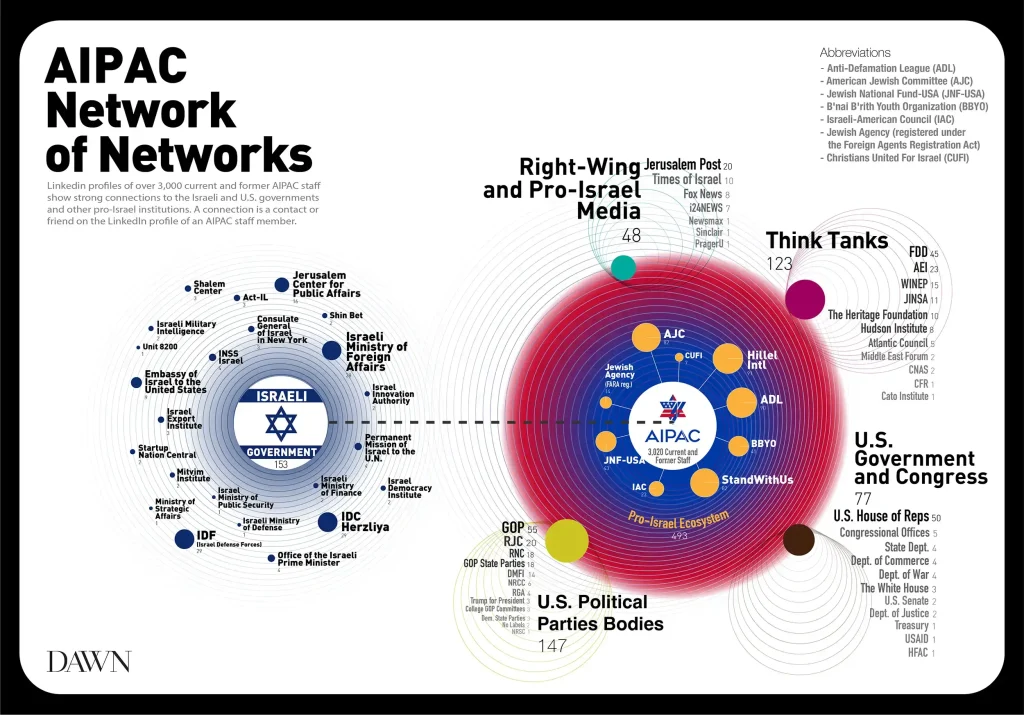
We must ask whether those who died served the political interests of figures such as Miriam Adelson, or if they intersect with larger global ambitions that prioritize power over people.
The reality indicates a troubling alignment with ideologies that prioritize profit and global ambition over the well-being of American lives. The cost—a tragic irony—is that many of those who serve are abandoned upon returning, much like the towns left deserted by exploitative economic practices.
Pain at Home for Gain Over There?
The number of homeless veterans exceeds 30,000, while the Trump administration continues to dismantle successful policies that had reduced these figures.
How can we be surprised by the military’s ongoing recruitment crisis? Research from the
Georgetown Security Studies Review shows documented difficulties in meeting recruitment goals.
…the recruitment crisis has a long history since the abolition of the draft in 1973, often depending on the state of the economy. During strong economic periods, fewer individuals enlist, seeking better civilian job opportunities.
Many enlist only because they find limited options and a desire for financial security amid despair. Feelings of anger and frustration often result in a cycle of violence. As Joe Bageant poignantly put it:
The tide of our national meanness rises incrementally, one brutalizing experience at a time…
This Memorial Day serves as a reminder: the enemies we should recognize may not be those we typically envision, but rather those who profit from war and chaos while neglecting the needs of those who serve.


