Breaking News in Science
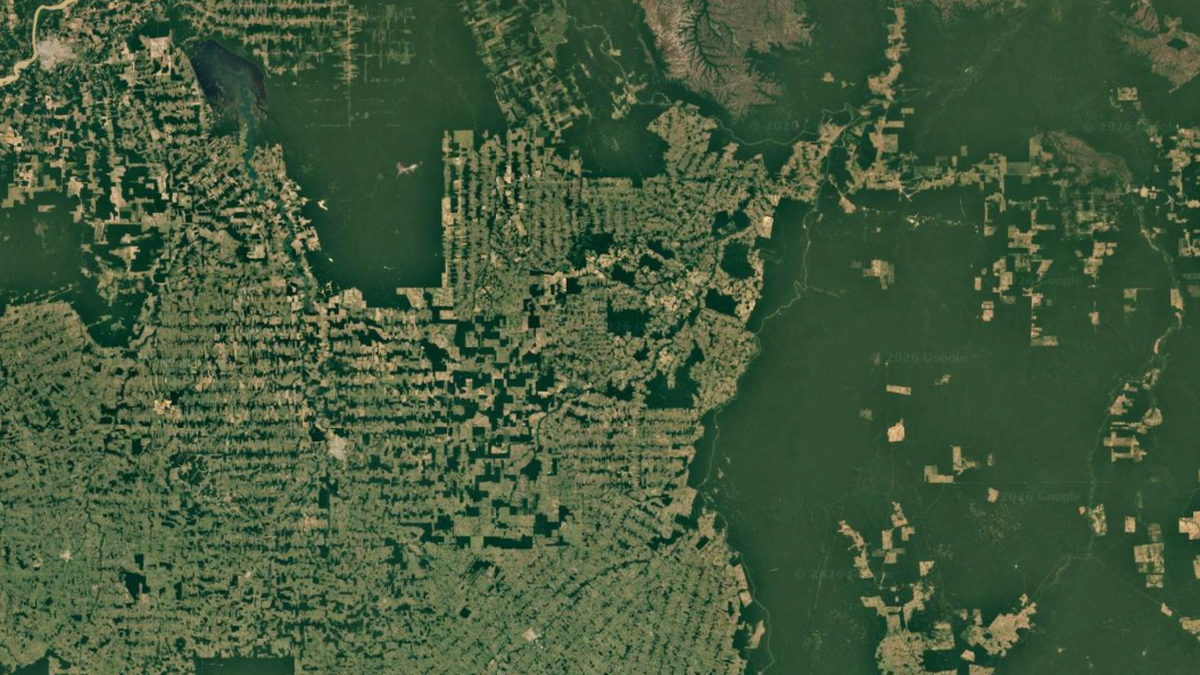
A Satellite Perspective on Forest Fragmentation

Photo Credit: Google Earth
Breaking up forests is just as bad for global warming
A recent study highlights how the fragmentation of forests can significantly impact local temperatures. Researchers discovered that dividing vast forests into smaller patches raises surface temperatures in tropical and temperate zones. Conversely, in high-altitude boreal forests, fragmentation has a cooling effect due to increased snow cover, which reflects sunlight. This discovery emphasizes the need for climate action to consider forest fragmentation as a critical factor.
Radio jets from colossal black holes illuminate gas clouds
Astronomers have gained insights into the relationship between massive black holes and the gas halos of their galaxies. A study led by an Indian team revealed that ionized hydrogen glows along the pathways of radio-frequency energy emitted by the black holes. Interestingly, magnesium—indicative of cooler gas—was found dispersed throughout the galaxies. This suggests that the jets don’t create gas halos; rather, they illuminate existing gas clouds as they expand.
Butterflies use wing patterns to evade predators
Striking wing patterns in butterflies may serve an essential role in predator defense. Researchers studied high-speed videos of butterfly flights and 3D computer models to uncover that the combination of flapping wings and vibrant patterns tricks predators. The visual illusions created by these patterns confuse predators’ perception of the butterflies’ speed and direction, making this one of the most effective visual defense strategies observed in moving animals.
Published: October 04, 2026, 05:24 PM IST


