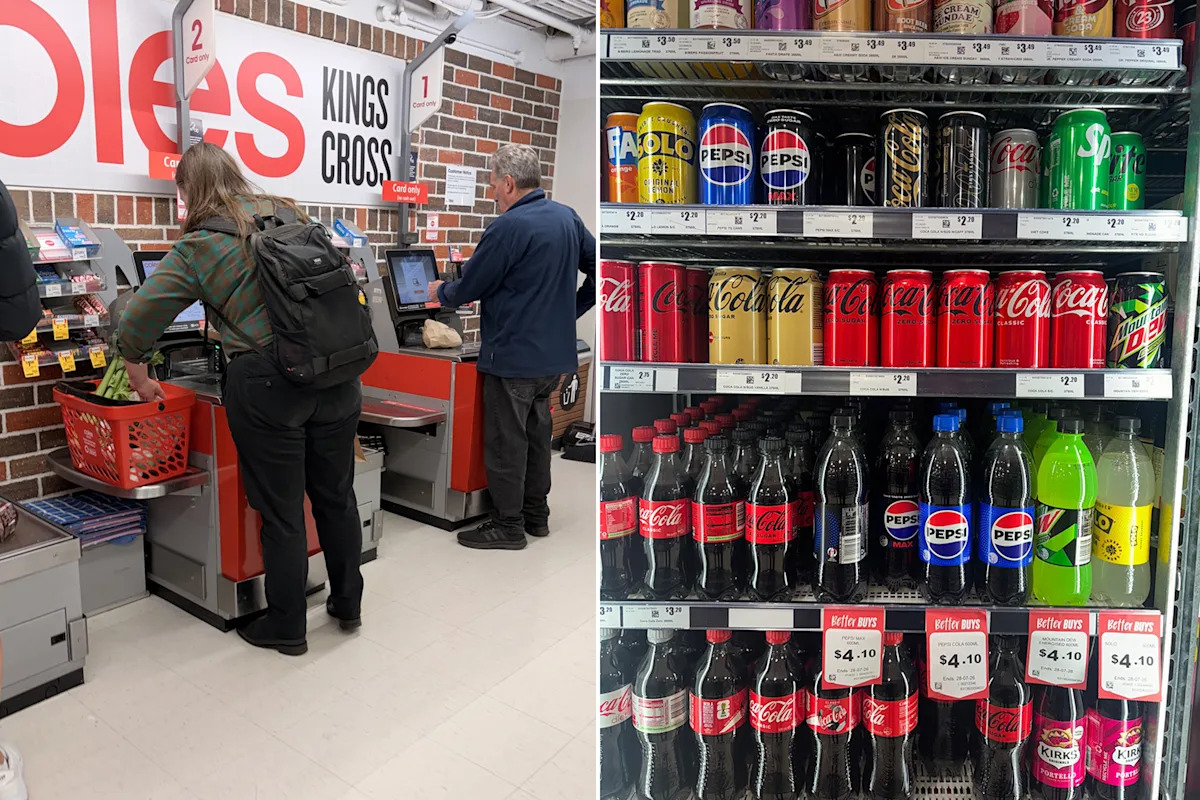
The ongoing supply chain disruptions have led to rising concerns over potential shortages in Australia’s supermarkets, particularly related to beverages. While Diet Coke has recently grabbed headlines due to supply challenges in India, experts now warn that the situation may affect Australian consumers more broadly.
Shortages of fuel, fertiliser and bitumen have plagued Aussies in the months since the closure of the Strait of Hormuz —but reports of another shortage have sparked a frenzy among consumers.
Fears spread online after Reuters reported Diet Coke sold in cans in India was in short supply because of an issue with supply chain disruptions. The news sent local “fridge cigarette” drinkers into a panic.
Now, experts are warning that we could see supply issues in Australia — and it might impact more brands than just Coca-Cola.
What’s causing the “candemic”?
Dr. Vinh Thai, an expert in logistics and supply chain management at RMIT University, spoke to Yahoo News about the factors contributing to this “candemic.”
According to Dr. Thai, India relies heavily on aluminium imports from Middle Eastern countries, where many smelters are located near the Strait of Hormuz.
He indicated that the ongoing stalemate there has significantly disrupted production and supply chains.
“Furthermore, there is considerable damage to the smelter factories caused by the conflict,” he noted.
Thus, the issue isn’t a lack of the beverage itself, but rather a shortage of the aluminium cans required for packaging. In India, Diet Coke is exclusively sold in aluminium cans.
Will Australia soon experience a Diet Coke shortage?
What does this mean for Australians who enjoy a can of Diet Coke after a long day?
Dr. Thai suggests that a Diet Coke shortage in Australia is unlikely due to the nation’s significant alumina production capabilities.
However, Associate Professor Elizabeth Jackson from Curtin University holds a different view.
She pointed out that while Australia extracts raw materials like bauxite (a key element for aluminium), these materials are often exported to produce aluminium sheets before being imported back for can production.
Moreover, other necessary elements for aluminium production also traverse through the Middle East, creating further vulnerabilities in the supply chain.
“This is the aspect of the supply chain that is concerning,” Dr. Jackson conveyed to Yahoo News.
“While manufacturers of aluminium cans in Australia are somewhat insulated from global events, the sourcing of materials to produce aluminium sheets occurs offshore, exposing us to potential risks in the supply chain,” she added.

As the public worries about the “candemic,” RMIT University Professor Vinh Thai explains the supply issue in India is not about the beverage itself but with a shortage of aluminum. Source: Yahoo News Australia
Dr. Thai emphasizes that there is a “diversity” in the availability of Diet Coke, as major retailers like Woolworths and Coles offer both canned and plastic-bottled versions.
A spokesperson for Coca-Cola Europacific Partners reassured Yahoo News that Diet Coke “remains readily available across Australia.”
“We produce our beverages, including Diet Coke, locally at our manufacturing sites across the country, helping to support consistent and reliable supply,” the spokesperson stated.
Will the price be impacted?
Dr. Thai warned that while a shortage of Diet Coke may be unlikely, any potential impact will likely manifest through price increases.
“Increased prices will result from supply chain disruptions,” he indicated.
Dr. Jackson concurred, noting that a “cascading effect” of rising costs is currently unfolding due to the fuel crisis and high natural resource expenses.
“Even as early as March, aluminium prices were on the rise, resulting in increased costs for raw materials vital to producing aluminium cans,” she said.
RELATED:
Will other drinks be affected?
Even if Diet Coke isn’t your beverage of choice, Dr. Jackson warns that the ongoing conflict in the Middle East could have repercussions for any drinks packaged in aluminium cans.
“Any product that relies on aluminium cans will likely be affected,” she cautioned. “Currently, it may seem like a Coca-Cola issue.”
Dr. Jackson elaborated that the ongoing impact of diminished stocks — whether they be bauxite, diesel, or sulphur — is leading supply chains to run low on essential raw materials necessary for production.
As the flow of materials through the Middle East remains disrupted, shortages may loom on the horizon.
“We are likely to see manufacturers operating at less than full capacity due to depleting resources,” Dr. Jackson added.
Key Takeaways
- Diet Coke faces supply challenges in India due to aluminium shortages.
- The situation may not directly lead to a shortage in Australia, according to some experts.
- However, price increases due to supply chain disruptions are anticipated.
- Other beverages in aluminium cans could also be at risk of shortages.
- Australia’s production capabilities provide some insulation but rely on global supply chains.
FAQ
Will there be a shortage of Diet Coke in Australia?
Experts have mixed opinions, with some believing that Australia is insulated from the crisis while others highlight potential risks due to global supply chain vulnerabilities.
Why is Diet Coke in short supply in India?
The shortage in India is attributed to issues with aluminium can production, stemming from supply chain disruptions in the Middle East.
Are prices expected to rise for Diet Coke?
Yes, experts predict price increases due to ongoing supply chain challenges and rising raw material costs.
Could other beverages be affected by this situation?
Yes, any drinks packaged in aluminium cans may suffer from similar supply chain issues as seen with Diet Coke.
Concerns about beverage availability are growing as global supply chains face disruption. Monitoring the situation will be essential for consumers in the coming months.