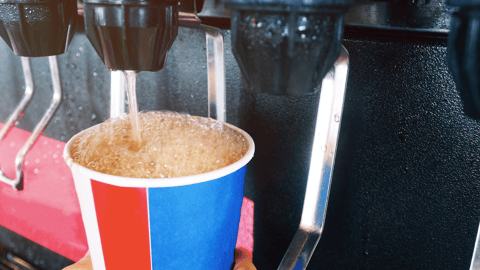
Canadians are thirsty—for fountain pop. In the 12 months ending December 2025, they consumed 427 million fountain soft drinks, as per the Ipsos Foodservice Monitor. This marks a notable 6% increase from the previous year, positioning fountain drinks as the leading cold beverage category in foodservice.
This rising trend hasn’t escaped the attention of Tim Hortons, Canada’s largest quick-service restaurant chain, which is introducing fountain drink dispensers in selected locations across the country. Customers will soon enjoy a variety of flavours, including Coca-Cola, Diet Coke, and Fuze, through Coca-Cola Freestyle touchscreen units.
During the company’s fourth-quarter and year-end earnings call in mid-February, Axel Schwan, president of Tim Hortons Canada and the U.S., stated that these machines will “play a key role” in boosting combo sales.
He highlighted that cold beverages are capturing a larger portion of the chain’s drink sales, comprising 27% of beverage transactions in the fourth quarter of 2025. This figure represents an 8.6% year-over-year increase, despite the unusually cold weather in December, marking the highest share for the fourth quarter recorded.
“In the world of foodservice, beverages are making a comeback,” observes Emma Balment, a director in the food and beverage group for market strategy and understanding at Ipsos.
Despite the pressures of high inflation, she notes that “2025 saw immediate consumption beverages grow across most foodservice categories, including convenience, grocery, full-service, and quick-service restaurants,” although coffee shops presented an exception.
Balment adds that the immediate-consumption beverage consumer is driving growth in the convenience channel, attracting loyal coffee drinkers away from coffee shops.
While quick-service restaurants lead in fountain soft-drink growth, convenience stores are expanding their foodservice offerings. Nevertheless, fountain drinks currently lag behind other cold beverage types in this sector.
“Fountain soft drinks are not keeping pace in c-stores, where consumers prefer bottled, slushy, or canned formats—in that order,” she mentions.
Balment suggests that this trend may be influenced by many convenience stores prioritizing promotional pairings of canned and bottled beverages with snacks, such as potato chips and chocolate bars.
“C-store beverage customers are increasingly deal-conscious, showing a five-point increase in their deal-seeking behavior compared to last year,” she says. “These bundle deals on canned and bottled drinks prominently displayed across coolers could be a factor.”
As convenience stores seek to innovate and compete with quick-service restaurants for “cheap and cheerful” occasions, Balment advises that retailers may want to revisit their fountain programs.
Beverage manufacturers are also enhancing their fountain initiatives across Canada.
Keurig Dr Pepper Canada (KDP Canada) has introduced a new program, although their main focus for convenience stores lies elsewhere (see sidebar).
PepsiCo Canada is also investing in fountain drinks, emphasizing their capacity to reach a diverse customer base.
“Fountain beverages are crucial in addressing the needs of a wide and varied consumer base,” states Emily Sweet Kretz, general manager of away-from-home operations at PepsiCo Beverages Canada.
“Zero-sugar options resonate strongly with Generation Z and millennials, while diet beverages remain significant for older consumers,” she adds. “Our diverse flavour range—spanning brands like Mountain Dew, Brisk, 7UP, Crush, and Mug—also pairs well with a variety of foods.”
This factor is vital as convenience stores enhance their foodservice offerings and vie to become destinations for meals and beverages.
PepsiCo is relying on fountain drinks to drive overall beverage growth.
“We see a strong alignment between preferences for fountain drinks and innovations in bottle and can formats, with taste, refreshment, and flavour being the leading drivers across both categories,” remarks Sweet Kretz.
“It also allows consumers to sample different flavours, fostering loyalty and encouraging purchases of other formats in retail channels like grocery,” she continues.
In collaboration with convenience retailers, PepsiCo offers “a variety of merchandising and promotional support,” she adds.
These resources include digital screen takeovers in stores, social media materials promoting exclusive flavour launches, and signage near fountain or frozen beverage machines.
“In certain instances, we also partner on custom or limited-edition cups linked to broader brand initiatives or product launches to enhance the in-store experience,” she concludes.
For convenience retailers, this presents an opportunity to align with the rising foodservice trend and expand their retail offerings to include profitable fountain beverage programs.
Key Takeaways
- Canadians consumed 427 million fountain soft drinks in 2025, marking a 6% increase.
- Tim Hortons is rolling out Coca-Cola Freestyle dispensers to enhance customer choice.
- Cold beverages made up 27% of drink sales at Tim Hortons in Q4 2025, an unprecedented high.
- Convenience stores are seeing a shift in consumer preferences toward bottled and canned beverages.
- Industry experts predict continued growth in the fountain drink sector amid evolving consumer habits.
FAQ
What is the primary driver for the increase in fountain drink consumption?
Consumers are increasingly drawn to immediate consumption beverages across different foodservice categories.
How is Tim Hortons adapting to this trend?
The chain is introducing Coca-Cola Freestyle machines to allow customers greater variety in their drink choices.
What challenges do convenience stores face regarding fountain drinks?
Many convenience stores are focusing on promotions for bottled and canned beverages, leaving fountain drinks lagging behind.
What role do beverage companies play in the fountain drink market?
Beverage manufacturers are ramping up initiatives to promote fountain drinks, highlighting their importance to consumer preferences.
As the fountain beverage market evolves, both quick-service and convenience retailers have opportunities to capture consumer interest and grow their beverage offerings.