Circle has unveiled a comprehensive suite of tools that empower AI agents to manage wallets, explore services, and execute programmable payments using $USDC. This initiative is part of a broader movement among companies to establish robust financial infrastructures for autonomous software systems.
The newly introduced products fall under Circle’s “Agent Stack” and include specialized wallets for agents, a command-line developer interface, a marketplace for services linked to agent functionalities, and a nanopayments protocol for machine-to-machine transactions.
According to Circle, their nanopayments infrastructure facilitates gas-free $USDC transfers as minuscule as $0.000001, optimizing high-frequency autonomous payment flows among software systems.
The tools have been designed to enable AI agents to conduct transactions independently while adhering to predefined permissions, spending limits, and policy guidelines across supported blockchains and payment networks.
The launch also features Circle CLI, a command line interface intended for developers and AI agents building applications on Circle’s platform, as well as Agent Wallets, which facilitate independent fund management, sending, and receiving.
Circle is the issuer of the $USDC stablecoin, which stands as the second-largest stablecoin in market capitalization, boasting approximately $78 billion in circulation according to DeFiLlama data. Shares of Circle (CRCL) saw an increase of about 18% during midday trading and have risen over 51% in the past month.
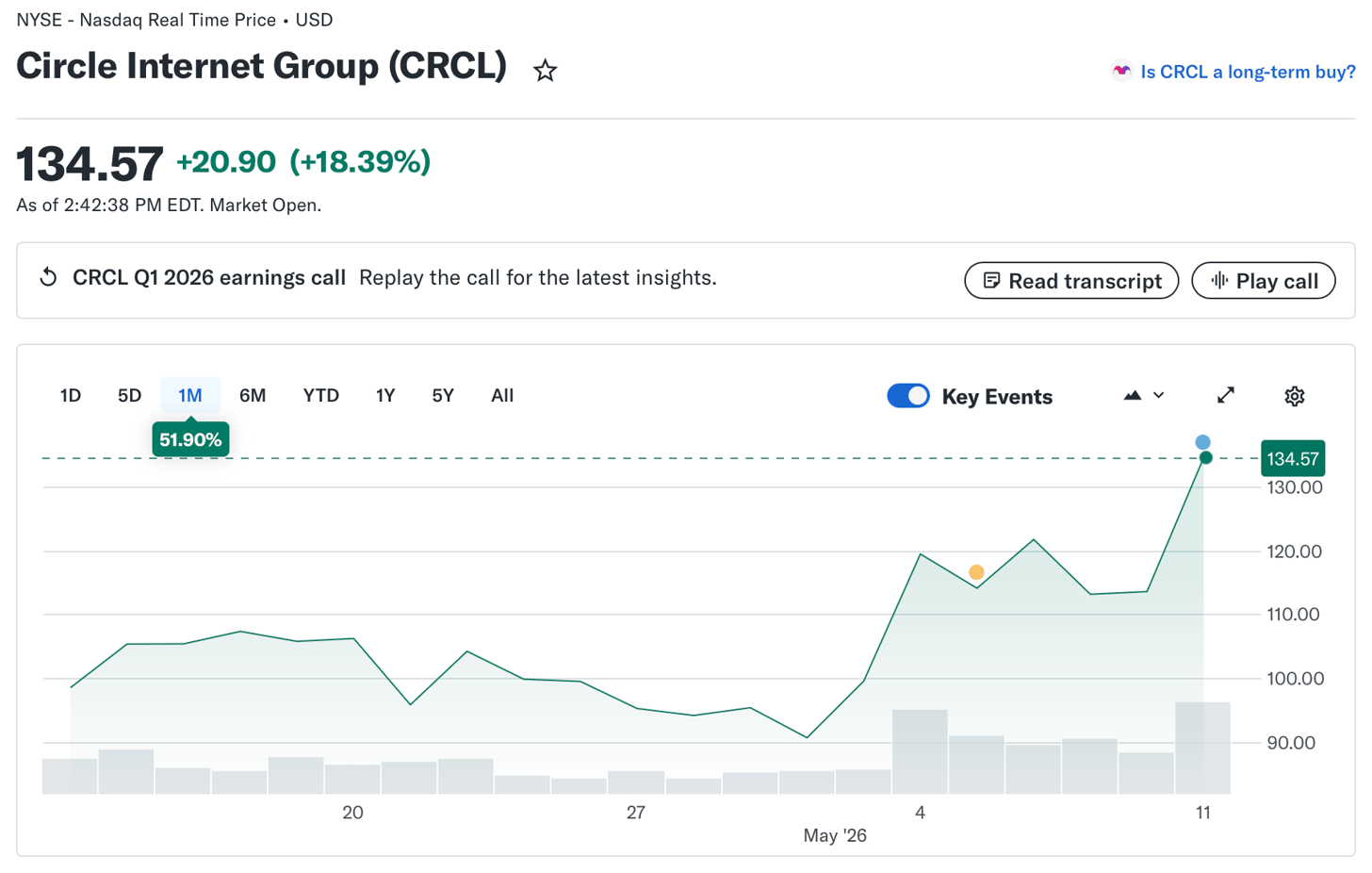
Source: Yahoo Finance
Stablecoins Emerge as the Backbone for AI Payments
The launch from Circle arrives in a landscape where crypto companies are increasingly advocating for stablecoins and blockchain networks as the foundational financial infrastructure for AI agents.
In March, MoonPay debuted an open-source wallet standard enabling AI agents to manage funds and carry out transactions seamlessly across blockchains, utilizing a shared wallet framework incorporating policy controls and secure key storage. Additionally, BitGo released a developer tool tailored for AI, allowing agents and assistants to access wallet functionalities, API resources, and technical documentation via natural language prompts.
Visa, too, introduced a command-line tool aimed at facilitating AI-driven payments without revealing API keys, while Stripe-backed Tempo launched a blockchain and payments protocol designed specifically for stablecoin transactions between autonomous software systems.
Furthermore, Coinbase announced that its Ethereum layer-2 network Base is upgrading its infrastructure to support an “AI agent economy,” focusing on stablecoin transactions, tokenized assets, and developer tools for autonomous software systems.
In a recent development, Exodus introduced XO Cash, a Solana-based stablecoin complete with a developer toolkit, which aims to empower AI agents to process payments through agent-connected wallets, featuring customizable spending controls and access to Visa payment rails.
This growing emphasis on AI-driven automation has already begun altering corporate landscapes. Recently, Coinbase announced a reduction of approximately 14% in its workforce, with CEO Brian Armstrong attributing these changes in part to the advances in AI significantly reshaping operational methodologies.
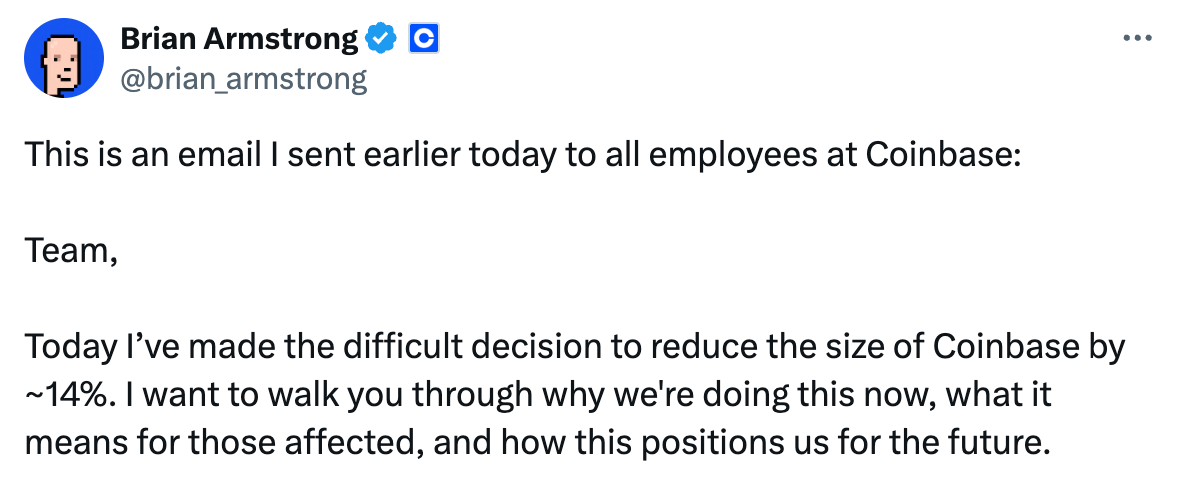
Source: Brian Armstrong