For many years, the common advice to women has been to ensure strong bones by consuming enough calcium, preferably from dairy sources, and to consider supplements, especially after menopause. While this guidance isn’t entirely inaccurate, it paints an incomplete picture of what is necessary for optimal bone health.
Today, medical consensus has evolved. While calcium remains a crucial nutrient, we now recognize that bones are dynamic living tissues and not merely passive deposits of minerals. The risk of fractures is influenced by much more than just calcium intake. Factors such as muscle strength, movement, and importantly, the risk of falling are all critical elements of bone health. The current understanding isn’t that calcium is unimportant, rather, it is just one piece of a much larger puzzle.
Calcium: A Foundation, Not the Only Solution
Calcium serves a vital structural role in bone. Insufficient calcium intake forces the body to draw minerals from the skeleton, resulting in weakened bones over time.
The recommended daily intake for women over 50 is set at 1,200 mg, but this guideline is not as solidly supported by evidence as commonly believed. It is based on older short-term studies of calcium balance, while more recent research suggests that calcium balance should be monitored over extended periods.
Merely increasing calcium intake—especially with high-dose supplements—may not be the answer many women hope for. Some studies have linked high-dose supplements to an increased risk of heart attacks and strokes, as well as a higher incidence of kidney stones according to a large randomized trial.
A significant meta-analysis published in the BMJ found that raising calcium intake results in only modest improvements in bone mineral density, typically between 0.6% and 1.8% over one to two years, with minimal additional benefits thereafter. Importantly, those who started with low calcium levels did not experience greater gains than those already consuming higher amounts; moreover, higher doses did not promote noticeable differences compared to moderate amounts.
Thus, while calcium provides an early boost in bone density with increased intake, it is unlikely to significantly lower fracture risk on its own. Beyond that initial period, its primary role is to maintain rather than build bone quality.
Nonetheless, a steady baseline calcium intake is crucial to prevent the body from leeching minerals from the skeleton. Current evidence suggests that around 700 mg per day may be a more practical target for many adults, including those undergoing menopause. Meeting this requirement through diet not only ensures adequate nutrient intake but also avoids the potential cardiovascular and kidney stone risks associated with high-dose calcium capsules.
Fractures Are Linked to Falls, Not Just Low Bone Density
A critical yet often overlooked truth is that most fractures in older women stem from falls rather than merely low bone density.
Research consistently indicates that the risk of falling—driven by factors like muscle weakness, poor balance, and slower reflexes—is a major contributor to fracture incidence, especially hip fractures. Age-related muscle decline, known as sarcopenia, is a significant factor in this equation. The link between osteoporosis and sarcopenia—sometimes referred to as osteosarcopenia—greatly heightens fracture risk.
Muscle functions as a protective mechanism for bones in two ways: it diminishes the likelihood of falling and provides mechanical stimulation that helps maintain bone integrity.
This understanding shifts the emphasis from bone alone to encompass the entire musculoskeletal system, pinpointing where effective interventions can be applied.
Exercise: A Key Component in Fall Prevention
Exercise stands out as one of the most effective strategies for preserving bone health, yet it remains underutilized. However, not all types of exercise yield the same benefits.
Resistance (weight) training and exercises that involve impact loading, such as jumping, are supported by compelling evidence for enhancing bone density. Landmark studies, including the LIFTMOR trial, have demonstrated that such training can enhance bone density at clinically significant locations such as the spine and hips among postmenopausal women.
Conversely, activities like swimming and cycling, where the body is buoyed by water or a bike, and walking—though excellent for cardiovascular fitness—have limited benefits for bone density when performed alone.
Structured programs featuring resistance training two to three times weekly, along with suitable jumping exercises, can prove particularly beneficial. Not only does exercise contribute to bone density, but it also enhances balance, coordination, and response times—key factors that help reduce the risk of falling.
It’s important to note that women who have previously experienced fractures, have advanced osteoporosis, or face balance challenges may need tailored or supervised programs.
Protein: An Essential Partner
Bone is composed of more than just minerals; it features a complex matrix of minerals and proteins. Higher protein consumption has been correlated with improved bone mass retention and a significantly lower risk of hip fractures according to several clinical reviews.
Protein serves as the fundamental building block for the collagen matrix of bones. For this reason, expert recommendations now suggest that older adults aim for a protein intake of 1.0 to 1.2 grams per kilogram of body weight each day, a figure that surpasses traditional minimums and aligns more closely with the forthcoming 2025-2030 Dietary Guidelines for Americans. In this context, calcium and protein are complementary, as calcium mineralizes while protein maintains the structural framework.
Vitamin D and Other Nutritional Supports for Bone Health
Vitamin D plays a vital role in facilitating calcium absorption and supporting muscle function—both of which are essential for bone health. However, extensive randomized trials—and guidance from the US Preventive Services Task Force—suggest routine supplementation of up to 400 i.u. of Vitamin D along with as much as 1,000 mg of calcium may not reduce fracture risk in generally healthy postmenopausal women.
This doesn’t render vitamin D insignificant; many individuals may still require a supplement given the commonality of its deficiency. However, in the context of protecting against fractures, specific testing and targeted supplementation are likely more effective than blanket recommendations.
Other nutrients, such as magnesium, potassium, and vitamin K, support bone and muscle health. Nonetheless, evidence supporting the role of standalone supplements in reducing fracture risk is limited. Overall, nutritional quality is more significant than focusing on any single nutrient.
Dairy: Valuable, Yet Not Indispensable
Dairy products remain among the richest sources of calcium in Western diets. Additionally, they offer high-quality protein, phosphorus, and, when fortified, adequate amounts of vitamin D. However, the focus should not solely be on calcium quantity, but on its bioavailability—the efficiency of absorption.
Calcium from dairy is absorbed at an approximate rate of 30-35%. In contrast, certain brassica vegetables like broccoli, kale, and bok choy often outperform dairy in absorption efficiency, as documented in controlled absorption studies. Conversely, some plant foods, like spinach, contain oxalates that greatly hinder absorption.
From a practical standpoint, thoughtfully chosen plant sources can be just as beneficial as dairy for meeting nutritional needs. Among dairy foods, not all exhibit the same effects. A review regarding bone health outcomes indicated that while milk is linked to minor increases in bone mineral density, the outcomes related to fractures have been inconsistent. In contrast, fermented dairy items such as yogurt and cheese show more reliable protective associations against fractures.
Medication Plays a Key Role
While lifestyle choices are fundamental for bone health, they may not be sufficient for everyone. For women diagnosed with osteoporosis, those who have experienced previous fragility fractures, or those at elevated fracture risk, medications may significantly lower fracture risk, often surpassing the potential benefits of lifestyle adjustments alone. Medications include those that slow bone breakdown (antiresorptive therapies) and anabolic treatments that actively promote bone formation.
A comprehensive discussion regarding bone health with your healthcare provider should always encompass risk assessments, alongside the potential for targeted therapies when suitable.
Bringing It All Together
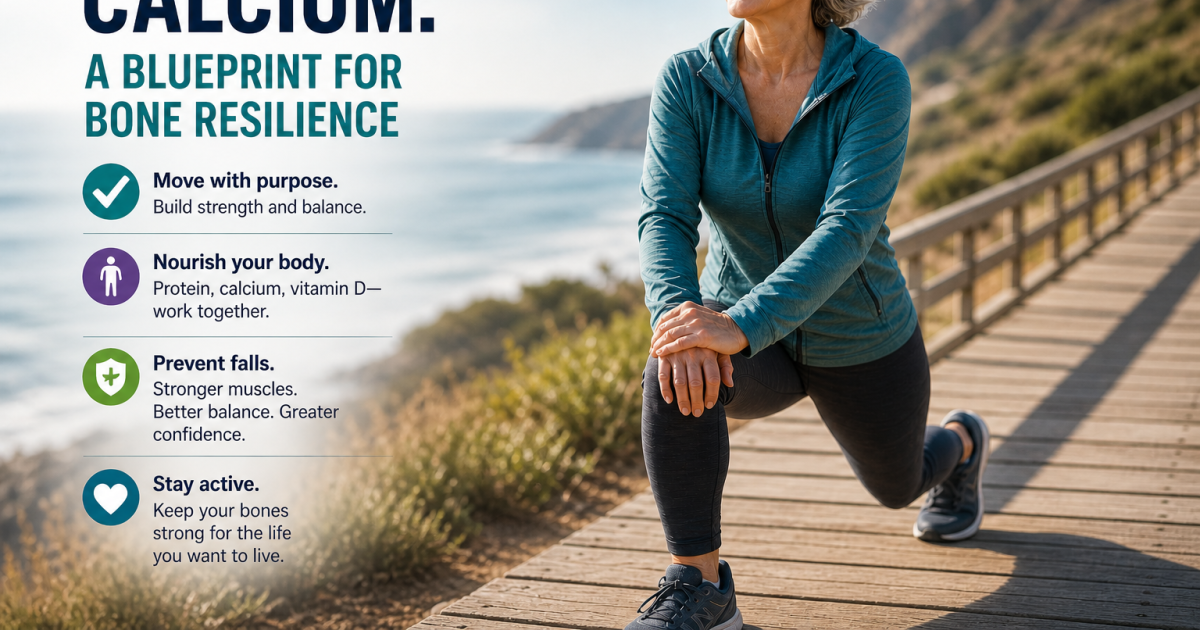
Optimal bone health is not founded on a single nutrient or practice; rather, it is the result of an array of factors working in harmony over time.
For most women, achieving healthy bones entails:
- Maintaining a consistent baseline of calcium intake
- Getting adequate protein to support muscle and bone health
- Engaging in regular resistance and, when appropriate, impact exercises
- Following a generally high-quality diet
- Utilizing medications if necessary to diminish fracture risk
The lowest fracture risk is not simply found in those who consume high levels of calcium, but in those who support the entire system: bones that are sufficiently mineralized, muscles that are strong, and bodies that are less likely to fall.