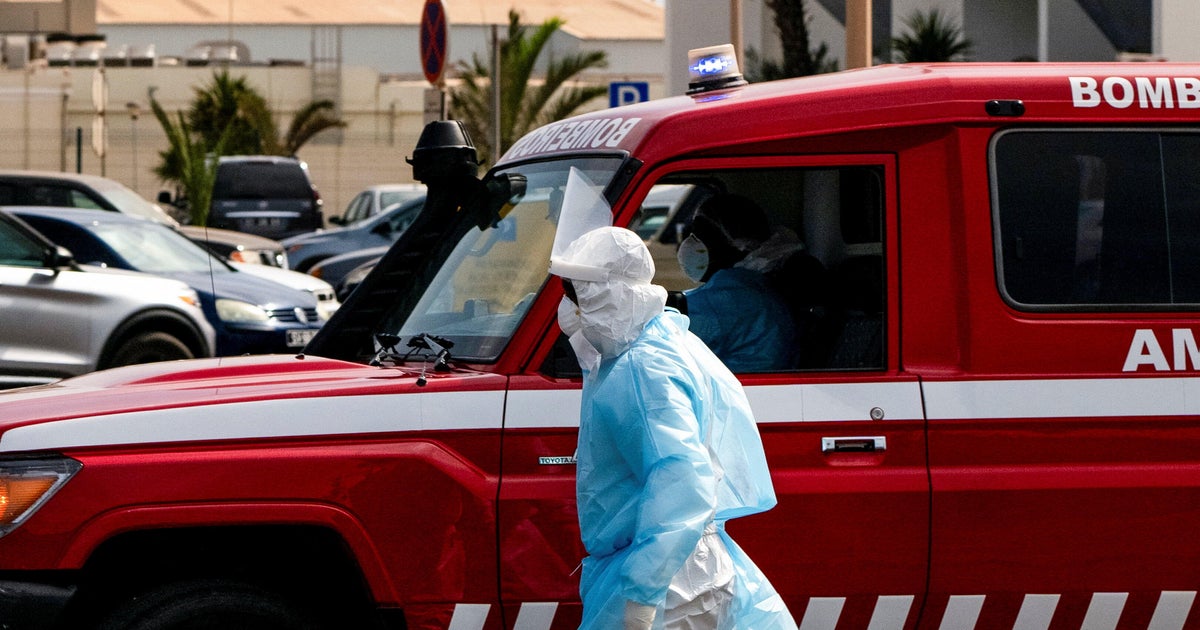
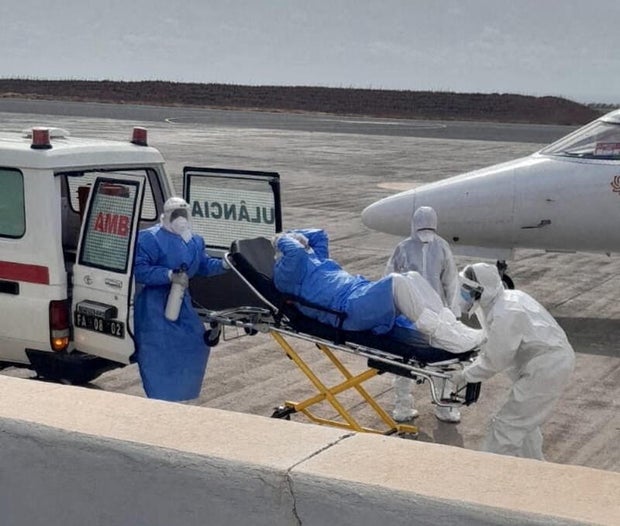
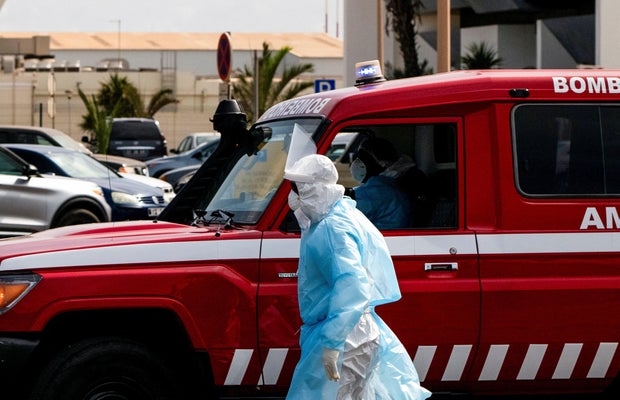
Amidst an alarming outbreak, three passengers suspected of having the hantavirus were evacuated from the MV Hondius cruise ship and are currently en route to the Netherlands for medical treatment, as confirmed by the World Health Organization. Among the evacuees are nationals from Germany, the Netherlands, and the United Kingdom, including a crew member from the UK.
This rare outbreak has tragically resulted in the deaths of three individuals from the cruise.
The cruise operator, Oceanwide Expeditions, reported in a statement on Wednesday evening that a medical aircraft has successfully transported two of the patients to the Netherlands, while a second aircraft is facing delays. The passenger aboard the second flight is reported to be in stable condition. Details regarding the delay have not been disclosed, but the company promises an update soon.
The U.K. Health Security Agency confirmed in a statement that one British national has been evacuated for care in the Netherlands. They are also aware of two other individuals who were on the MV Hondius and have returned to the U.K. independently. Neither of them is reporting symptoms and has been advised to self-isolate. The agency highlighted that the risk to the general public remains very low.
In a recent development concerning the approximately 150 passengers, the Spanish government reiterated its commitment to allow the vessel to dock in the Canary Islands, despite earlier objections from the head of the local government.
According to Oceanwide Expeditions, the cruise ship, which set sail from Cape Verde, is currently headed north towards the Canary Islands, a journey expected to take three to four days.
The initial plan, which was coordinated between the Spanish government and the WHO, was for the vessel to dock in the Canary Islands for a comprehensive “investigation” and “inspection” following the evacuation of the three patients. However, the regional government head, Fernando Clavijo, opposed this plan earlier, stating that he had called for a meeting with Spain’s Prime Minister Pedro Sanchez.
In a social media update, Clavijo, who belongs to Spain’s conservative political opposition, remarked: “The Canary Islands always acts with responsibility, but it cannot accept decisions taken behind the backs of the Canary Islands institutions and without sufficient information to the population.”
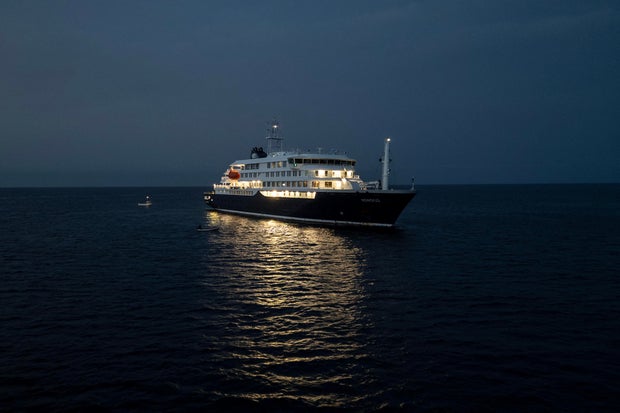
However, at a later press conference, Spain’s health minister, Monica Garcia Gomez, reaffirmed the plan, stating that the vessel would dock at Granadilla on the Canary Island of Tenerife “within three days.”
“A coordinated system for health assessment and evacuation will be established to repatriate all passengers unless their medical condition prevents it,” she informed reporters.
On Wednesday, José Domingo Regalado, the mayor of Granadilla de Abona in Tenerife, rejected the MV Hondius’s arrival at the local industrial and logistics port, asserting that this decision contradicts “what is desired.”
“What we are asking for is to take action, as they can be transferred to the nearest airport for repatriation and treatment by their local health services if necessary. Furthermore, we request that the ship be disinfected at sea before approaching a port with a local population,” he stated.
Addressing Clavijo’s earlier remarks, Gomez stated she had been in “constant contact” with him and assured that he would participate in all relevant discussions.
A planned flight to evacuate the ship’s doctor, who was exhibiting symptoms, was canceled early Wednesday morning, according to a source familiar with the situation.
Spain’s health ministry later announced that the ill individuals would be treated in the Netherlands.
Dr. Jay Bhattacharya, acting director for the U.S. Centers for Disease Control and Prevention, announced in a statement that the CDC has been collaborating with both domestic and international partners since the outbreak was identified.
The CDC is coordinating medical support for all Americans aboard the cruise ship, which includes 17 U.S. passengers, according to Bhattacharya.
Two Georgia residents who were aboard the Hondius but have returned to Georgia are being monitored, though they have not displayed any symptoms, as reported by the Georgia Department of Health.
“Our primary concern is the safety and health of affected American travelers,” Bhattacharya stated.
South African officials confirmed on Wednesday that they had identified the Andes strain of the hantavirus in two individuals who had been on the cruise. This particular strain, mainly found in Argentina and Chile, can be transmitted between humans, unlike many other variants of the virus.
Swiss authorities also reported that a man who traveled on the ship had tested positive for the Andes strain, while stating there is currently “no risk to the Swiss public.”
The French Ministry of Health mentioned that a confirmed “contact case” is involved, with a man believed to have flown with one of the two patients evacuated to Johannesburg for treatment in late April.
At this time, one British citizen remains in intensive care in South Africa following the cruise. The French authorities likely referenced a different patient, a 69-year-old Dutch woman, who exhibited “gastrointestinal symptoms” upon disembarking the ship and sadly passed away two days later during her flight to Johannesburg, after her condition worsened.
This brings the total number of suspected or confirmed cases to nine, with three fatalities, and five individuals confirmed to be under treatment, alongside the case involving the French citizen.
Oceanwide Expeditions confirmed that two infectious disease specialists are en route from the Netherlands to the cruise ship and will remain on board following its anticipated departure from Cape Verde.
The MV Hondius, a luxury cruise ship registered in the Netherlands, set sail from Ushuaia, Argentina, on April 1 and has been anchored off the coast of Cape Verde since Sunday.
Argentina’s health ministry issued a statement on Wednesday indicating that it is reviewing the itinerary of a Dutch couple who traveled through southern Argentina and Chile before the expedition. They will also undertake rodent capture and analysis in Ushuaia, according to the statement.
No cases related to the outbreak have been identified within Argentina thus far, the health ministry noted.
Ann Lindstrand, the WHO representative in Cape Verde, reassured CBS News that there was no risk of a pandemic-level outbreak concerning the hantavirus due to its low likelihood of human-to-human transmission.
Bhattacharya echoed this sentiment, stating that hantavirus “is not transmitted by asymptomatic individuals; transmission requires close contact, making the risk to the American public very low.”
Spanish and Dutch authorities are engaged in intense negotiations regarding the future of the passengers. They have been advised to remain in their cabins as much as possible.
“Any necessary quarantine will be determined by the health authorities in Spain or the Netherlands in coordination with WHO,” said Lindstrand, adding that should a quarantine be necessary, it may last up to two months due to hantavirus’s incubation period of one to eight weeks, which is a significant duration for confinement.
Lindstrand mentioned being in contact with a volunteer doctor aboard the ship, who reported that the passengers are “coping surprisingly well,” although they are eager for updates regarding their next port of call.
“We have received communications from several individuals on board,” said Maria Van Kerkhove, WHO’s director of epidemic and pandemic preparedness and prevention. “We want to assure you that we are collaborating with the ship’s operators and the countries to which you belong. We understand your anxieties.”
Key Takeaways
- Three patients suspected of hantavirus were evacuated from the MV Hondius cruise ship.
- The outbreak has resulted in three fatalities among the cruise passengers.
- Oceanwide Expeditions confirms the ship is heading to the Canary Islands.
- Spanish health authorities plan to evaluate and eventually evacuate passengers.
- The risk to the general public remains low according to health agencies.
FAQ
What is hantavirus?
Hantavirus is a rare viral infection that can be transmitted through contact with infected rodents.
How is hantavirus transmitted?
The virus is mainly transmitted through direct contact with infected animals, but human-to-human transmission is possible with specific strains.
What should passengers do if they feel unwell?
Passengers are advised to report symptoms to ship medical staff and follow isolation guidelines provided by health authorities.
Is there a risk of a wider outbreak?
Health officials assert that the likelihood of a pandemic-level outbreak is very low.


