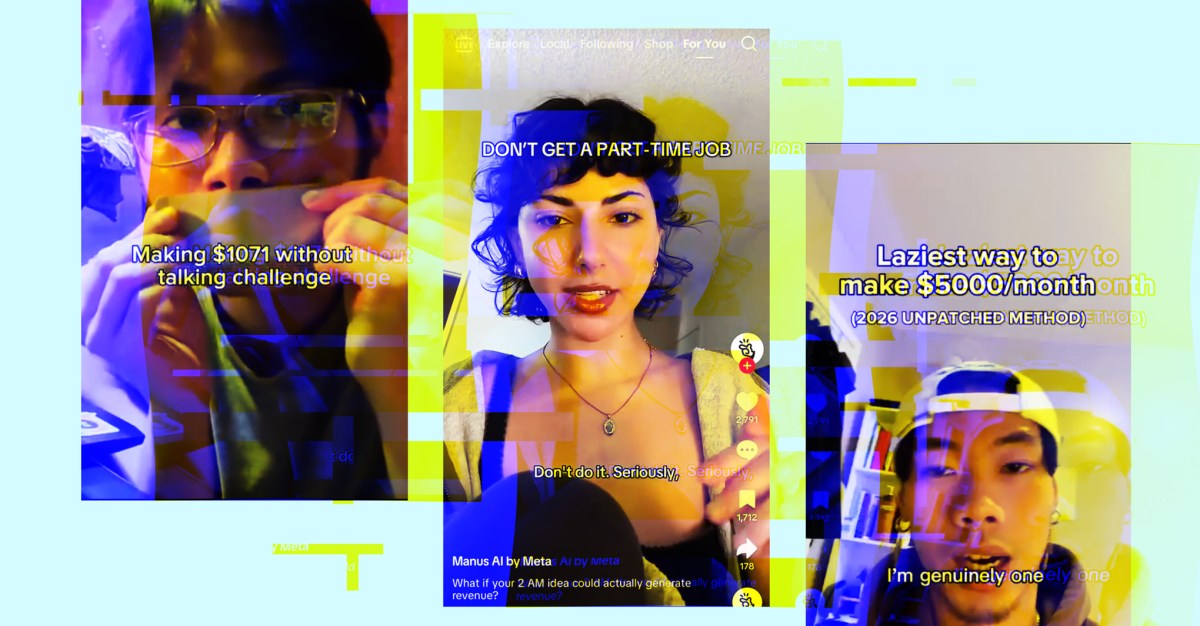
Manus, an AI startup acquired by Meta for $2 billion last year, is launching advertisements that promote quick and straightforward ways to earn money using AI technology. The approach involves identifying local businesses lacking a web presence or having subpar websites, creating websites for them, and then marketing those services over the phone.
As part of this promotional strategy, Manus has enlisted content creators to develop Instagram, YouTube, and TikTok accounts that advocate for its AI offerings as an easily accessible and profitable venture. (The creators’ TikTok accounts were subsequently removed following inquiries from The Verge.) Some of the content produced by these creators also served as official ads for Manus, yet the creator accounts often concealed their association with the brand.
The advertisements were overt in their messaging. One video from an account named “Manus AI by Meta” depicted Manus’ AI agent as an “Easy side hustle” accessible to anyone, claiming it could take less than 10 minutes to set up and potentially generate earnings of $5,000 a month. The young presenter enthusiastically stated, “There is literally no limit,” assuming, of course, that numerous businesses would be inclined to purchase an AI-generated website from an unknown internet stranger.
Although the ad did not tag the creator, their TikTok account—now removed—was primarily filled with Manus-related content. Their Instagram account, still active, mirrors this content closely, with no disclosure in the bio or posts about any link to Manus.
Across both TikTok and Instagram, a network of accounts emerged featuring strikingly similar Manus content, largely promoting the website initiative and marketing vibe-oriented applications. These accounts displayed noteworthy similarities in appearance, language, and promises: phrases like “The art of Manus,” “my websites don’t look vibe-coded anymore,” and “don’t settle for a part-time job,” along with challenges soliciting users to earn thousands without speaking, complete with tape over their mouths. Most of these accounts were relatively new, only posted about Manus, and seemed to be managed by creators in their late teens or early twenties. While many posts garnered little engagement, some went viral, racking up tens of thousands of likes and comments.

Some accounts vaguely referred to “building with Manus” in their bios, while others listed names that led to LinkedIn profiles identifying them as contractors for Manus. Additionally, one individual’s LinkedIn stated they were hired by Manus in January as a “viral growth expert” tasked with leading a team of 10-20 content creators. This role involved enforcing brand guidelines, offering content-specific coaching, and promoting viral strategies. The individual did not respond to requests for comment. A spokesperson for Manus, Ronghui Li, confirmed the company collaborates with external agency partners on paid user-generated content creator programs across platforms, including TikTok, Instagram, and YouTube, validating the mentioned individuals as part of this initiative.
Manus opted not to comment on Meta’s involvement in this program or whether it adhered to Meta’s advertising policies. When asked about disclosure and advertising regulations, Li mentioned that some creator videos were licensed as formal ads, complete with standard labeling. However, he asserted that the responsibility for disclosure on creator posts rests with the creators and noted that Manus is currently reviewing specific accounts and posts flagged for scrutiny.
When questioned about why Manus was promoting its tool as an “easy side hustle,” Li stated that the company does not condone exaggerated or misleading income claims and is reviewing the flagged content. However, he did not clarify whether this review pertains to the entire program, nor did he provide any evidence supporting the earnings claims made in the videos.
Major platforms such as Meta, YouTube, and TikTok unequivocally require that creators clearly disclose paid promotions. Several legal and advertising experts expressed that the undisclosed relationships not only violate significant platform advertising policies but may also contravene laws in numerous jurisdictions. Advertising attorney Sonal Patel Oliva emphasized that British regulators take a firm stance against undisclosed commercial relationships in influencer marketing, necessitating that incentivized content be distinctly labeled as advertising. Alexandros Antoniou, an academic at the University of Essex in England, underscored that vague brand-affiliated language fails to meet disclosure standards.
Meta did not respond to multiple requests for comment regarding knowledge of the program or compliance with its advertising guidelines. While TikTok has refrained from commenting directly, it appears that many of the Manus promotional videos have been removed and various accounts implicated in the campaign have been banned since the inquiries began. YouTube did not offer a response when approached.
Antoniou further noted that income-related claims pose greater legal risks than disclosure omissions, particularly under stringent consumer protection regulations in the UK. The consensus among experts is that similar principles apply across the EU and US.
Throughout the entirety of this campaign, Meta has owned Manus and has reportedly begun integrating the startup into its operations. The company now faces the potential necessity of unwinding the acquisition after Chinese regulators intervened, despite Meta’s assertion that it adheres to relevant laws and expects to resolve the matter with Beijing shortly.
In summary, Manus’s advertising campaign for its AI services has raised significant ethical and legal questions due to its ambiguous promotional tactics and undisclosed partnerships. This venture highlights the ongoing challenges and scrutiny faced by tech companies in adhering to advertising regulations while trying to innovate in a lucrative market. As the situation unfolds, it remains to be seen how Manus and its parent company, Meta, will navigate these issues without compromising their reputation.