As we age, maintaining a fit and active lifestyle becomes increasingly important, especially for those over 60. Engaging in regular physical activity not only boosts strength but also enhances overall health and well-being. Bodyweight exercises serve as an excellent entry point for older adults who may not have a history of strength training. These exercises are accessible, low-impact, and versatile, enabling individuals to learn key movement patterns and build foundational strength without the need for complicated gym equipment.
Contrary to popular belief, resistance training doesn’t have to involve heavy weights. According to Steve Chambers, a gym manager and certified personal trainer at Ultimate Performance, bodyweight training utilizes your own body weight to create resistance, effectively building muscle and strength. This method helps improve coordination and joint stability while also laying the groundwork for more advanced exercises in the future.
While bodyweight exercises are a fantastic place to start, it’s essential to understand that long-term muscle growth may eventually require the addition of weighted resistance. Muscle adaptation occurs when it faces new challenges, so a progressive approach will yield the best results. With that in mind, here are six effective bodyweight exercises to include in your fitness routine:
6 Bodyweight Exercises for Building Strength
1. Bodyweight Squat

The bodyweight squat is an essential exercise to include in your routine. It primarily targets the quads, hamstrings, and glutes, and promotes functional movements used in daily life, such as sitting and standing. To perform a squat:
- Stand with your feet hip-width apart and arms in front of you or crossed over your shoulders.
- Maintain a straight back, engage your core, and sit your hips back as you bend your knees to lower into a squat.
- Keep your weight in your heels as you press back up to the starting position.
- Squeeze your glutes at the top and repeat.
2. Push-ups

Push-ups effectively train the upper body, targeting the chest, shoulders, and triceps while also demanding core stability. Start with wall or bench push-ups before moving to the floor as your strength improves. Here’s how to do a push-up correctly:
- Place your hands slightly wider than shoulder-width apart, behind your shoulders.
- Engage your core by tucking your hips under, tightening your glutes, and pulling your abs in.
- Lower your body in a controlled manner while focusing on keeping your elbows tucked near your sides.
- Push back up explosively to the starting position.
3. Step-ups

Begin without weights until you feel confident with your form, then you can progressively add them in.
Step-ups are crucial for replicating everyday activities like climbing stairs and transitioning confidently between surfaces. This exercise also promotes balance and coordination. To perform a step-up:
- Stand in front of a step or low chair, ensuring it’s at knee height.
- Step onto the platform with one foot and then lower back down with the same foot.
- Press through the working leg to leverage your hamstrings and glutes.
- Switch legs and repeat.
4. Plank and Side Planks
Plank

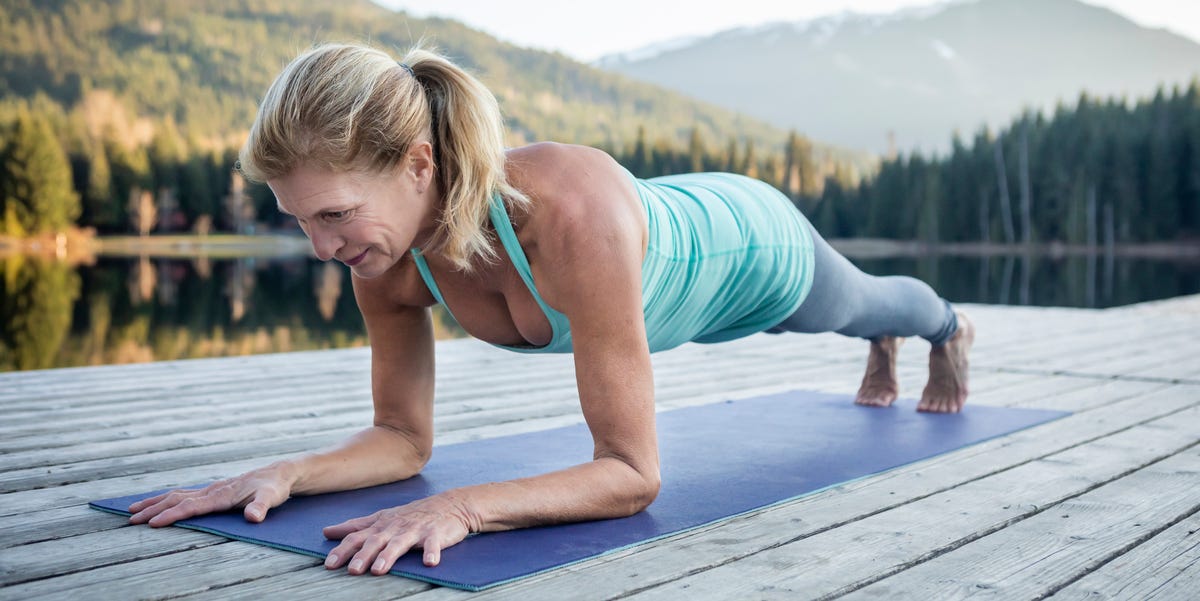
As we age, our approach to core training shifts. Instead of aiming for a six-pack, focus on building a stable core that protects the spine and supports movement. Planks teach you to resist motion effectively and enhance core stability. To execute a plank:
- Start face-down with elbows bent at 90 degrees and forearms resting on the floor.
- Engage your abs and lift your hips to achieve a straight line from head to heels.
- Ensure your shoulders are above your elbows and focus on maintaining good alignment.
- Hold the position, engaging your glutes and core for stability.
Side Plank

Incorporating side planks adds lateral stability, which is crucial for balance and injury prevention. To perform a side plank:
- Lie on your side with your forearm flat, elbow aligned beneath your shoulder.
- Engage your core and lift your hips to form a straight line from head to feet. Hold for 15 to 30 seconds.
- Your top hand can rest on your hip for stability or reach towards the ceiling for an added challenge.
5. Chin-ups

Though chin-ups may seem daunting, they are highly beneficial for upper body strength. They primarily engage the back, biceps, and grip muscles. With progressive training, you can work towards achieving chin-ups. Here’s how:
- Use a step or bench to reach the bar, or jump to start if you’re able.
- Hang on the bar with a neutral grip and squeeze your glutes.
- Pull your body upwards until your chin clears the bar.
- Lower yourself back down in a controlled manner.
6. Split Squat

The split squat is an effective exercise for developing lower body strength, balance, and stability. Here’s how to perform it:
- Stand with feet shoulder-width apart and take a step backward with one foot.
- Lower your body until your back knee gently grazes the floor.
- Pause briefly before pushing through the front leg to return to the starting position.
Having a strong core contributes significantly to overall health—enhancing power, posture, coordination, and balance. Consider joining a core challenge to effectively develop your mid-section strength.