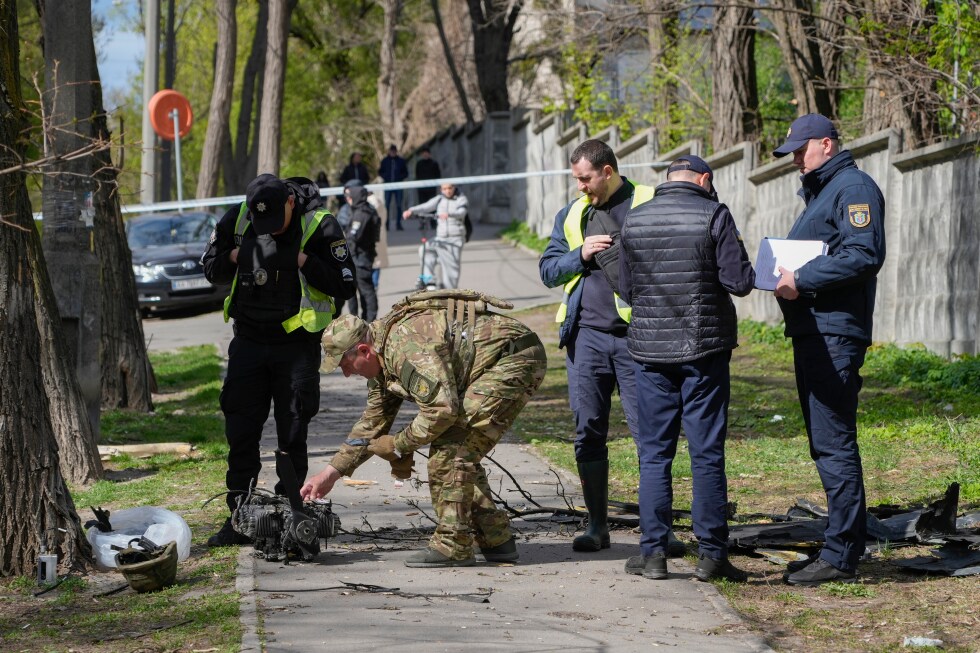
In recent developments in the ongoing conflict, Ukraine has significantly advanced its drone defense capabilities and offensive operations. With a record number of enemy drones neutralized, the country’s military strategies are evolving rapidly, prompting attention from global defense sectors.
KYIV, Ukraine (AP) — Ukraine used interceptor systems to shoot down more than 33,000 Russian drones of various types in March, a record monthly figure since Moscow launched its all-out invasion more than four years ago, Ukraine’s defense minister claimed.
Meanwhile, Ukraine’s domestically developed long-range attack drones struck a Russian oil refinery and terminal on the Black Sea for the third time in less than two weeks, prompting the evacuation of local people and a Russian warning of possible “environmental consequences.”
Ukraine has developed cutting-edge and battle-tested drone technology that has proved essential in holding back Russia’s larger army and has garnered military interest from around the world.
Interceptor drones as part of a comprehensive air defense system are now being sought by Middle East and Gulf countries amid the Iran war, according to Ukrainian officials.
AP AUDIO: Ukraine says it shot down 33,000 Russian drones in March, a monthly record
AP correspondent Charles de Ledesma reports as Ukraine’s war technology develops; it is taking out higher numbers of Russian drones.
Ukraine is scaling up supplies of interceptor drones to thwart Russian aerial attacks, and its military has introduced a new command within the air force to enhance the country’s capabilities, Defense Minister Mykhailo Fedorov said in a post on Telegram late Monday.
Ukraine says its deep-strike range is growing
Ukraine’s offensive capabilities have also improved, with the Defense Ministry stating Tuesday that the country’s forces have more than doubled the range of their deep-strike capabilities since Russia’s February 2022 invasion.
At that time, Ukrainian forces were able to hit military targets about 630 kilometers (400 miles) away. They are now striking targets as far as roughly 1,750 kilometers (1,100 miles) behind enemy lines, the ministry said in a statement.
That improvement has allowed Ukraine to hit Russian oil installations that provide crucial revenue for Moscow’s war effort. It has also targeted manufacturing plants that supply Russia’s armed forces.
A Russian refinery is struck
Ukraine struck a Russian oil refinery at the Black Sea port of Tuapse for the third time this month in a coordinated operation involving multiple branches of the country’s defense and security services, its Unmanned Systems Forces said Tuesday.
The two strikes earlier this month destroyed 24 oil storage tanks and damaged four others, it said. Independent verification of these claims was not possible.
Video from Tuapse released Tuesday by Krasnodar regional Gov. Veniamin Kondratyev showed a massive plume of black smoke rising from the refinery and black, steaming puddles on an adjacent street. An emergency official reported that boiling oil products had spilled onto the street from one of the oil tanks, damaging several cars.
People living near the Tuapse refinery were being evacuated, according to Kondratyev. He did not provide details about how many were evacuated or for how long.
Speaking about the strikes on Tuapse, Russian President Vladimir Putin stated they could “cause serious environmental consequences,” as reported by Russian news agency Interfax. Putin also said Kondratyev had reported there were no serious threats in Tuapse and that people were “dealing with the challenges they face on the ground.”
Both sides carry out drone attacks
The Russian Defense Ministry reported Tuesday that its air defenses intercepted 186 Ukrainian drones over Russian regions, including Crimea and the Black and Azov Seas.
In the Belgorod region bordering Ukraine, three people were killed and three others were injured in a drone attack, said Gov. Vyacheslav Gladkov.
Conversely, Russian drone attacks on Ukraine have resulted in the deaths of three civilians and injured five others, according to Ukrainian authorities. Two individuals were killed in the city of Chuhuiv in the northeastern Kharkiv region, as reported by the head of the regional military administration, Oleh Syniehubov.
A 40-year-old man died, and five other men sustained injuries in Kryvyi Rih, the hometown of Ukrainian President Volodymyr Zelenskyy. Additionally, a rare daytime drone attack on Kyiv on Tuesday wounded two people, Mayor Vitali Klitschko reported. Another Russian attack on Konotop in Ukraine’s northern Sumy region knocked out the city’s power and water supply.
Key Takeaways
- Ukraine recently shot down over 33,000 Russian drones in March, marking a significant operational achievement.
- The country has improved its long-range strike capabilities, hitting targets 1,750 kilometers away.
- Ukraine’s drone technology has attracted global military interest.
- Recent strikes have targeted key Russian oil installations, impacting Moscow’s revenue.
- Both sides continue to engage in drone attacks, resulting in casualties on either side.
FAQ
What recent advancements has Ukraine made in drone technology?
Ukraine has developed advanced interceptor systems that have successfully neutralized a record number of enemy drones.
How far can Ukraine now strike targets?
Ukrainian forces can now strike targets approximately 1,750 kilometers behind enemy lines, significantly increasing their operational range.
What areas have been affected by drone strikes?
The recent drone strikes have primarily targeted Russian oil refineries and military installations, affecting the revenue streams for Moscow’s war effort.
What is the current situation regarding civilian casualties?
Both Ukrainian and Russian drone operations have resulted in civilian casualties on both sides, highlighting the human cost of the ongoing conflict.
___
Follow AP’s coverage of the war in Ukraine at https://apnews.com/hub/russia-ukraine