In a bustling gym environment, athletes transition rapidly between various equipment, adjusting weights and prepping for their next set. Efficiency is key, and though performance metrics center on weight and reps, the journey to optimal training begins with thoughtful design—consider the angle of a bench, the contours of a handle, and the stability of a framework.
The increasing focus on design in fitness reflects a significant trend in intellectual property (IP). Recent findings from the World Intellectual Property Organization (WIPO) indicate that industrial design filings for sports-related equipment are growing at an impressive rate of 8.3% annually, outpacing the 4% growth across other sectors, especially in the fitness equipment domain.
For REP Fitness, industrial design is not merely an additional step; it is central to the company’s operations. Founded in 2012 by brothers Ryan and Shane McGrotty in their garage, REP has transformed into a company with over 200 employees, dedicated to serving the CrossFit community and beyond.
To an outsider, a dumbbell is a dumbbell. But for someone who trains seriously, every detail matters.
Today, REP offers a variety of equipment, including racks, benches, dumbbells, and cable systems, catering to home gyms, boutique studios, and institutional facilities such as schools and military training centers.
As REP expands its footprint into the UK and Europe, it is simultaneously developing its international portfolio of industrial designs through WIPO’s Hague System for the International Registration of Industrial Designs, allowing them to protect their innovative designs worldwide.
Design as a Critical Factor in Performance
“To an outsider, a dumbbell is just a dumbbell,” states Brad Hattenbach, REP’s in-house IP counsel. “Yet for serious trainers, the finer points are crucial. The way it balances, its compactness, and the ease of adjustment all contribute to the overall experience and performance.”
The industrial design of training tools governs ergonomics, adjustability, stability, and efficiency of space. Equipment must align with human biomechanics, endure repeated use, and safely handle heavy weights. Even minor design flaws, such as a misplaced adjustment pin, can lead to significant training challenges and safety issues.
Recognizing this, REP established a dedicated team in 2025 to routinely evaluate their product range. This process includes identifying potential enhancements to designs that warrant protection. They consider key practical questions: Can the grip be improved? What about the knurling? Are there any friction points reported by users?
Feedback is gathered from fitness enthusiasts within the company, competitive athletes, professional reviewers, and an active online community. Prototypes are rigorously tested by employees who are competitive lifters themselves. Hattenbach explains, “We’ll place prototypes in our gym and solicit opinions: What feels off? How can it be enhanced?”
Additionally, REP actively seeks feedback from gyms and training facilities where multiple athletes engage in intense workouts.
When you release something that strikes a chord, it can be imitated very quickly.
At KNGDM Sports Performance in Colorado, they train athletes ranging from aspiring young talents to seasoned professionals, and the design of equipment plays a pivotal role in their training sessions.
“Design influences our programming,” says Joe Parker, co-founder of KNGDM. “It impacts how many exercises we can run simultaneously, how many athletes we can assist at once, and the efficiency with which we move through a workout.”
Particularly, multifunctional systems significantly boost training dynamics. Parker cites integrated cable functionality in rack systems as an example: “If an athlete hasn’t mastered pull-ups yet, we can quickly transition them to a lat pulldown on the same machine. This allows for seamless training of varying strength levels without frequent changes around the gym.”
The result is equipment that combines multiple exercise options into one unit, designed for easy adjustments and durable under heavy use—qualities that competitors quickly take notice of.
The Versatile Adjustable Dumbbell
REP’s adjustable Pepin Dumbbell serves as a prime example of how thoughtful design can differentiate performance and create a secure asset. This product, registered internationally under WIPO’s Hague System (DM/240 993), compacts various weights into a modular, space-efficient design.
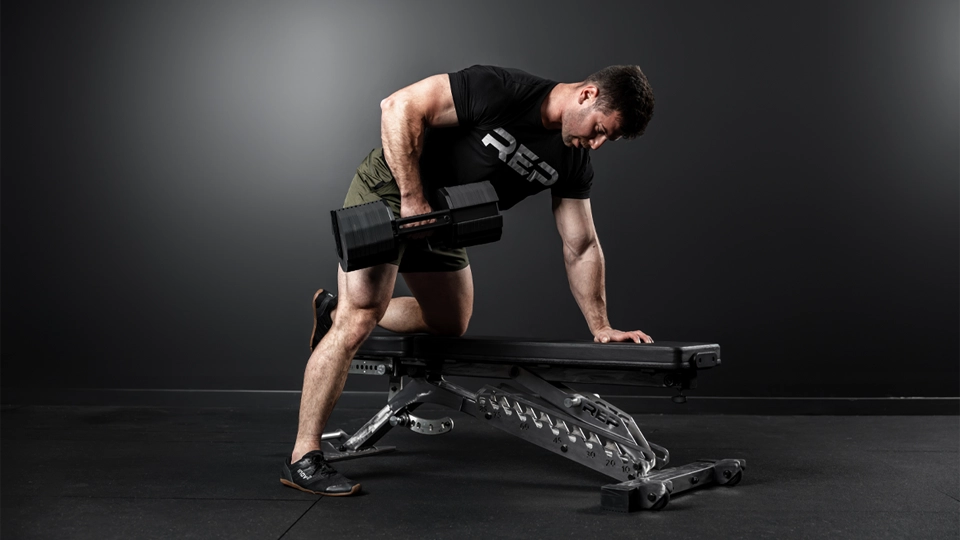
Instead of requiring multiple fixed dumbbells, users can adjust a single pair from light to heavy loads, reaching up to 56 kilograms per dumbbell while occupying a space roughly equivalent to a yoga mat. In contrast, a typical dumbbell rack can monopolize an entire corner of a gym.
Shane Percival, REP’s external counsel, emphasizes the importance of compactness: “This design caters to serious lifters who need robust functionality but may be limited in space, such as in a garage gym.”
Every design element contributes to this compactness: the geometry of the weights, the alignment and locking mechanisms, the handle’s balance, and the docking system that ensures safe loading and unloading. These visible features are critical in determining how the product performs in practice.
We have successfully asserted our rights by contacting infringing parties and leveraging our Hague registration.
Even traditional fixed dumbbells illustrate how subtle design elements matter. At KNGDM, the team utilizes REP’s urethane dumbbells. Parker comments, “The flat sides are a notable advantage. They allow for elevated push-ups or other movements, adding versatility to a straightforward piece of equipment.”
This versatility, however, also invites the potential for imitation. “We face challenges with knock-offs,” Hattenbach admits. “A product that connects with users can be duplicated swiftly.” Counterfeits often appear through online channels or via third-party distributors.
“We’ve had to issue takedown notices to various retailers and online sellers,” he notes. “Registering industrial designs gives us a tangible basis for protecting our unique shapes and mechanisms. Without this registration, enforcement becomes significantly more complex.”
Thus, the focus remains on safeguarding the specific shapes, geometries, and adjustment systems that make the Pepin Dumbbell stand out.
Introducing the Multifunctional Pegasus Seat
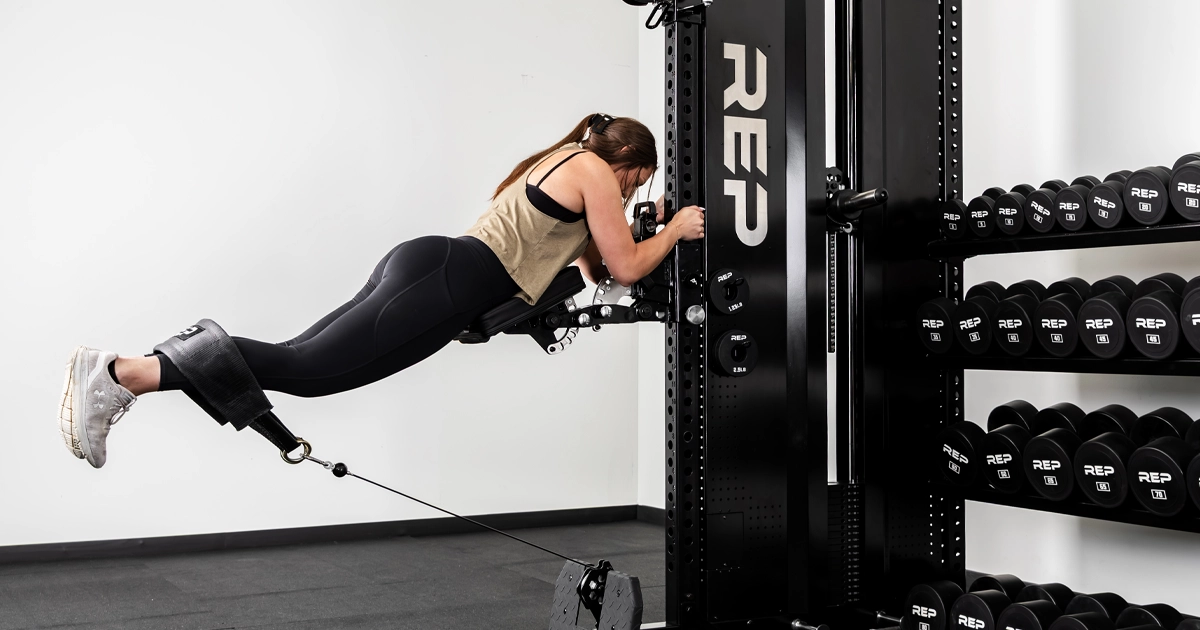
Another innovation is REP’s flat pulldown Pegasus seat attachment, secured under international design registration DM/237 368. This product stands out by allowing quick adjustments to the seat and leg rollers for diverse users and exercises, effectively transforming one station to accommodate multiple functions without needing additional equipment.
The Hague registration protects the unique design features—shapes, angles, and mechanisms—that enhance versatility and safety, preventing others from replicating this functional design.
“Upon its launch, this seat was unlike anything on the market,” Hattenbach explains. “We’ve seen directly copied versions emerge. Our Hague registration allowed us to address the issue, reaching out to infringers to assert our rights. While some halted sales immediately, others required formal legal actions.”
These experiences highlighted the importance of early and broad registration. Hague registrations enable REP to protect their innovations across multiple markets with streamlined processes, thus supporting swift product launches and global distribution.
Inspiration from Colorado’s Landscape
REP has also focused on establishing a distinctive visual language across its product range. This effort aims to convey that their equipment is designed as an integrated system rather than a collection of off-the-shelf parts.
Some design elements draw inspiration from the natural landscapes of Colorado, including sharp profiles that resemble local mountain formations like the Flatirons and Longs Peak, in addition to hexagonal patterns and circular motifs present in various structural and decorative components.
These design choices foster consistency and recognition for the brand, signaling that these products are not merely generic copies. “We are not just branding existing products; we are constructing a recognizable design system,” Hattenbach states.
In a market flooded with new fitness innovations, consistent design elements not only denote quality but also cultivate protectable features that can be recognized internationally, helping REP safeguard its products more effectively.
Understanding the Impact of Design Protection in Fitness
The surge in industrial design filings in the fitness space represents a broader change: equipment is increasingly defined by its design, as well as its functioning, adapting seamlessly to users and their varying training needs.
Unlike clothing or purely decorative goods, strength training equipment endures significant stress, making even minor form variations impactful on safety and effectiveness. In this context, design is intricately linked to user safety and performance.
Additionally, since many significant design features are visible—such as adjustment levers, plate shapes, and seat contours—they are prone to imitation, particularly given the fast-paced nature of product cycles. New designs can gain popularity quickly, leading to rapid reproductions.
“Hague registrations are essential for our operations,” Percival explains. “They give REP the agility to protect early and operate confidently on a global scale. This method is much more efficient than managing a patchwork of individual national filings.”
REP Fitness’s narrative illustrates a crucial lesson for the fitness industry: innovation isn’t limited to technical features or new materials; it also flourishes within creative choices that influence equipment design. Enhancements in stability, ergonomics, and spatial efficiency propel performance. When innovation leads to market success, it attracts imitation, and when safeguarded correctly, these innovations become valuable IP assets.
For gym enthusiasts, the difference between one dumbbell and another may hinge on comfort, balance, and efficient use of space. For a growing company venturing into global markets, these differences define brand identity and warrant international protection. It’s not just about securing products; it’s about nurturing lasting innovation and brand recognition across diverse markets.
In strength training, while weights may be visible, the thoughtful design that enhances safety, efficiency, and adaptability often carries the more significant impact.
About the author: Louis Meunier is a consultant with two decades of experience in international cooperation, strategic communication, and media. He serves as a Senior Information Officer at WIPO, focusing on data-driven communication and outreach strategies to promote awareness and effective use of the Hague System.
—
This revised article enhances the original’s clarity, structure, and accessibility while emphasizing practical fitness insights. If you have specific preferences or need adjustments, let me know!